- Resources
- Best IVR Service Providers in India

Best IVR Service Providers in India
The right IVR software solution can be a significant cost saver for your business. But when implemented poorly, it can quickly become a source of customer frustration. The outcome depends on choosing the right IVR provider and configuring the system to meet your business and customer needs.
India’s IVR market is on track to nearly double, from $553 million today to just over $1 billion by 2035 (Market Research Future, 2025). This growth is being driven by businesses of all sizes, from growing startups to established enterprises, adopting IVR to handle customer conversations more efficiently.
This guide will help you compare the best IVR software providers and choose the right solution for your business.
Key Takeaways
- Ozonetel is the only India-native platform on this list with true Hinglish conversational AI — it understands Hindi and English switching naturally within the same sentence, rather than simply adding Hindi voice to an English AI engine.
- Most global CCaaS providers don’t automate TRAI/DLT compliance — Talkdesk, Five9, RingCentral, NICE CXone, and Genesys typically require manual setup or third-party solutions, adding operational risk for Indian outbound campaigns.
- DLT registration is mandatory in India. Businesses making outbound IVR calls must register with a TRAI-approved DLT platform such as Jio, Airtel, Vi, or BSNL. Otherwise, calls can be blocked and numbers may be blacklisted.
- CRM integration matters more than the CRM name. Simply passing a phone number is very different from pulling the customer’s complete account history before an agent answers. Deeper integration can significantly improve containment.
- Pricing in India can be unclear with global vendors. Talkdesk, Five9, and Nextiva largely use USD pricing, so businesses should ask for an actual quote or sample invoice based on their expected call volume.
- Nextiva has a stronger India presence than the other global vendors through its Bengaluru operations and Simplify360 acquisition. However, its DLT compliance and local support should still be confirmed directly.
In this article, we will explore:
Quick Take: 12 Best IVR Providers in India
A quick answer before the deep dive — full reviews follow later in this document.
| # | Company | Best For |
|---|---|---|
| 1 | Ozonetel | Best overall / best AI IVR for enterprise BFSI, D2C, and healthcare |
| 2 | Acefone | Best mid-market contact center |
| 3 | CallHippo | Best for SMB and startup voice automation |
| 4 | Plivo | Best developer-first platform with India-native roots |
| 5 | TeleCMI | Best budget-friendly multilingual SMB IVR |
| 6 | Twilio | Best for developer and API-first teams |
| 7 | RingCentral | Best for global enterprise UC + contact center |
| 8 | NICE CXone | Best for large (500+ agent) enterprise contact centers |
| 9 | Genesys | Best for complex, multi-region enterprise deployments |
| 10 | Talkdesk | Best mid-market CCaaS with a visual builder, strong compliance |
| 11 | Five9 | Best for omnichannel plus workforce management at scale |
| 12 | Nextiva | Best global UCaaS + CCaaS bundle with a growing India presence |
Quick Comparison: India’s Top 12 IVR Providers at a Glance
we’ve compared India’s top IVR software providers based on their ideal use case, pricing, key differentiators, and G2 ratings
| Vendor | Best For | AI / Hinglish | TRAI/DLT | Starting Price (India) | G2 |
|---|---|---|---|---|---|
| Ozonetel | Enterprise AI IVR — BFSI, D2C, Healthcare | Full / Native | Automated | Custom quote (no self-serve pricing) | 4.6 |
| Acefone | Mid-market contact center | Basic / Partial | Yes | Custom quote | 4.0 |
| CallHippo | SMB / startup voice automation | Basic / Partial | Yes | Free–$42/user/mo | 4.5 |
| Plivo | Developer/API-first, India voice | Good / Partial | Check | ₹2,699/user/mo | 4.3 |
| TeleCMI | Budget SMB, multilingual | Basic / Partial | Yes | Custom (14-day trial) | 4.0 |
| Twilio | Developer/API-first teams | Good / Limited | Check | $0.05–0.07/min | 4.2 |
| RingCentral | Global enterprise UC + CC | Good / Limited | Check | $20–35/user/mo | 4.0 |
| NICE CXone | Large enterprise (500+ agents) | Full / Limited | Check | $110–135/agent/mo | 4.3 |
| Genesys | Complex enterprise deployments | Full / Limited | Check | $75–240/user/mo | 4.1 |
| Talkdesk | Mid-market/enterprise, regulated industries | Good / Limited | Check | $85–225/user/mo | 4.4 |
| Five9 | Medium-large, omnichannel + WFM | Good / Limited | Check | From $119/user/mo | 4.1 |
| Nextiva | Global enterprise, growing India ops | Good / Partial | Check | $20–75/user/mo | 4.5 |
12 Best IVR Service Providers in India — Detailed Reviews
From startups to large enterprises, these are the best IVR software providers in India, evaluated on features, pricing, integrations, AI capabilities, and overall business value.
1. Ozonetel: Best AI IVR for Enterprises & Mid Market Firms
What Is Ozonetel?
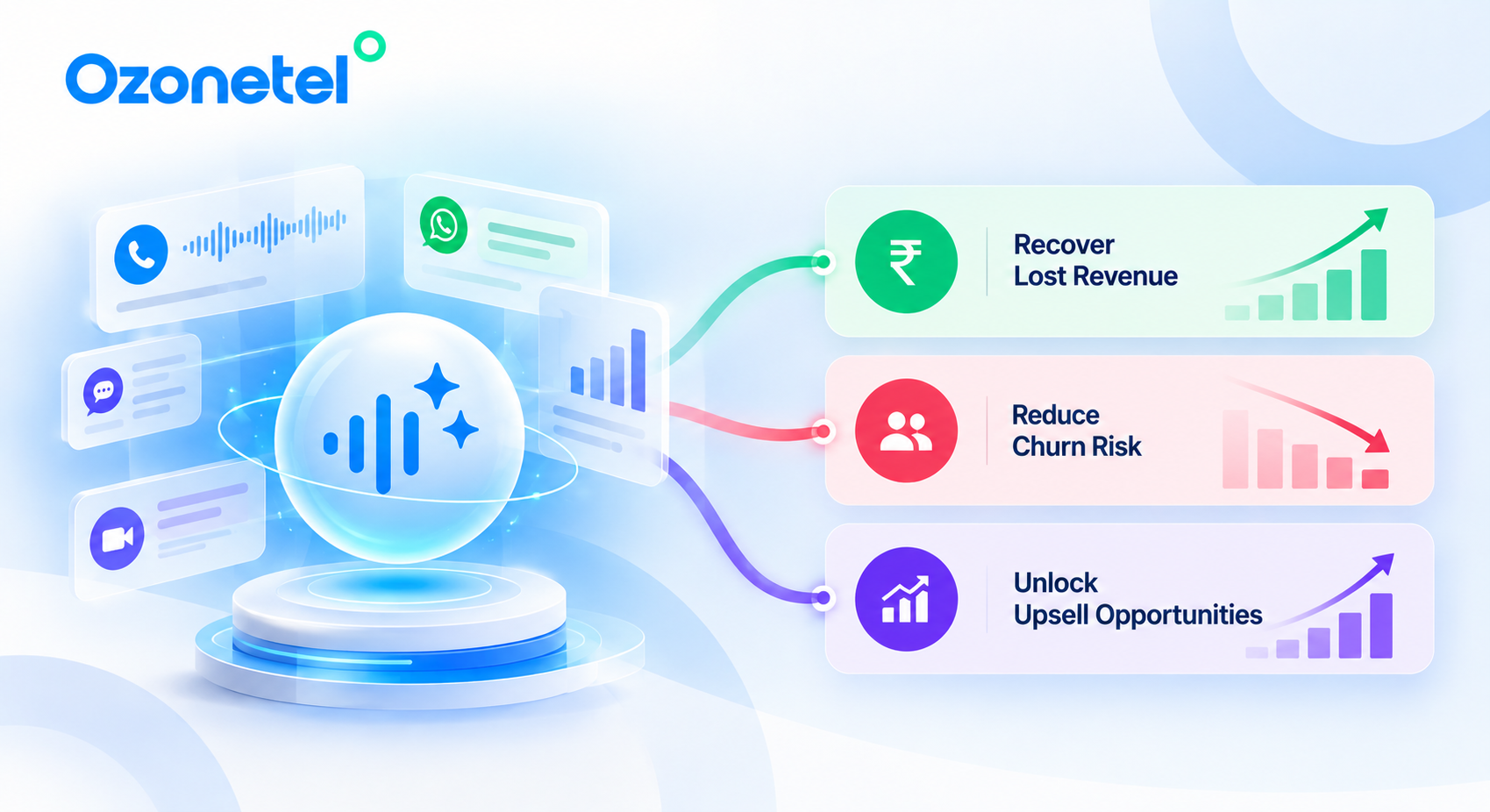
Ozonetel is an AI-native unified CX platform that combines IVR, omnichannel routing, AI speech analytics, and CRM integration in one stack, engineered for Indian speech patterns and unpredictable call volumes rather than ported from a US product.
What Is Ozonetel Best For?
Ozonetel AI-IVR Mid-market to enterprise contact centers in BFSI, insurance, healthcare, D2C/e-commerce, and BPO — particularly teams handling 5,000+ calls a day where self-service containment moves real revenue.
What Are Ozonetel’s Key Features?
- Full conversational AI IVR with NLU trained on Indian speech — handles Hinglish and mid-sentence code-switching natively
- Multi-carrier redundancy with automatic failover, built for BFSI-grade uptime
- End-to-end TRAI/DLT compliance, including automated outbound scrubbing
- Real-time analytics on menu-level abandonment, containment, and zero-out rates
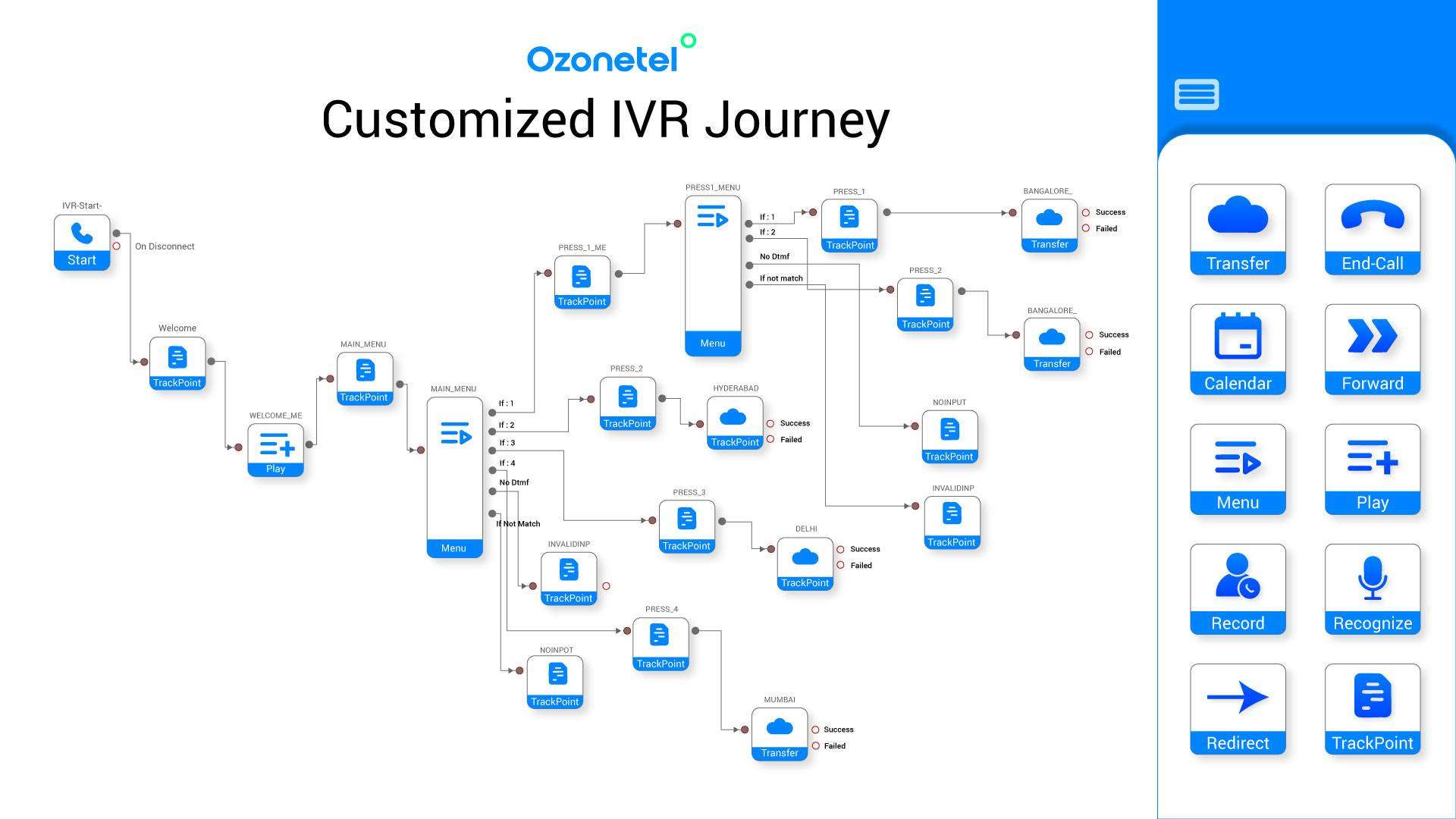
- Visual, no-code IVR designer for call flow creation and A/B testing
What Are Ozonetel’s Best Integrations?
- Salesforce
- Zoho
- Freshdesk
- LeadSquared
- Custom CRMs via open API
What Are Ozonetel’s Plans & Pricing?
No self-serve pricing is published — Ozonetel is custom-quoted based on call volume, language requirements, and integration complexity. This is a real tradeoff: unlike Plivo, Twilio, or CallHippo on this list, you can’t benchmark Ozonetel’s cost without a sales conversation.
What Are Ozonetel’s Pros & Cons?
| Pros | Cons |
|---|---|
| Native Hinglish and regional language NLU — not a bolted-on TTS layer | More platform (and spend) than a 3-person startup running a single-level menu needs |
| Multi-carrier redundancy built for BFSI-grade uptime | Custom-quote pricing means no public starting number to benchmark against |
| Real-time analytics on containment and abandonment | Enterprise-grade deployment with full CRM integration takes longer to go live than lighter no-code platforms |
What Are Ozonetel’s Customers Saying?
G2 reviewers give Ozonetel 4.6/5 across 623 reviews. Users consistently praise its omnichannel capabilities and describe the CRM-integration and implementation process as notably smooth, alongside responsive support and fast issue resolution.
2.Acefone: Best Mid-Market Contact Center with Solid IVR
What Is Acefone?
Acefone is a full-featured cloud contact center at mid-market pricing, with IVR sitting inside a broader CCaaS suite that includes AI-powered analytics (branded AceX) and omnichannel routing.
What Is Acefone Best For?
Mid-market contact centers (30–150 agents) trading some AI sophistication for price accessibility.
What Are Acefone’s Key Features?
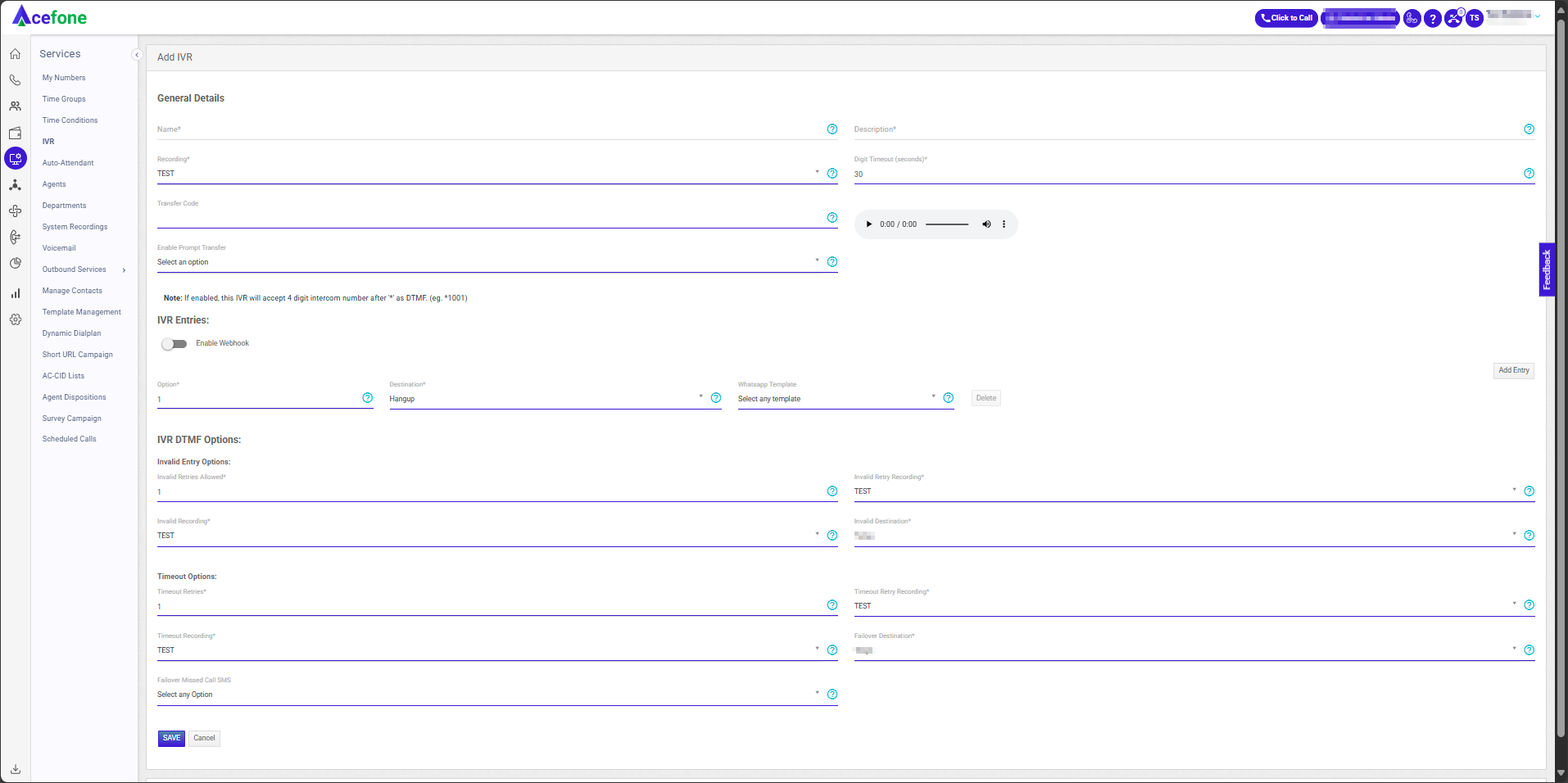
- Multi-level IVR with visual call flow designer
- AceX analytics layer with sentiment detection
- Omnichannel routing across voice, chat, email, SMS, WhatsApp
- Strong presence in BFSI, healthcare, and retail
What Are Acefone’s Best Integrations?
Major CRMs plus custom API support
What Are Acefone’s Plans & Pricing?
Custom quote — same self-serve pricing gap as Ozonetel and several others on this list.
What Are Acefone’s Pros & Cons?
| Pros | Cons |
|---|---|
| AceX AI analytics with sentiment detection | AI and NLP capability is mid-tier — functional, not cutting-edge |
| Full omnichannel routing across 5 channels | Deep Hinglish handling may fall short for high-containment needs |
| Strong BFSI, healthcare, retail footprint | Custom-quote pricing, no self-serve transparency |
What Are Acefone’s Customers Saying?
Acefone holds generally positive marks across G2, Capterra, and GetApp — reviewers most often cite responsive customer support, straightforward onboarding, and competitive pricing relative to the feature set, alongside some billing and cancellation complaints worth factoring into procurement.
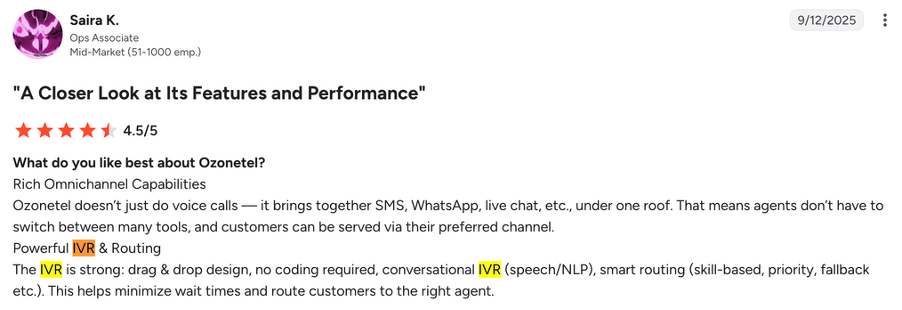
G2 and Capterra reviewers describe Acefone’s IVR and voicemail setup as quick to configure, with a wide range of voice options.
3. CallHippo: Best for SMB and Startup Voice Automation
What Is CallHippo?
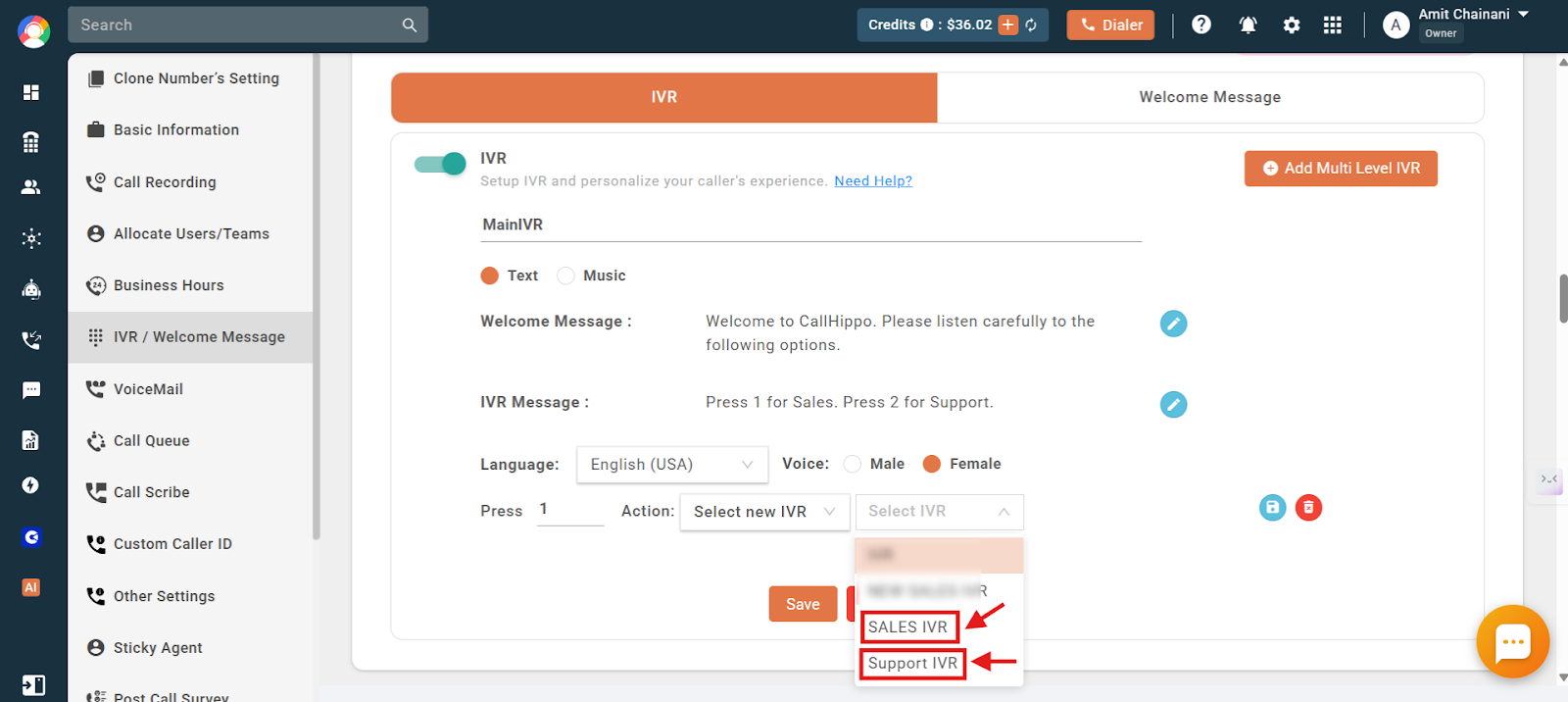
CallHippo is an AI-forward SMB communications platform spanning six products — business phone system, AI voice agent, omnichannel inbox, WhatsApp Business API, parallel dialer, and outcome-based AI agents.
What Is CallHippo Best For?
Startups and SMBs wanting a modern, AI-forward platform with global virtual number support.
What Are CallHippo’s Key Features?
- AI Voice Agent for autonomous call answering, lead qualification, appointment booking
- Virtual numbers in 50+ countries
- Free Core plan available for basic IVR routing
What Are CallHippo’s Best Integrations?
Omnichannel inbox and WhatsApp Business API, plus standard CRM connectors
What Are CallHippo’s Plans & Pricing?
Free Core plan, then $18–42/user/month across paid tiers.
What Are CallHippo’s Pros & Cons?
| Pros | Cons |
|---|---|
| Genuine AI Voice Agent for autonomous handling | G2 (4.5) and Trustpilot (1.9, ~660 reviews) tell very different stories |
| Free entry tier | Billing and cancellation complaints cluster on Trustpilot |
| Numbers in 50+ countries | India support runs through a global team, not IST-native |
What Are CallHippo’s Customers Saying?
G2 reviewers give CallHippo 4.5/5 — but that sits next to a 1.9/5 on Trustpilot across roughly 660 reviews, with complaints there clustering around billing and cancellation. Read both before shortlisting.
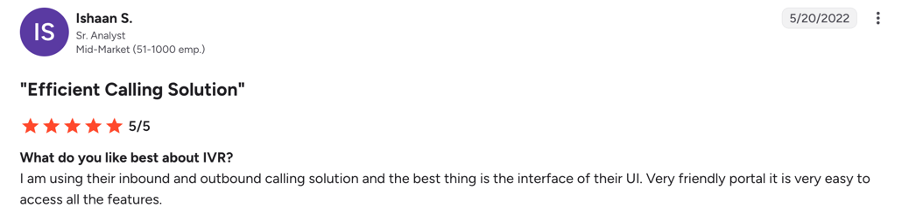
G2 reviewers compare CallHippo’s IVR and call routing favorably against traditional systems for day-to-day operational efficiency.
4. Plivo: Best Developer-First Platform with India-Native Roots
What Is Plivo?
Plivo was founded in India and built its name on developer-friendly APIs for voice and messaging, with a recent expansion into a full CX platform (Plivo CX).
What Is Plivo Best For?
Developer-led teams building custom telephony experiences who want API-first control.
What Are Plivo’s Key Features?
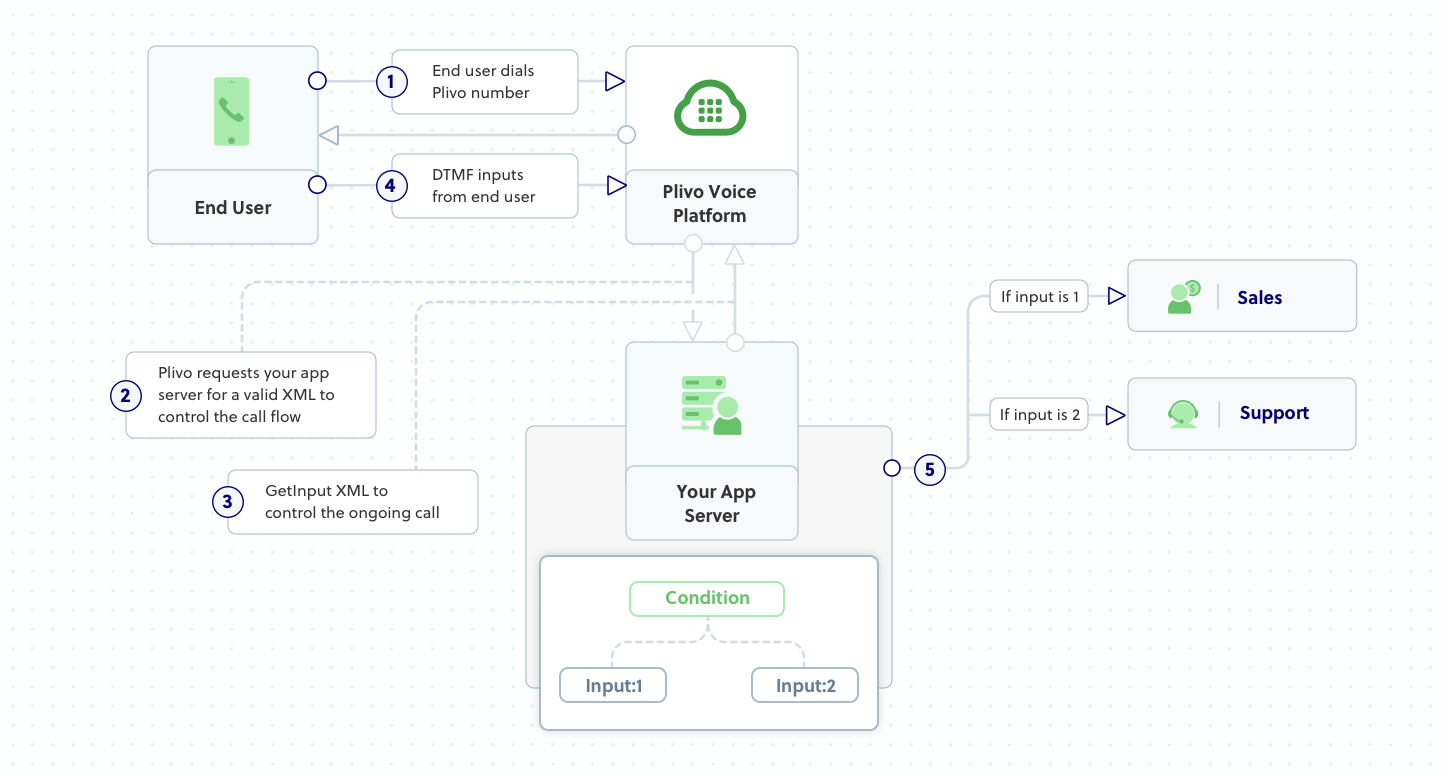
- Programmable Voice API with full IVR control via PlivoXML
- Competitive, transparent India voice pricing (₹0.60/min local, ₹250/month number rental)
- India-born company with India-native voice infrastructure
What Are Plivo’s Best Integrations?
Custom builds via PlivoXML and REST API — not pre-built CRM connectors
What Are Plivo’s Plans & Pricing?
₹2,699/user/month for Plivo CX (Growth plan); usage-based pricing for the core voice API.
What Are Plivo’s Pros & Cons?
| Pros | Cons |
|---|---|
| Full programmable control via PlivoXML/REST API | Plivo CX is comparatively new — less battle-tested than the core voice API |
| Competitive, transparent India voice pricing | Support skews developer-oriented; less guided onboarding |
| India-born, India-aware infrastructure | No visual no-code builder |
What Are Plivo’s Customers Saying?

G2 reviewers give Plivo 4.3/5.
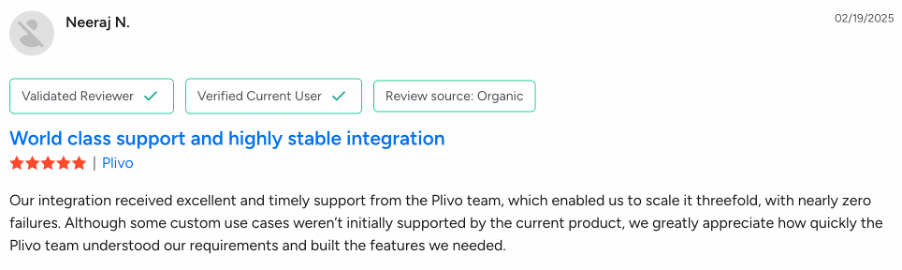
G2 reviewers praise Plivo’s programmable voice API for straightforward IVR setup and consistent call quality.
5. TeleCMI: Best for SMB Cloud IVR with Multilingual Ambition
What Is TeleCMI?
TeleCMI is an India-based cloud telephony provider built around ease of use and multilingual reach, with prompt-level support across multiple Indian languages.
What Is TeleCMI Best For?
Price-conscious Indian SMBs wanting basic, reliable cloud IVR over advanced AI.
What Are TeleCMI’s Key Features?
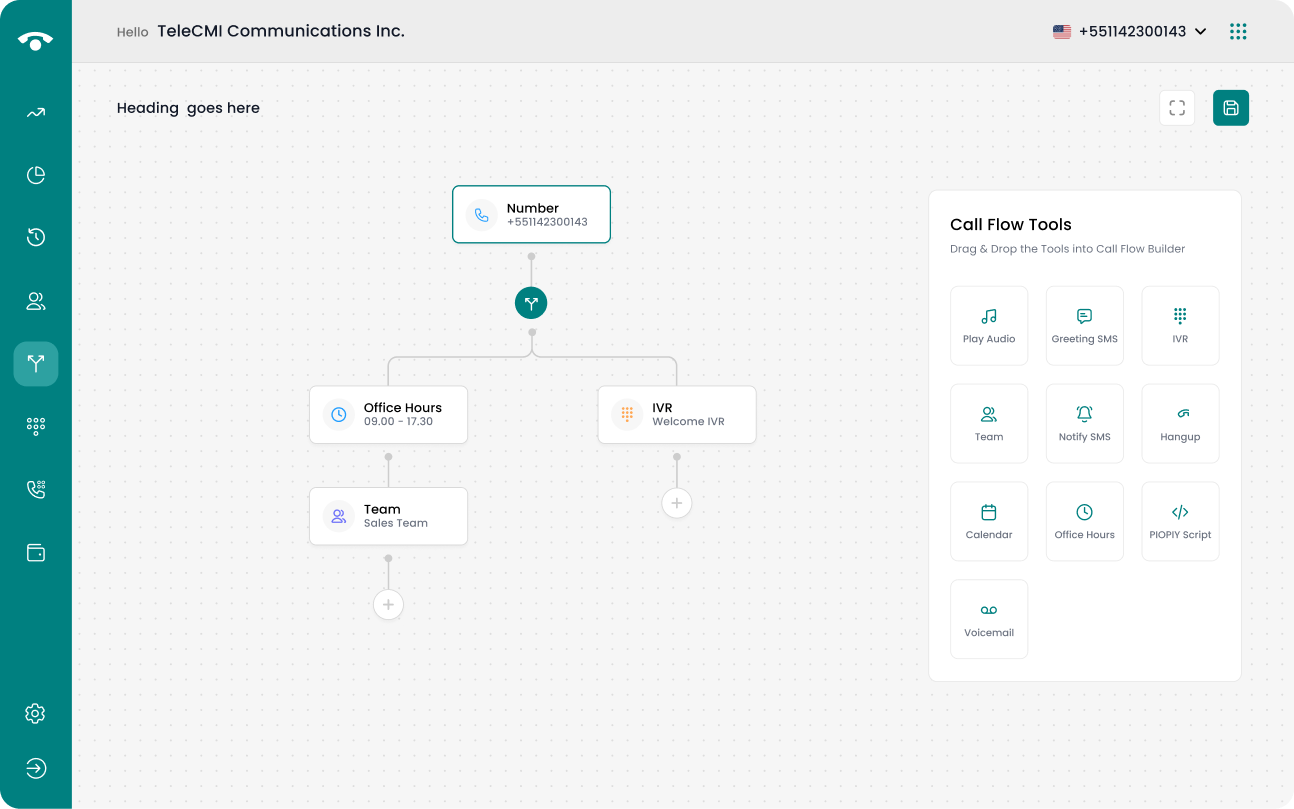
- Visual call flow builder with multi-level menus
- Multilingual prompts across major Indian languages
- Transparent India pricing, 14-day free trial
What Are TeleCMI’s Best Integrations?
Standard SMB CRM connectors
What Are TeleCMI’s Plans & Pricing?
Custom quote, with a 14-day free trial to test before committing.
What Are TeleCMI’s Pros & Cons?
| Pros | Cons |
|---|---|
| Multilingual prompts across major Indian languages | AI capability is minimal — DTMF-based IVR at its core |
| Transparent India pricing | Limited speech recognition |
| 14-day free trial | Basic feature set next to enterprise alternatives |
What Are TeleCMI’s Customers Saying?

G2 reviewers give TeleCMI 4.0/5.
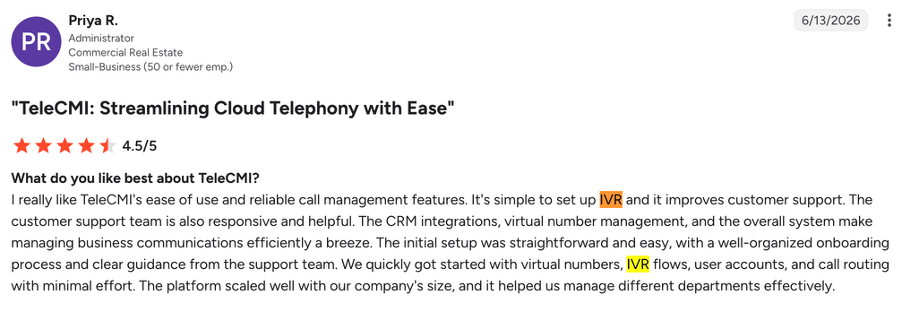
G2 reviewers point to TeleCMI’s IVR-driven call routing as quick to set up for teams migrating off legacy systems.
6. Twilio: Best for Developer and API-First Teams

What Is Twilio?
Twilio’s programmable voice API powers IVR systems globally, and its push into contact center (Flex) and AI engagement makes it a legitimate option even at the platform level.
What Is Twilio Best For?
Engineering-led organizations valuing API flexibility and global scale over localized, managed service.
What Are Twilio’s Key Features?
- Best-in-class documentation and developer experience
- Global carrier network with India voice pricing
- Extensive SDK support and developer community
What Are Twilio’s Best Integrations?
Custom builds via TwiML and Studio
What Are Twilio’s Plans & Pricing?
Usage-based: $0.05–0.07/min for India voice, billed in USD.
What Are Twilio’s Pros & Cons?
| Pros | Cons |
|---|---|
| Best-in-class documentation and developer experience | TRAI/DLT compliance needs developer configuration, not automated management |
| Global carrier network | Hinglish/code-switching isn’t built in natively; runs through third-party TTS |
| Extensive SDK support | No dedicated IST support; USD pricing creates forex exposure |
What Are Twilio’s Customers Saying?
G2 reviewers give Twilio 4.2/5.
Some G2 reviewers note that configuring advanced features like IVR and multichannel workflows can take real technical effort.
7. RingCentral: Best for Global Enterprise UC + Contact Center
What Is RingCentral?
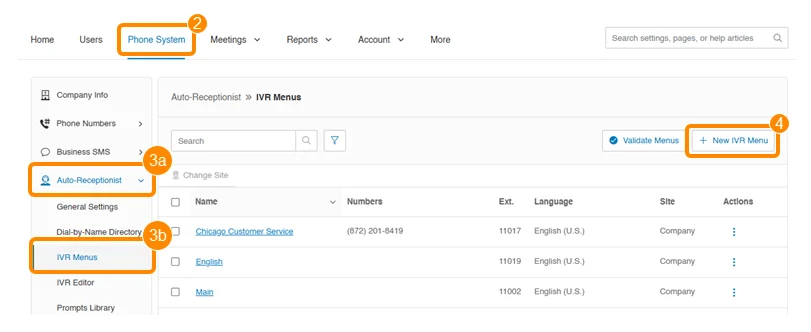
RingCentral dominates unified communications, and its contact center product (RingCX) brings IVR, omnichannel routing, and AI to multinationals already on the platform for business phones.
What Is RingCentral Best For?
Multinational enterprises that already run RingCentral and want a single UC + CC platform.
What Are RingCentral’s Key Features?
- RingCX with IVR, ACD, skills-based routing, omnichannel engagement
- AI Receptionist (AIR) for conversational call handling and appointment booking
- Compelling integration story for existing RingCentral customers
What Are RingCentral’s Best Integrations?
Native RingEX (UCaaS) integration
What Are RingCentral’s Plans & Pricing?
$20–35/user/month for RingEX; RingCX (dedicated contact center) starts at $65–95/user/month.
What Are RingCentral’s Pros & Cons?
| Pros | Cons |
|---|---|
| RingCX with full ACD and skills-based routing | Hinglish and regional-language support is essentially nonexistent at the NLU level |
| AI Receptionist for conversational handling | DLT compliance needs custom configuration |
| Strong for existing RingCentral customers | USD pricing is a cost disadvantage for India-only deployments |
What Are RingCentral’s Customers Saying?
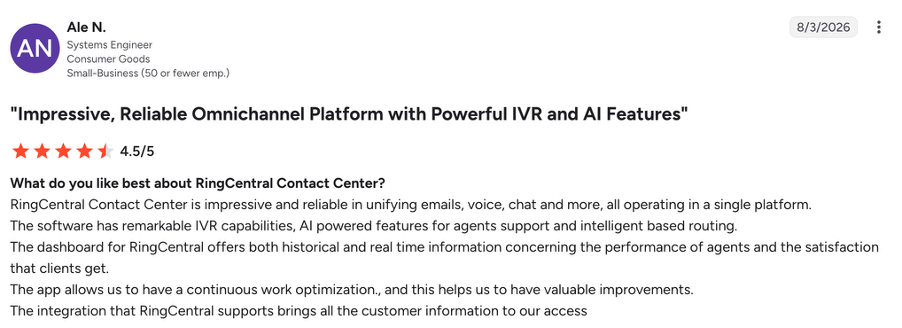
G2 reviewers give RingCentral 4.0/5.
G2 lists IVR among RingCentral Contact Center’s core auto-dialer capabilities, alongside its wider automation toolset.”
8. NICE CXone: Best for Large Enterprise Contact Centers
What Is NICE CXone?
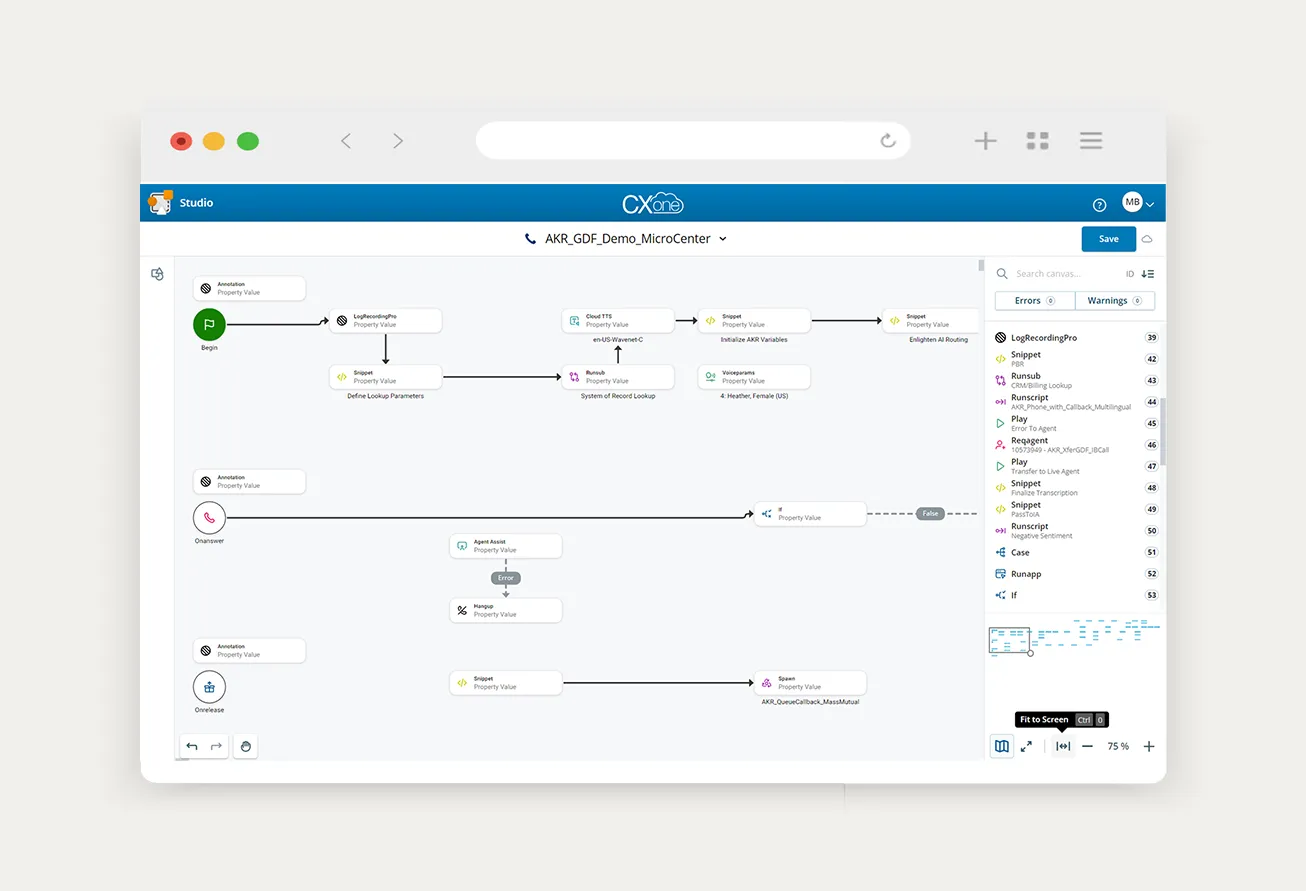
NICE CXone is an enterprise-grade CCaaS platform with one of the more sophisticated IVR products on the market, using NLU to drive self-service on a fine-grained admin design tool (Studio).
What Is NICE CXone Best For?
Large enterprise contact centers (500+ agents) with complex routing needs and the budget to match.
What Are NICE CXone’s Key Features?
- Natural-language self-service with full ACD integration
- Omnichannel routing across 30+ digital channels
- AI-powered analytics, workforce, and quality management included
What Are NICE CXone’s Best Integrations?
Native ACD and analytics stack; Enghouse Interactive for advanced self-service
What Are NICE CXone’s Plans & Pricing?
$110–135/agent/month, scaling with channels, AI, and workforce tools.
What Are NICE CXone’s Pros & Cons?
| Pros | Cons |
|---|---|
| Natural-language self-service with full ACD integration | Hinglish and regional-language support is extremely limited |
| Omnichannel routing across 30+ channels | Pricing sits at the top of the market |
| AI analytics and workforce management included | Implementation runs in months |
What Are NICE CXone’s Customers Saying?
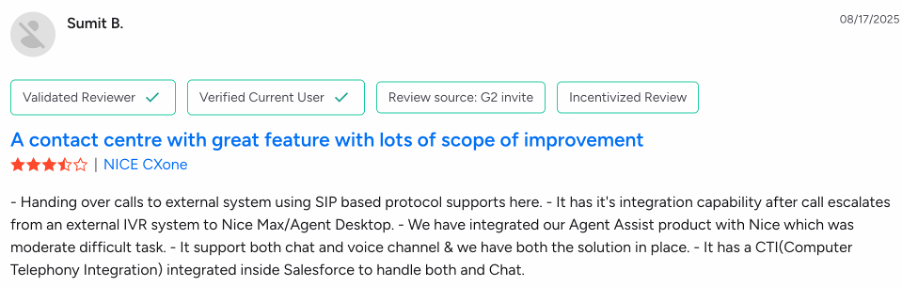
G2 reviewers give NICE CXone 4.3/5.
G2 lists IVR as one of NICE CXone’s core capabilities for customer-to-system interaction at enterprise scale.
9. Genesys: Best for Complex Enterprise Deployments
What Is Genesys?
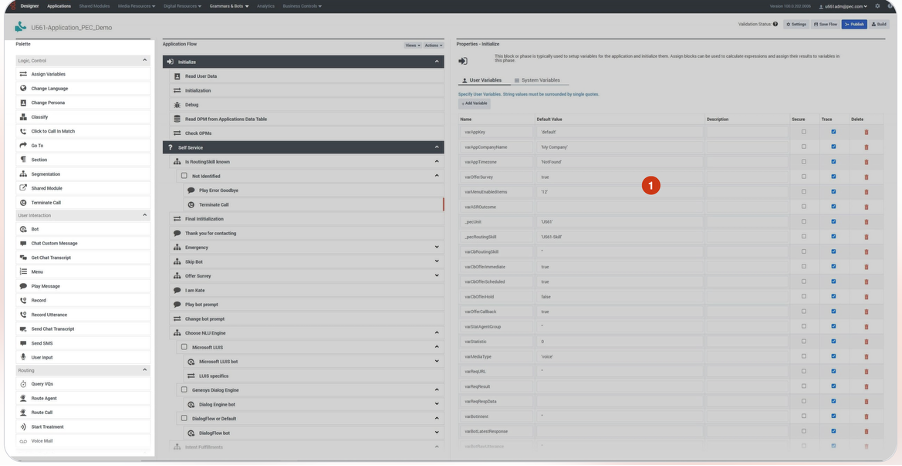
Genesys is one of the heavyweights in enterprise CCaaS, with speech-enabled, AI-driven IVR woven into a broader experience orchestration layer.
What Is Genesys Best For?
Large global enterprises (500+ agents) with complex, multi-region deployments where compliance depth and AI maturity are non-negotiable.
What Are Genesys’s Key Features?
- Predictive routing, Agent Copilot, and Supervisor Copilot for AI-assisted operations
- 30+ compliance certifications, including ISO 42001 for AI governance
- Deep capability for multi-region, multi-language deployments
What Are Genesys’s Best Integrations?
Native experience orchestration and workforce engagement suite
What Are Genesys’s Plans & Pricing?
$75–240/user/month across four Cloud CX tiers, billed annually. Telecom minutes and many CRM integrations are billed separately as add-ons.
What Are Genesys’s Pros & Cons?
| Pros | Cons |
|---|---|
| Predictive routing + Agent/Supervisor Copilot | Same India gap as NICE — no native Hinglish or regional-language understanding |
| 30+ compliance certifications | Global support model, USD pricing |
| Deep multi-region, multi-language capability | Implementation measured in months |
What Are Genesys’s Customers Saying?

G2 reviewers give Genesys 4.1/5.
G2 reviewers describe Genesys as manageable for everyday IVR and routing changes, with a steeper curve on advanced configuration.
10. Talkdesk: Best for Mid-Market Teams Wanting a Visual CCaaS Builder
What Is Talkdesk?
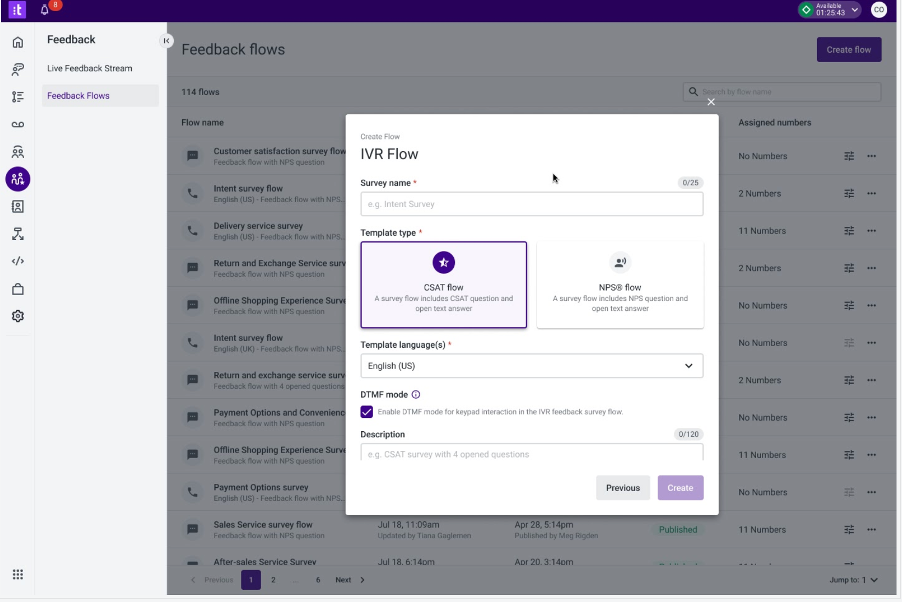
Talkdesk is a global cloud contact center platform recognized as a Leader in Gartner’s 2025 Magic Quadrant for CCaaS, built around a clean visual IVR/flow builder and a strong compliance stack targeting regulated industries specifically.
What Is Talkdesk Best For?
Mid-size to enterprise contact centers, particularly in regulated industries like healthcare and financial services, that want a visual builder without India-specific requirements as the top priority.
What Are Talkdesk’s Key Features?
- Visual IVR/Automation Designer, no-code, across both voice and digital channels
- Deep compliance coverage: SOC 2 Type II + SOC 3, ISO 27001, ISO 22301, ISO/IEC 42001, PCI DSS Level 1, HIPAA (via configuration), GDPR
- Industry Experience Clouds for healthcare and financial services with pre-built integrations (e.g., Epic, core banking systems)
What Are Talkdesk’s Best Integrations?
60–70+ native integrations, including Salesforce, Zendesk, Slack, Shopify
What Are Talkdesk’s Plans & Pricing?
$85–225/user/month across four plans — Digital Essentials ($85), Voice Essentials ($105), Elite ($165), Industry Experience Clouds ($225).
What Are Talkdesk’s Pros & Cons?
| Pros | Cons |
|---|---|
| Visual, no-code IVR/Automation Designer | No confirmed India-specific pricing or DLT compliance automation |
| Deep compliance coverage across 7+ frameworks | True omnichannel is gated to the top (Elite) tier |
| 4–8 week deployment for a typical 100-agent rollout | Standard contracts run 3 years — a real lock-in risk |
What Are Talkdesk’s Customers Saying?

G2 reviewers give Talkdesk 4.4/5.
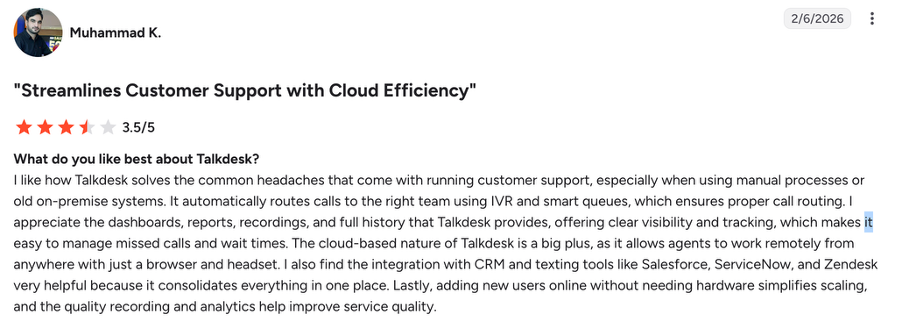
G2 reviewers frequently cite Talkdesk’s configurability — including IVR and call flows — as nimble and fast to deploy.
11. Five9: Best for Medium-to-Large Businesses Wanting Omnichannel Workforce Management
What Is Five9?
Five9 is a global cloud contact center platform trusted by 3,000+ clients worldwide, built around AI-driven IVR, omnichannel routing, and workforce management in one stack.
What Is Five9 Best For?
Medium-to-large businesses that want advanced omnichannel and workforce management features and don’t need India-specific compliance handled natively.
What Are Five9’s Key Features?
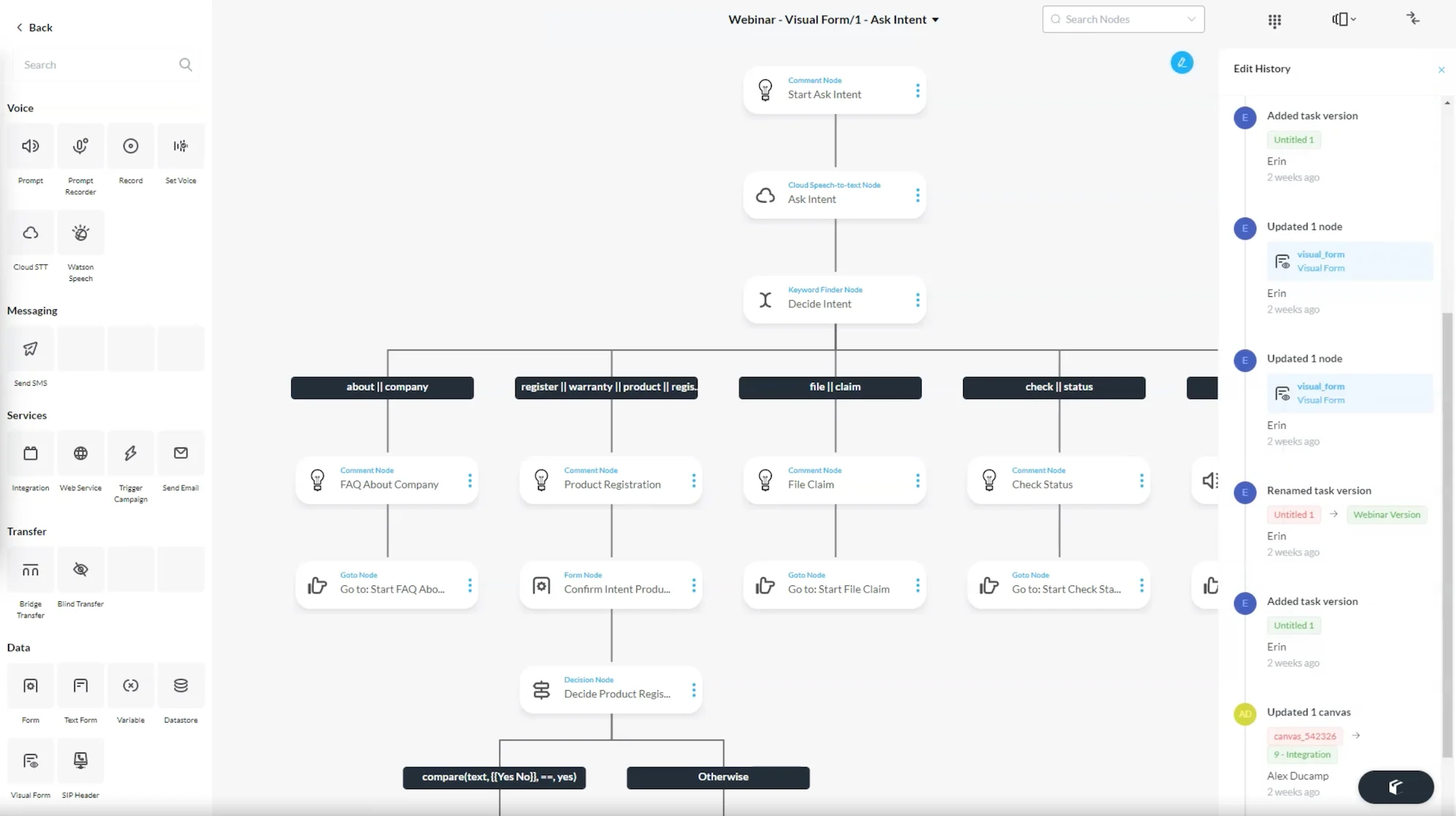
- AI-driven IVR with visual, mobile-friendly design tools
- Strong workforce management and omnichannel routing for medium-to-large deployments
- Deep integrations aimed at both customer experience and agent experience
What Are Five9’s Best Integrations?
Major CRMs and helpdesk platforms via native connectors and open API
What Are Five9’s Plans & Pricing?
From $119/user/month (Digital), $159/user/month (Core); Plus, Pro, and Enterprise tiers are quote-based.
What Are Five9’s Pros & Cons?
| Pros | Cons |
|---|---|
| AI-driven IVR with visual, mobile-friendly tools | No confirmed India-specific pricing, TRAI/DLT automation, or IST-native support |
| Strong workforce management at scale | Starting price sits above most India-native alternatives on this list |
| Deep CX and agent-experience integrations | Complex setup and learning curve for advanced workflows |
What Are Five9’s Customers Saying?

G2 reviewers give Five9 4.1/5.
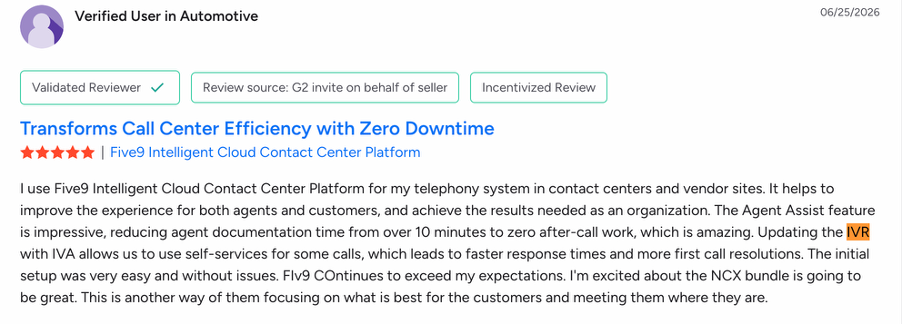
G2 reviewers point to Five9’s call routing and IVR setup as intuitive enough for new agents to ramp quickly.
12. Nextiva: Best Global UCaaS+CCaaS With a Strong India Presence
What Is Nextiva?
Nextiva is a US-built UCaaS and CCaaS platform that has quietly built real India momentum — a Bengaluru operations hub and the Simplify360 acquisition, with enterprise clients reportedly including Tata Play, ICICI Bank, PhonePe, and Meesho.
What Is Nextiva Best For?
Enterprises wanting global platform maturity paired with a genuine, if still growing, India presence.
What Are Nextiva’s Key Features?
- AI-driven IVR bundled with omnichannel engagement (voice, SMS, chat, WhatsApp)
- Serves 100,000+ businesses globally
- A real India operations footprint, unlike most global peers on this list
What Are Nextiva’s Best Integrations?
Simplify360, plus standard enterprise CRM connectors
What Are Nextiva’s Plans & Pricing?
$20–75/user/month, billed in USD — no India-specific pricing published.
What Are Nextiva’s Pros & Cons?
| Pros | Cons |
|---|---|
| Real India operations footprint — unusual among global peers | No India-specific pricing published |
| AI-driven IVR bundled with full omnichannel engagement | Confirm TRAI/DLT compliance and local support directly before shortlisting |
| Serves 100,000+ businesses globally | USD global pricing adds forex exposure for India-only deployments |
What Are Nextiva’s Customers Saying?

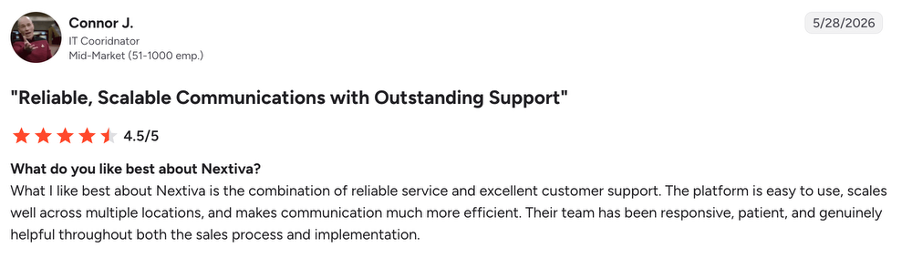
G2 reviewers give Nextiva 4.5/5.
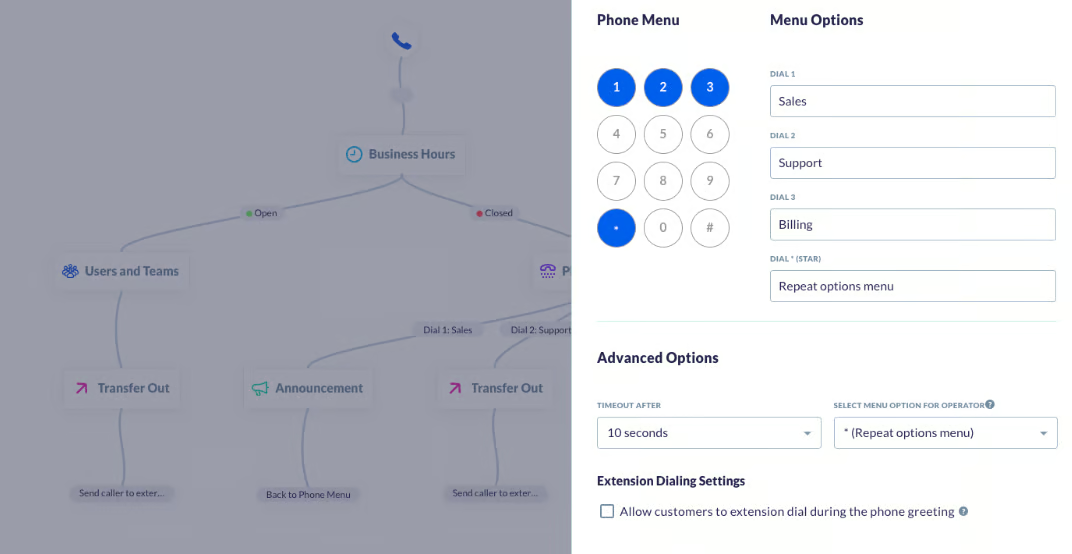
G2 reviewers highlight how easily they can build and edit their IVR call tree as business needs change.
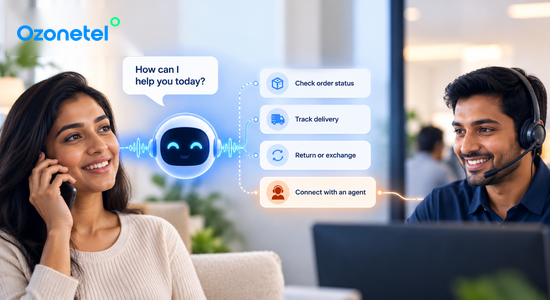
How to Choose the Best IVR Software: 7 Features to Evaluate
Choosing an IVR provider goes beyond comparing pricing or features. The right solution should improve customer experience, reduce agent workload, and scale with your business. Here are the seven factors that matter most when evaluating IVR software.
AI and Conversational Capabilities
Modern IVR software should do more than route calls. It should understand natural language, identify customer intent, automate routine requests, and seamlessly transfer complex conversations to the right agent. Ask vendors for a live demo using real customer queries instead of scripted examples.
Multilingual and Hinglish Support
For businesses serving customers across India, multilingual support is essential. Look for IVR software that understands Hinglish and regional languages in natural conversations, not just pre-recorded prompts. Test the solution with real customer scenarios and different accents before making a decision.
Intelligent Call Routing
The best IVR systems use customer intent, CRM data, language preference, business hours, and agent skills to route calls intelligently. This reduces transfers, shortens wait times, and helps customers reach the right team the first time.
CRM Integrations and Customer Context
An IVR should integrate seamlessly with your CRM and business applications. Screen pops, customer history, previous interactions, and automatic call logging give agents complete context and eliminate manual updates, improving both productivity and customer experience.
Easy IVR Design and Self-Service
Business requirements change frequently. Choose software with a visual drag-and-drop IVR builder that allows your team to create, modify, and deploy call flows without relying on developers. This makes it easier to launch self-service journeys and respond quickly to business needs.
Reliability, Security, and Compliance
Look for providers that offer enterprise-grade reliability with high uptime, multi-carrier redundancy, automatic failover, and TRAI/DLT compliance. These capabilities ensure uninterrupted customer service while keeping outbound communication compliant with Indian telecom regulations.
Transparent Pricing and Scalability
Don’t compare providers on subscription costs alone. Evaluate implementation charges, virtual numbers, usage fees, AI capabilities, integrations, support, and future scalability. Request pricing based on your expected call volume so you understand the total cost of ownership before investing.
How to Implement IVR Software in 5 Simple Steps
Implementing IVR software isn’t just about choosing the right platform. A well-planned setup helps improve call routing, increase self-service adoption, and deliver a better customer experience. Follow these five steps for a successful IVR implementation.
Analyze Your Call Volume and Customer Queries
Review your inbound call volume and identify the most common customer requests. Automate repetitive queries such as order tracking, account balance checks, or appointment scheduling, while routing complex issues to live agents.
Choose the Right Business Number
Select the number that best fits your business. A virtual number works well for most businesses, a local DID number builds regional presence, and a toll-free number makes it easier for customers to contact your support team.
Design an Intuitive IVR Call Flow
Keep your IVR menu simple with no more than two or three levels. Use clear prompts, offer a quick path to a live agent, and regularly test customer journeys to eliminate unnecessary steps.
Integrate Your IVR with CRM and Business Systems
Connect your IVR software with your CRM, helpdesk, and business applications. This enables intelligent call routing, screen pops, automatic call logging, and personalized customer interactions.
Test, Launch, and Optimize
Run a pilot before full deployment and monitor key metrics such as call abandonment, self-service rate, first-call resolution, and customer satisfaction. Use analytics to continuously refine call flows and improve performance.
Final Thoughts
Every IVR platform has its strengths. But if your priority is combining AI, multilingual support, intelligent routing, robust APIs, and enterprise-scale reliability on one platform, Ozonetel is one of the strongest choices in the market.
Compare your shortlist, test real customer journeys, and choose the best IVR software that will grow with your business, not one you’ll outgrow in a year.
Elevate Your CX with Ozonetel’s AI-powered IVR
Frequently Asked Questions
The best IVR software depends on your business requirements. Ozonetel is well suited for enterprises seeking AI-powered automation and multilingual support, while Exotel and MyOperator are popular choices for growing businesses and SMBs.
Basic IVR software starts from around ₹500 per month, while enterprise-grade AI IVR solutions are typically custom-priced based on users, call volume, integrations, and deployment requirements.
Look for conversational AI, multilingual support, intelligent call routing, CRM integrations, no-code workflow design, analytics, high availability, and built-in TRAI/DLT compliance.
Yes. Most modern IVR solutions integrate with CRM platforms such as Salesforce, Zoho CRM, Freshdesk, HubSpot, LeadSquared, and Microsoft Dynamics. CRM integration enables screen pops, automatic call logging, and personalized customer interactions.
Small businesses typically benefit from solutions like MyOperator,, Ozonetel Exotel, and CallHippo because they’re affordable, easy to deploy, and require minimal technical expertise.
Start by evaluating your daily call volume, the languages your customers speak, and any industry-specific compliance requirements. Then compare providers based on AI capabilities, intelligent call routing, CRM integrations, uptime, scalability, and pricing. Always request a live demo and test real customer scenarios before making a decision.
DLT (Distributed Ledger Technology) compliance is a TRAI requirement for businesses making commercial outbound calls in India. It helps prevent spam and ensures legitimate business communications are delivered. Choosing a DLT-compliant IVR provider reduces the risk of blocked calls, blacklisted numbers, and regulatory issues.
Most IVR providers support pre-recorded prompts in major Indian languages such as Hindi, Tamil, Telugu, Kannada, Marathi, Bengali, and Gujarati. However, AI-powered IVR solutions providers like Ozonetel go a step further by understanding Hinglish, regional accents, and natural conversations, enabling more accurate call routing and self-service experiences.
Traditional IVR relies on touch-tone menus and predefined call flows. AI-powered IVR understands natural language, identifies customer intent, automates routine requests, and delivers more personalized customer experiences.
Basic DTMF IVR deploys in 2–5 days. A fully configured IVR with CRM integration and multi-level routing typically takes 3–6 weeks. AI-powered conversational IVR with multiple CRM integrations ranges from 4–8 weeks. CRM integration complexity is the biggest variable.
Don’t rely on feature lists or recorded demos. Ask the vendor to demonstrate a live inbound call where the agent’s screen automatically displays the caller’s details, interaction history, and open tickets. Also verify that call notes, recordings, and outcomes are automatically synced back to your CRM. A truly integrated IVR solution should eliminate manual data entry and give agents complete customer context before they answer the call.
Rakesh Kr Jha
Senior Content Writer
Rakesh, a senior writer at Ozonetel, draws on his decade-long journalism career to write about techn...
Rakesh Kr Jha
Senior Content Writer
Rakesh, a senior writer at Ozonetel, draws on his decade-long journalism career to write about technology. His articles delve into the latest advancements in the tech industry and provide valuable insights on improving customer experience.