15 Best VoIP Service Providers in India (2026)

Prashanth Kancherla
Mar 11, 2026 | 19 mins read

Best for Call Centers and Enterprise
1. Ozonetel
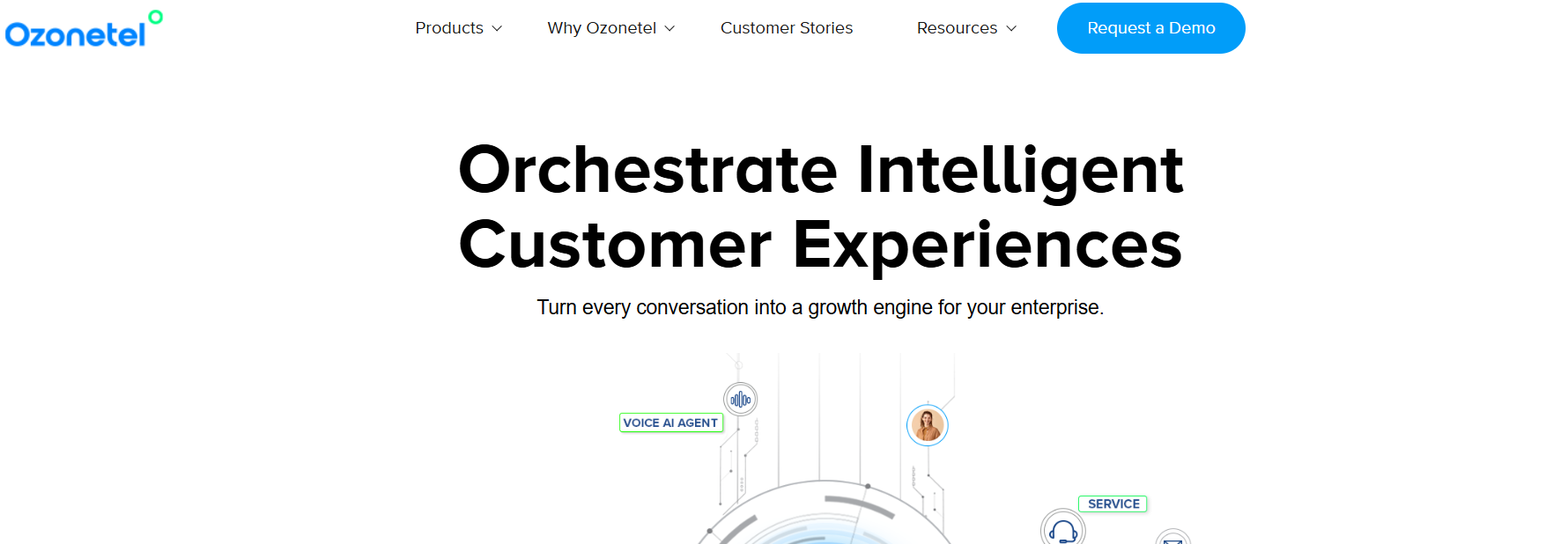
Ozonetel is one of India’s most established cloud telephony and contact center platforms, built specifically for high-volume business communication.
Founded in 2007 and headquartered in Hyderabad, Ozonetel powers customer engagement for over 2,500 businesses across BFSI, e-commerce, healthcare, and logistics. Unlike generic VoIP providers, Ozonetel provides a full-stack cloud contact center suite — meaning you are not just getting calling capabilities, but a complete agent management, analytics, and automation platform.
Key Features
- CloudAgent platform with inbound, outbound, and blended call center support
- AI-powered call analytics, real-time agent assist, and auto-transcription
- Omnichannel support: voice, WhatsApp Business, chat, and SMS in one platform
- Deep CRM integrations: Zoho, HubSpot, Salesforce, Freshdesk, and 20+ others
- Smart IVR, intelligent call routing, and skills-based assignment
- Real-time dashboards and live supervisor monitoring tools
- 9% uptime SLA with India-based infrastructure and data residency
- TRAI-compliant with DoT-licensed cloud telephony
Pricing: Custom pricing based on agent count and usage. Contact Ozonetel for a tailored quote. Free demo available.
Best for: Mid-market to enterprise businesses running contact centers — especially in BFSI, e-commerce, healthcare, and logistics. Teams that need AI-powered quality monitoring and omnichannel capabilities in one platform.
Not ideal for: Very small teams (under 5 users) looking for a simple VoIP line without contact center features. Pricing is not self-serve.
Rating: 4.5/5 on G2 | 4.4/5 on Capterra
Read More: Case Study
Read More: See how AngelOne scaled to over 40K daily calls with cloud VoIP.
2. Tata Tele Business Services — Best for Enterprise Reliability
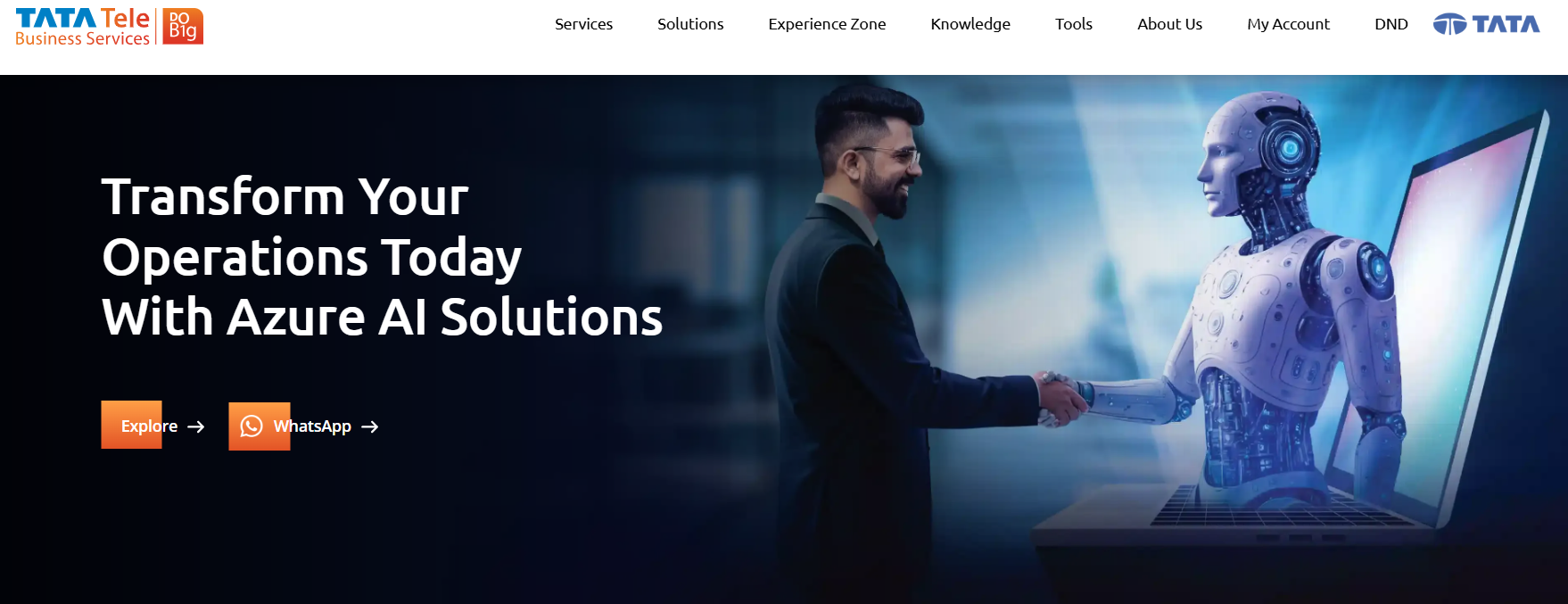
Tata Tele Business Services (TTBS) is the enterprise arm of the Tata Group and one of the most trusted VoIP service providers in Indian business connectivity. Their SmartFlo cloud telephony product offers SIP trunking, cloud PBX, toll-free numbers, and hosted IVR — backed by Tata’s nationwide fiber infrastructure and decades of telecom experience. For enterprises that prioritize uptime guarantees, enterprise-grade SLAs, and the assurance of a Tata brand, TTBS is a natural first consideration.
Key Features
- SmartFlo hosted cloud PBX with multi-location support
- SIP trunking with carrier-grade reliability across India
- Toll-free (1800) and virtual numbers across Indian states
- Multi-level IVR with business hours and holiday routing
- Call recording, analytics, and management dashboards
- Integration with Tata’s broader SD-WAN and connectivity portfolio
- Strong enterprise SLAs and dedicated account management
- Pan-India DoT compliance and regulatory expertise
Pricing: Custom enterprise pricing. Contact TTBS sales for a quote.
Best for: Large enterprises and corporates with existing Tata infrastructure relationships. Businesses that prioritize SLA guarantees and compliance-first deployments over cutting-edge AI features.
Not ideal for: Startups and SMEs — onboarding can be slow and pricing is not transparent for smaller teams. AI capabilities are limited compared to pure-play cloud telephony providers.
Rating: 3.9/5 on G2 | 4.1/5 on Capterra
3. Airtel IQ — Best for Telco-Backed Cloud Telephony
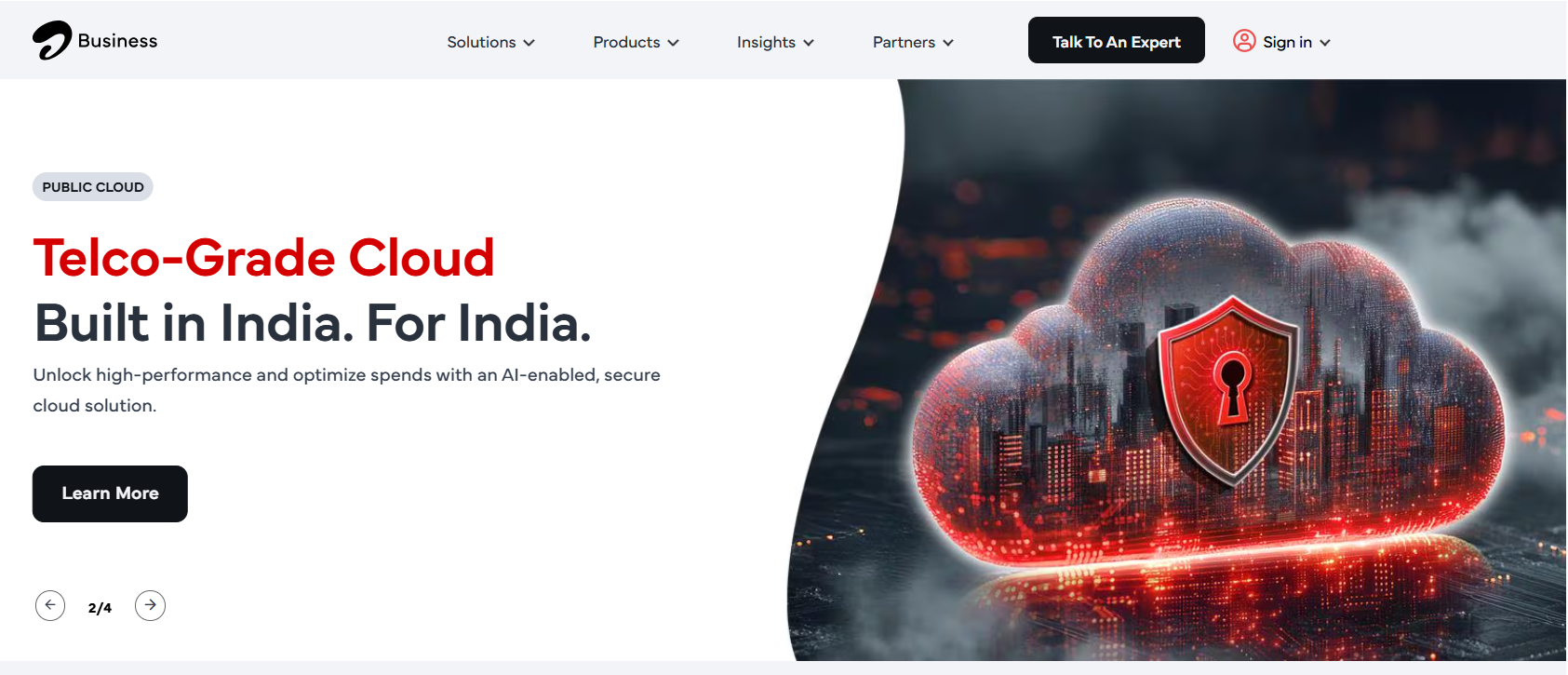
Airtel IQ is Bharti Airtel’s cloud communications platform, offering businesses a full suite of CPaaS capabilities — including voice, SMS, WhatsApp, and number masking.
Backed by Airtel’s carrier network, Airtel IQ delivers strong call quality and low-latency connectivity across India, making it particularly attractive for businesses that want telco-grade reliability without managing on-premise infrastructure. The platform has seen rapid growth among Indian enterprises running OBD (Outbound Dialer) campaigns and missed-call-to-action workflows.
Key Features
- Cloud telephony APIs for voice, SMS, WhatsApp Business, and number masking
- Outbound dialer (OBD) for bulk calling campaigns
- Toll-free and virtual number provisioning across Indian states
- IVR builder with multi-level menu support
- Click-to-call and call tracking capabilities
- Real-time CDR and analytics dashboard
- Carrier-grade infrastructure with Airtel’s national network backbone
- API-first architecture for custom integrations
Pricing: Custom pricing. Contact Airtel IQ for volume-based enterprise packages.
Best for: Enterprises running OBD campaigns, missed-call workflows, or high-volume transactional voice use cases. Businesses already in the Airtel ecosystem or preferring telco-backed infrastructure.
Not ideal for: Teams looking for a feature-rich agent interface or AI-assisted contact center capabilities. Developer bandwidth is needed to make full use of the API-first platform.
Rating: 4.0/5 on G2 | 4.2/5 on Capterra
4. Knowlarity — Best for SMEs and Growing Businesses
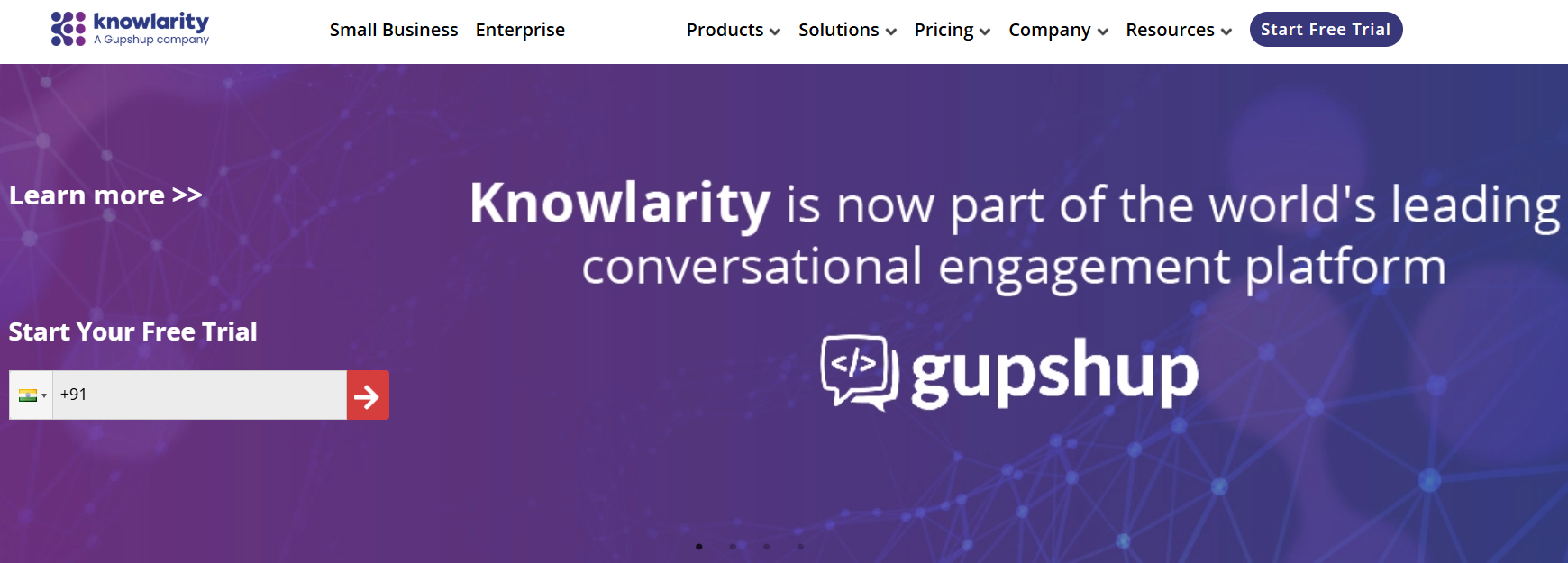
Knowlarity is one of India’s earliest cloud-based VoIP providers, founded in 2009 and now serving over 15,000 businesses across South and Southeast Asia. Their SuperReceptionist platform is particularly popular among growing SMEs that need professional calling features — IVR, toll-free numbers, missed call alerts, and call tracking — without enterprise-level complexity or pricing. Knowlarity has a strong track record in the Indian market and a self-serve setup that makes it easy for smaller teams to get started quickly.
Key Features
- SuperReceptionist cloud PBX with multi-level IVR
- Toll-free (1800) and virtual number management
- Missed call solutions and call-back automation
- Call recording with searchable archive
- CTI integrations: Zoho, Salesforce, HubSpot, and Freshdesk
- Real-time call tracking and team performance dashboards
- Mobile app for agents to receive business calls on personal phones
- WhatsApp Business integration
Pricing: Plans start at approximately Rs.1,499/month. Scales with users and features.
Best for: SMEs, growing startups, and mid-market businesses that need professional cloud telephony with straightforward self-serve setup. Particularly strong for teams running missed-call campaigns or regional IVR workflows.
Not ideal for: Large contact centers requiring advanced AI, agent assist, or real-time coaching. Some users report customer support responsiveness issues at scale.
Rating: 4.2/5 on G2 | 4.3/5 on Capterra
5. FreJun — Best for Sales Teams
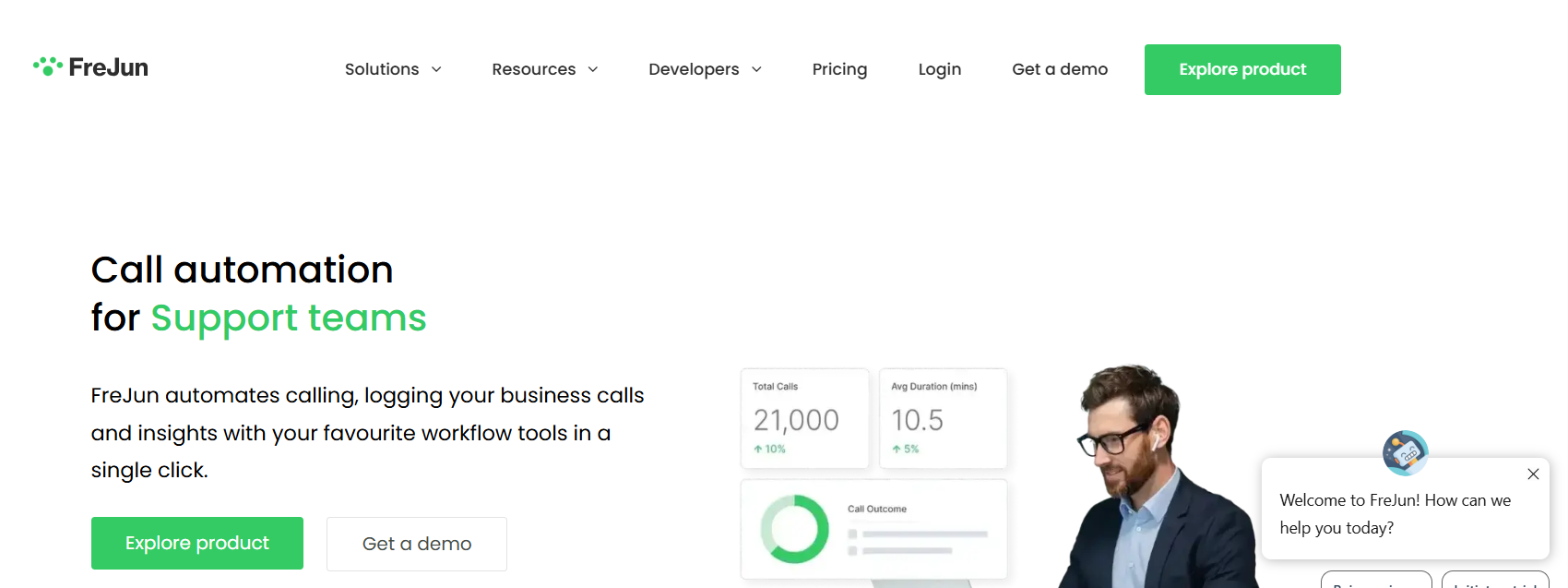
FreJun is a cloud calling platform built with sales teams in mind. Unlike traditional VoIP providers that serve all use cases equally, FreJun is laser-focused on the outbound sales workflow — with one-click calling from CRMs, automatic call logging, AI-powered call transcription, and conversation intelligence built into the core product. It has gained strong traction among Indian SaaS companies and growth-stage startups whose sales reps spend the majority of their day on calls.
Key Features
- One-click calling directly from CRM: HubSpot, Salesforce, Zoho, Pipedrive, and more
- Automatic call recording and AI-powered transcription
- Conversation intelligence: call summaries, keyword tracking, and deal signals
- and auto-dialer for high-volume prospecting
- Real-time call coaching and whisper mode for managers
- Call analytics by rep, team, and campaign
- Local number support for calling with regional numbers
- Mobile app with full feature parity
Pricing: Plans start at approximately Rs.1,999/user/month. Free trial available.
Best for: B2B sales teams, SDR/BDR teams, and revenue operations teams who want CRM-native calling with AI coaching. Strong for SaaS companies and high-velocity inside sales environments.
Not ideal for: Inbound contact centers or customer support teams — FreJun is built for outbound sales, not multi-channel customer service. Limited IVR and inbound routing capabilities.
Rating: 4.6/5 on G2 | 4.5/5 on Capterra
6. Exotel — Best for High-Volume Outbound
Exotel is a Bengaluru-based cloud VoIP platform that has carved out a strong reputation among Indian enterprises for high-reliability, high-volume voice operations. Originally known for its robust IVR and cloud PBX products, Exotel has evolved into a full-stack customer engagement platform with AI-powered conversation analytics and omnichannel support. It is particularly popular in the logistics, fintech, and hyperlocal delivery sectors — where massive outbound call volumes and number masking for privacy are non-negotiable requirements.
Key Features
- Cloud PBX, IVR, and ACD (Automatic Call Distributor)
- Number masking for customer and agent privacy
- High-volume OBD (Outbound Dialer) with NDNC compliance
- AI-powered conversation analytics and call transcription
- Smart call routing based on agent skills and availability
- WhatsApp Business, SMS, and voice in a unified platform
- Applet framework for custom workflow automation without coding
- Enterprise SLAs with dedicated infrastructure for large customers
Pricing: Custom pricing based on usage and scale. Contact Exotel for enterprise packages.
Best for: High-growth startups, logistics companies, fintech firms, and enterprises with large outbound volumes. Teams that need number masking, compliance-grade call recording, and API-extensible workflows.
Not ideal for: Small teams on a tight budget — Exotel’s pricing and product complexity are better suited to mid-market and enterprise customers with technical resources to manage the platform.
Rating: 4.3/5 on G2 | 4.4/5 on Capterra
7. TeleCMI — Best for SMEs Wanting Affordable AI Features
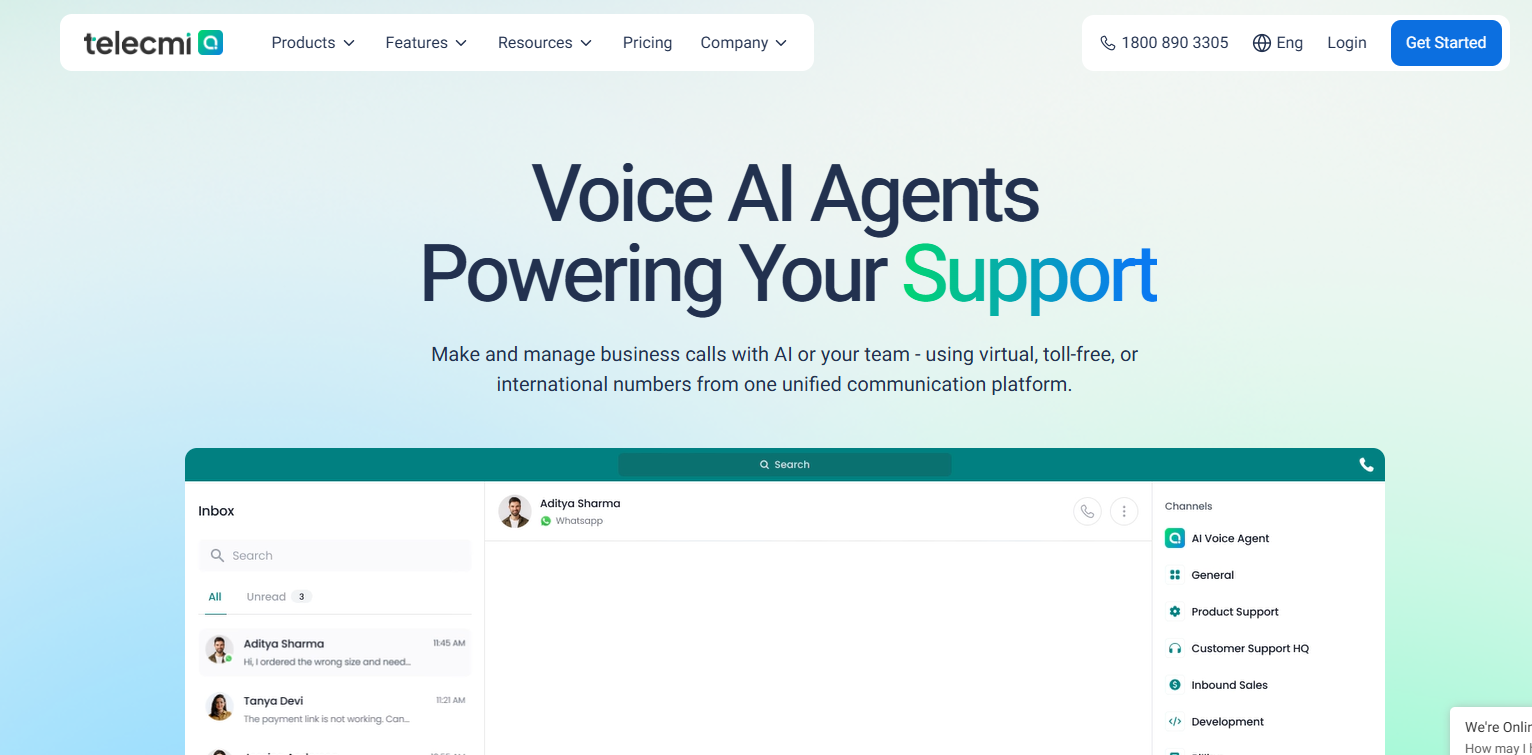
TeleCMI is a Chennai-based VoIP service provider that has built a strong reputation among Indian SMEs for delivering AI-powered contact center features at price points smaller teams can afford. Founded and headquartered in India, TeleCMI offers cloud VoIP solutions including virtual phone numbers in India and 57+ countries, call center automation, WhatsApp integration, and real-time analytics—backed by 7+ global data centers and a 99.99% uptime SLA.
Key Features
- AI-powered call routing, auto-transcription, and post-call analytics with 500+ metrics
- Virtual phone numbers in India and 57+ countries
- WhatsApp Business integration for seamless customer engagement
- Multi-level IVR and smart call distribution
- Call barge, whisper, and live monitoring for supervisor control
- CRM integrations with popular business tools
- ISO-certified platform with 99.99% uptime across 7+ global data centers
- Free plan available; paid plans start at approximately $15/user/month
- 24/7 customer support with strong local responsiveness
Pricing: Free plan available. Paid plans start at approximately $15/user/month (around Rs.1,250). Custom plans for larger teams.
Best for: Indian SMEs and mid-market businesses that want AI-assisted calling, WhatsApp integration, and international number support without paying enterprise prices. Strong for marketing agencies, fast-growing startups, and teams with global reach requirements.
Not ideal for: Very large enterprise contact centers needing advanced workforce management or highly complex multi-tier routing. The reporting dashboard has room to improve based on user feedback.
Rating: 4.5/5 on G2 | 4.4/5 on Software Suggest
8. Unified Voice — Best for Security and Compliance-First Businesses
Unified Voice (unifiedvoice.in) is a Chennai-based VoIP and unified communications provider that has been operational since 2012, serving over 5,000 businesses across India. What sets Unified Voice apart from most Indian cloud telephony providers is its emphasis on security and regulatory compliance — the platform is HIPAA and SOC 2 certified, making it one of the very few India-headquartered VoIP providers suitable for healthcare, legal, and financial services organizations that cannot compromise on data protection. Beyond compliance, Unified Voice offers a broad suite that includes voice, e-SMS, e-Fax, AI voice bots, video meetings, and cloud contact center capabilities.
Key Features
- HIPAA and SOC 2 compliant VoIP infrastructure — rare among India-based providers
- AI voice bots for automated inbound call handling
- e-SMS (two-way business SMS) and e-Fax for regulated industries
- Cloud contact center with IVR, call routing, and agent management
- Video conferencing and online meetings built into the platform
- CRM and ERP integrations for streamlined workflows
- End-to-end encrypted calls with AI threat monitoring
- IP PBX support with SIP phones, headsets, and conferencing hardware
- 99% uptime with carrier-grade infrastructure
- 24/7 support via phone, chat, and email
Pricing: Transparent pricing tiers available on website. Custom enterprise packages available. Contact Unified Voice for a quote.
Best for: Healthcare clinics, hospitals, legal firms, BFSI companies, and any India-based organization where data privacy compliance (HIPAA, SOC 2) is non-negotiable. Also well-suited to businesses wanting an all-in-one voice, messaging, and fax platform.
Not ideal for: Pure contact center operations that need advanced agent performance analytics or power dialers. Unified Voice’s strength is compliance and breadth of channels, not call center-specific AI coaching tools.
Rating: 4.3/5 on Google Reviews | Trusted by 5,000+ businesses since 2012
9. MyOperator — Best for SME Inbound Call Management
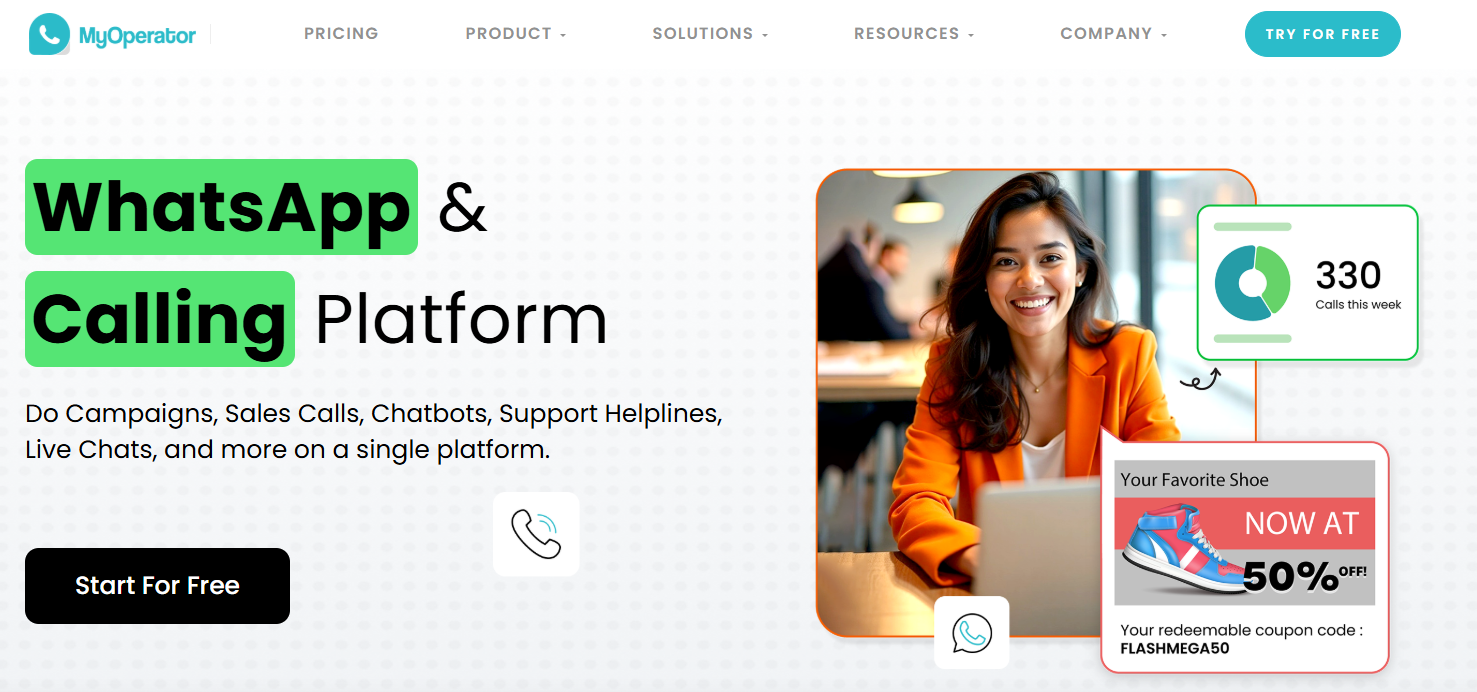
MyOperator is a Delhi-based VoIP service provider focused on helping Indian SMEs manage inbound calls professionally. Their virtual receptionist, IVR-first product delivers affordable cloud VoIP that has become popular with small businesses wanting to present a larger, more organized phone presence without investing in full contact center infrastructure. With quick setup, transparent pricing, and strong local customer support, MyOperator is a solid choice for businesses primarily handling inbound customer calls.
Key Features
- Virtual receptionist with multi-level IVR
- Toll-free (1800) and virtual number management
- Call routing by department, agent, and time of day
- Real-time call tracking and missed call alerts
- Call recording with cloud storage
- CRM integration with Zoho, HubSpot, and Leadsquared
- WhatsApp Business integration for missed call follow-up
- Mobile app for agents
Pricing: Plans start at approximately Rs.2,499/month. Transparent pricing tiers available on website.
Best for: Indian SMEs, retailers, clinics, real estate agencies, and professional services firms primarily managing inbound customer calls. Teams that want quick, no-fuss setup with local support.
Not ideal for: Outbound-heavy sales teams or contact centers needing power dialers, AI coaching, or advanced agent performance analytics.
Rating: 4.4/5 on G2 | 4.3/5 on Capterra
10. Nextiva — Best for Unified Communications Across Global Teams
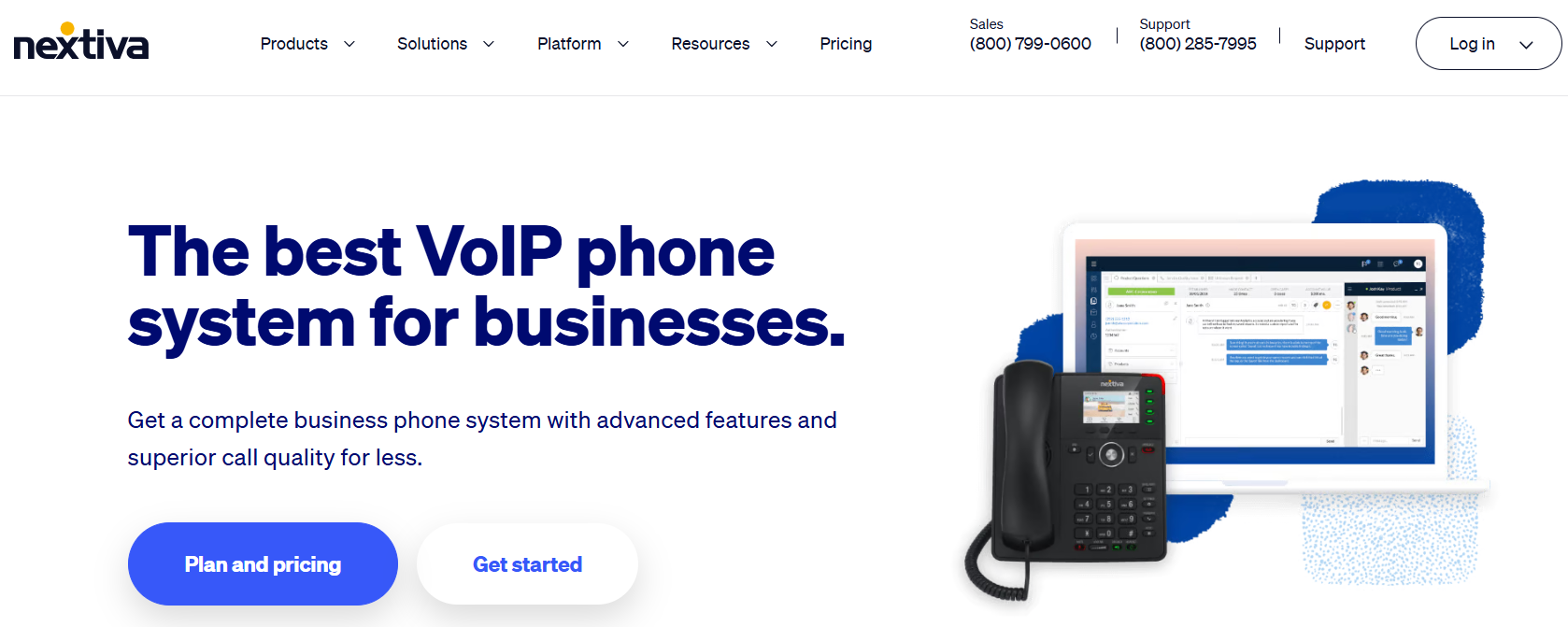
Nextiva is a US-based VoIP service provider and unified customer experience management platform that brings together voice, video, team messaging, SMS, social media, and email interactions in a single dashboard. Serving over 1 million users globally—including brands like IKEA and DHL—Nextiva is best known for its 99.999% uptime, comprehensive AI capabilities, and the breadth of its omnichannel platform. For Indian businesses with international operations, US or UK-facing teams, or global customers, Nextiva’s business VoIP and unified communications suite offers channel consolidation that few India-native providers can match.
Key Features
- Unified platform: voice, video, SMS, team chat, email, and social media in one interface
- AI-powered transcription, voicemail-to-text, sentiment analysis, and call summaries
- 999% uptime with redundant data center infrastructure
- Auto-attendant, multi-level IVR, and intelligent call routing
- Deep integrations: Salesforce, HubSpot, Zoho, Zendesk, Microsoft Teams, Google Workspace
- Online reputation management: tracks Google and Yelp reviews within the platform
- Workforce management and agent performance tools
- HIPAA and PCI-compliant enterprise plans
Pricing: Core plan from $15/user/month (approximately Rs.1,250). Engage and Power Suite for advanced contact center features. Annual billing recommended for best rates.
Best for: Indian companies with US or UK-facing teams or global operations, and businesses that want a truly unified communications platform covering calls, video, messaging, and social media from one interface.
Not ideal for: India-only domestic businesses — Nextiva’s infrastructure and support are US-centric, and features like unlimited calling apply primarily to the US and Canada. Advanced contact center features require higher-tier plans at significant additional cost.
Rating: 4.5/5 on G2 | 4.6/5 on Capterra
11. Vonage Business Communications — Best for API-Driven Enterprise Communication
Vonage, now owned by Ericsson, is one of the longest-standing names in the global VoIP industry. Its Vonage Business Communications platform combines cloud PBX, video meetings, team messaging, and SMS in a single solution, while its developer-grade Communications API platform is one of the most powerful in the market for custom voice and messaging workflows. For Indian enterprises with strong technical teams that need to build custom call flows, number masking, or deeply integrated telephony into their own applications, Vonage’s API layer is hard to beat.
Key Features
- Cloud PBX with unlimited domestic calling, SMS/MMS, and voicemail
- Vonage Meetings: video conferencing for up to 200 participants
- Team messaging and file sharing within the VBC app
- Vonage Communications APIs: voice, SMS, WhatsApp, and number insight APIs
- Virtual receptionist with custom call routing
- Call recording, call monitoring, and call analytics
- CRM integration: Salesforce, HubSpot, Zoho, Zendesk, and Microsoft Dynamics
- Global coverage: virtual numbers and calling in 35+ countries
Pricing: Mobile plan from $13.99/line/month (annual). Premium at $20.99/line/month. Advanced at $27.99/line/month. Note: key features like call recording and CRM integrations require add-ons or higher tiers.
Best for: Enterprises and technology companies that need powerful Communications APIs to build custom voice workflows, global virtual numbers, or tightly integrated telephony within their own applications.
Not ideal for: Indian SMEs looking for transparent all-in pricing — Vonage’s total cost climbs significantly with necessary add-ons. India-specific local support is limited, and some users have flagged billing transparency concerns.
Rating: 4.0/5 on G2 | 3.9/5 on Capterra
12. CallHippo — Best for Startups and Global Teams
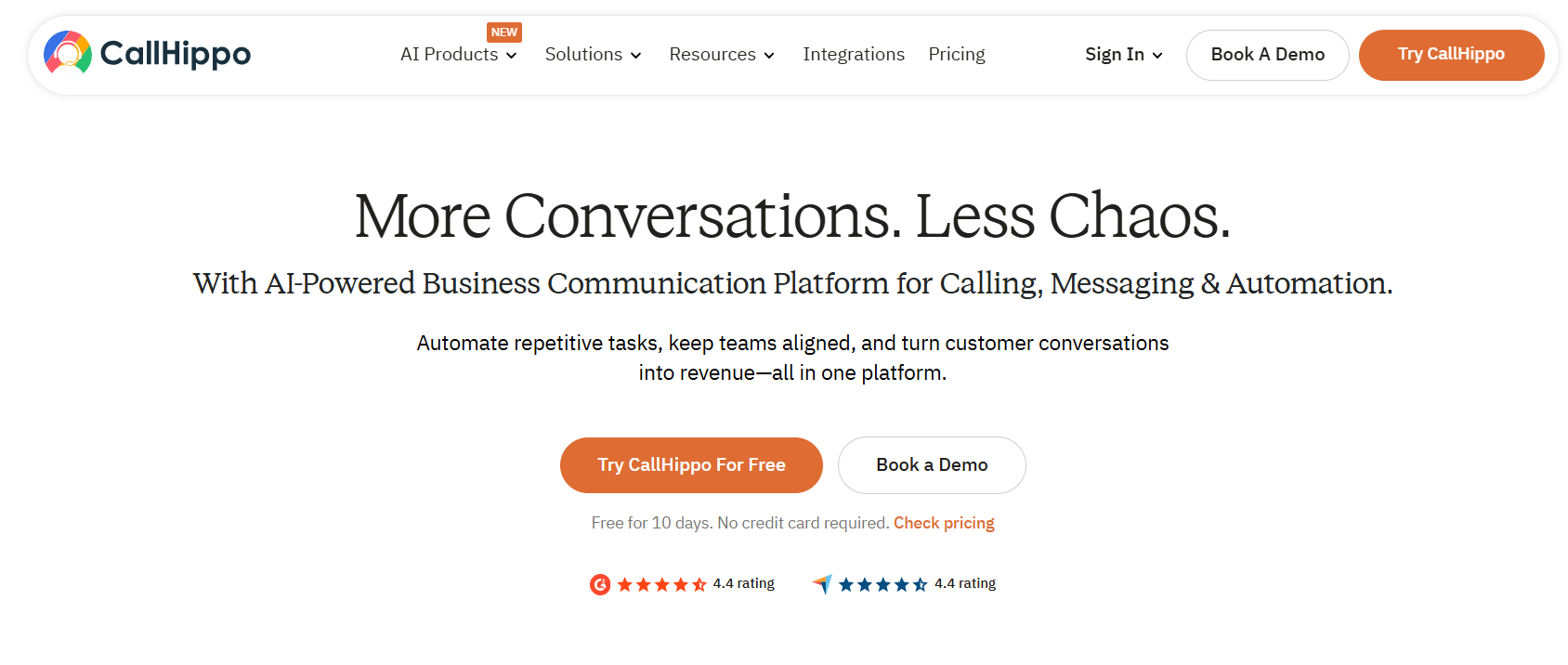
CallHippo is a global virtual phone system powered by VoIP technology that is popular with Indian startups serving international markets. Its biggest selling point is the ability to set up virtual phone numbers in 50+ countries within minutes—making it the go-to choice for founders and small teams that need to appear local to US, UK, or Australian customers from day one. The platform also offers basic CRM integrations, call recording, and team collaboration features at entry-level pricing accessible for early-stage companies.
Key Features
- Virtual phone numbers in 50+ countries including US, UK, and Australia
- 3-minute setup with no hardware required
- Call recording, voicemail, and call forwarding
- CRM integration: HubSpot, Salesforce, Pipedrive, and Zoho
- Power dialer and auto-dialer for outbound teams
- Call analytics and team performance tracking
- Mobile and desktop apps for softphone access
- IVR and call routing for small teams
Pricing: Plans start at approximately Rs.1,600/user/month (~$20/user/month). Free trial available.
Best for: Indian startups targeting international markets, small remote teams, and early-stage companies that need global virtual numbers at affordable pricing.
Not ideal for: India-focused contact centers needing advanced inbound routing, complex IVR, or AI-assisted quality management. India-based customer support is limited — mostly handled via tickets.
Rating: 4.2/5 on G2 | 4.1/5 on Capterra
13. Servetel — Best for Budget-Conscious Indian SMEs
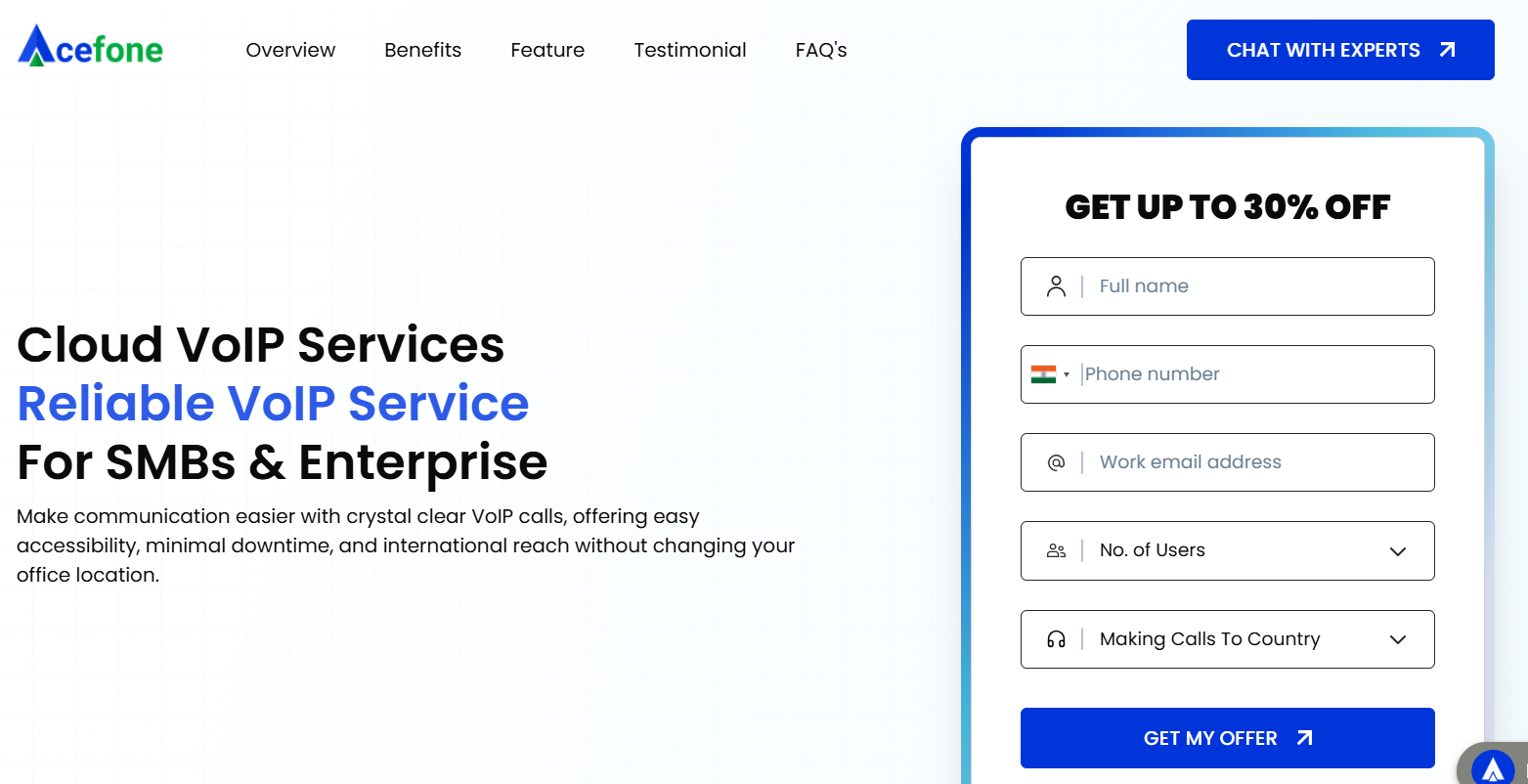
Servetel is a Noida-based cloud telephony provider that has built a loyal customer base among Indian SMEs looking for reliable, no-frills VoIP at competitive price points. While it does not have the AI capabilities or omnichannel features of larger platforms, Servetel covers the fundamentals well: IVR, toll-free numbers, call recording, and basic analytics — at pricing that makes it accessible for businesses with tight budgets and straightforward communication needs.
Key Features
- Cloud PBX with multi-level IVR
- Toll-free (1800) and virtual number provisioning
- Call recording and cloud storage
- Basic call analytics and reporting
- Click-to-call widget for websites
- Missed call alerts and auto callback
- Sticky agent routing for personalized call handling
- 24/7 India-based customer support
Pricing: Plans start at approximately Rs.999/month. Affordable entry-level tiers for small teams.
Best for: Small Indian businesses, micro-enterprises, and startups on tight budgets that need basic cloud telephony features without AI, advanced analytics, or enterprise-grade SLAs.
Not ideal for: Growing businesses that will quickly outgrow basic features. No AI capabilities, limited CRM integrations, and the feature set may feel restrictive for teams scaling beyond 20 agents.
Rating: 4.1/5 on G2 | 4.2/5 on Capterra
14. Grasshopper — Best for Solopreneurs and Micro-Businesses
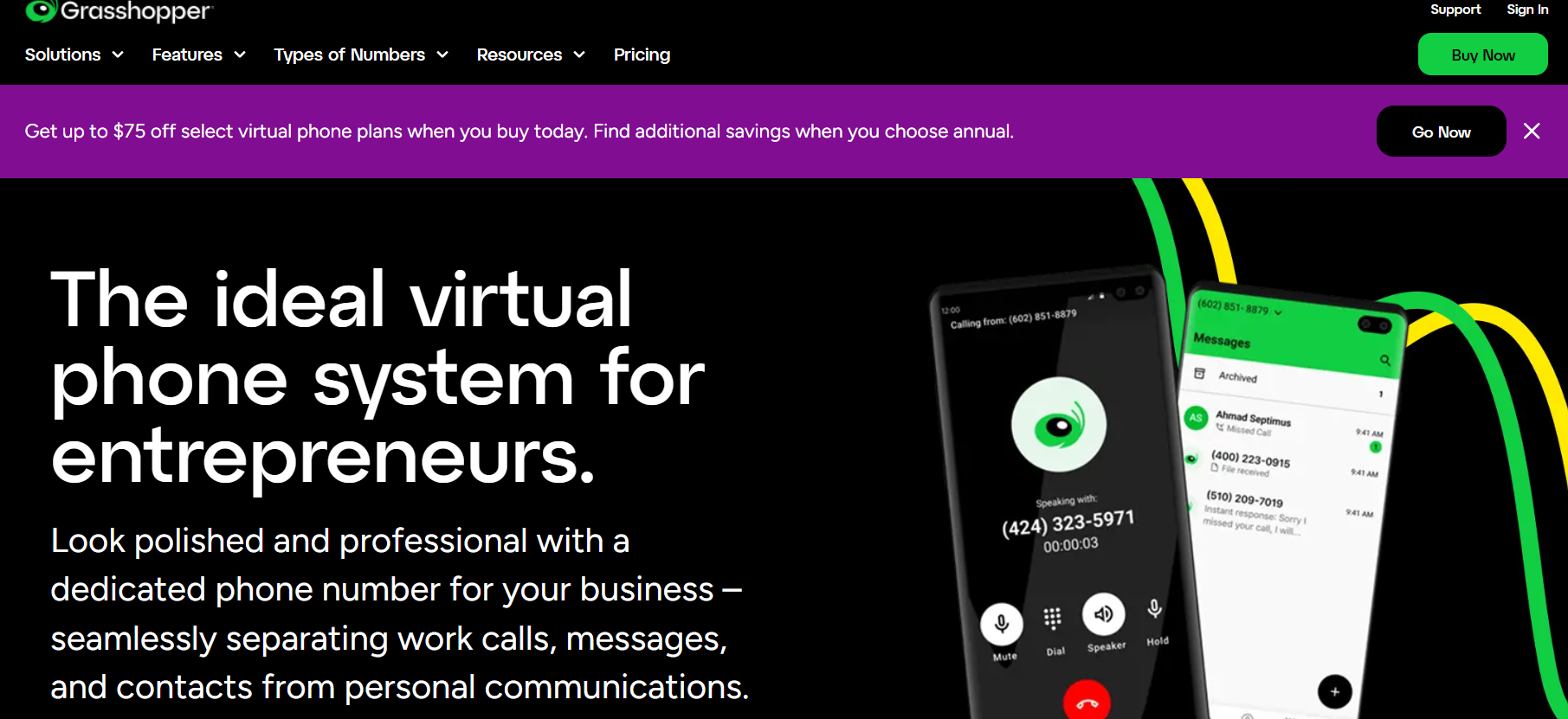
Grasshopper, now owned by GoDaddy, is a US-based virtual phone system designed specifically for solopreneurs, freelancers, and very small businesses that want a professional business phone number without the complexity or cost of a full VoIP platform. The premise is simple: you get a separate business number (local, toll-free, or vanity) that rings on your existing personal mobile or desktop — keeping business and personal calls cleanly separated without carrying two phones. It is used by over 350,000 customers globally and is particularly relevant for Indian entrepreneurs running US-facing businesses or freelancers serving international clients.
Key Features
- Local, toll-free, or vanity US business number that forwards to your existing phone
- Unlimited business calls and texts via mobile and desktop apps
- Voicemail transcription delivered to your email
- Auto-attendant with custom greetings for professional call handling
- Call forwarding and simultaneous ring across multiple devices
- Ruby live receptionist add-on for human call answering
- Voice Studio for professionally recorded custom greetings
- Virtual fax capability
Pricing: True Solo from $14/month (~Rs.1,165). Solo Plus from $25/month. Small Business from $55/month. 7-day free trial. Note: add-ons for call blasting, extra numbers, and international calling increase total cost.
Best for: Indian solopreneurs, freelancers, and very small businesses that serve US or international clients and want a US business number forwarding to their Indian mobile. Startup founders who want to project a professional presence before investing in a full phone system.
Not ideal for: Businesses needing India-based calling, local Indian numbers, or any contact center functionality. Grasshopper calling is effectively limited to the US and Canada, with no India-specific compliance or local number support. Not suitable for teams beyond 10 users.
Rating: 4.0/5 on G2 | 4.1/5 on Capterra
15. RingCentral — Best for Global Enterprise Communication
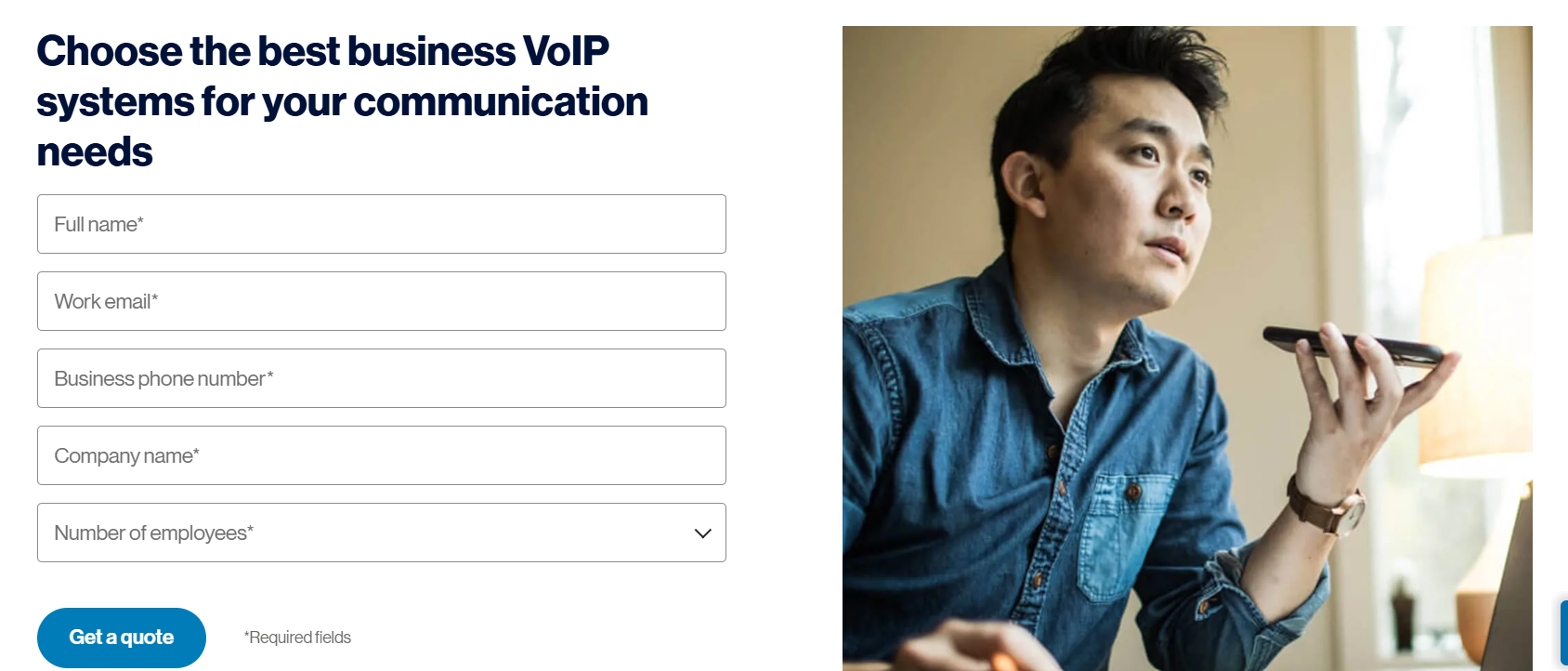
RingCentral is a US-headquartered cloud VoIP platform and unified communications giant serving over 400,000 businesses globally. Its RingEX platform combines cloud PBX, video conferencing, team messaging, and contact center capabilities in a single solution—making it a strong choice for multinational companies and large Indian enterprises with significant global operations. RingCentral’s AI capabilities are among the most advanced in the market, including real-time transcription, conversation intelligence, and AI-powered meeting summaries.
Key Features
- Unified communications: voice, video, messaging, and fax in one platform
- AI-powered transcription, call summaries, and conversation intelligence
- Global virtual numbers in 100+ countries
- RingCentral Contact Center with omnichannel routing
- 300+ integrations including Microsoft 365, Google Workspace, and Salesforce
- Advanced analytics and business intelligence dashboards
- Team messaging and video meetings built in
- Enterprise-grade security and compliance (HIPAA, GDPR, SOC 2)
Pricing: Plans start at approximately Rs.1,400/user/month (~$20/user/month). Enterprise pricing on request.
Best for: Multinational companies with India operations, large enterprises with globally distributed teams, and organizations needing a single unified communications platform across regions.
Not ideal for: India-focused SMEs or contact centers — local India support can be slow, and the platform’s global feature set adds cost and complexity that smaller teams do not need. Onboarding requires dedicated IT resources.
Rating: 4.1/5 on G2 | 4.0/5 on Capterra










15 Best VoIP Service Providers in India (2026)
Prashanth Kancherla
Mar 11, 2026 | 19 mins read
Best for Call Centers and Enterprise
1. Ozonetel
Ozonetel is one of India’s most established cloud telephony and contact center platforms, built specifically for high-volume business communication.
Founded in 2007 and headquartered in Hyderabad, Ozonetel powers customer engagement for over 2,500 businesses across BFSI, e-commerce, healthcare, and logistics. Unlike generic VoIP providers, Ozonetel provides a full-stack cloud contact center suite — meaning you are not just getting calling capabilities, but a complete agent management, analytics, and automation platform.
Key Features
- CloudAgent platform with inbound, outbound, and blended call center support
- AI-powered call analytics, real-time agent assist, and auto-transcription
- Omnichannel support: voice, WhatsApp Business, chat, and SMS in one platform
- Deep CRM integrations: Zoho, HubSpot, Salesforce, Freshdesk, and 20+ others
- Smart IVR, intelligent call routing, and skills-based assignment
- Real-time dashboards and live supervisor monitoring tools
- 9% uptime SLA with India-based infrastructure and data residency
- TRAI-compliant with DoT-licensed cloud telephony
Pricing: Custom pricing based on agent count and usage. Contact Ozonetel for a tailored quote. Free demo available.
Best for: Mid-market to enterprise businesses running contact centers — especially in BFSI, e-commerce, healthcare, and logistics. Teams that need AI-powered quality monitoring and omnichannel capabilities in one platform.
Not ideal for: Very small teams (under 5 users) looking for a simple VoIP line without contact center features. Pricing is not self-serve.
Rating: 4.5/5 on G2 | 4.4/5 on Capterra
Read More: Case Study
Read More: See how AngelOne scaled to over 40K daily calls with cloud VoIP.
2. Tata Tele Business Services — Best for Enterprise Reliability
Tata Tele Business Services (TTBS) is the enterprise arm of the Tata Group and one of the most trusted VoIP service providers in Indian business connectivity. Their SmartFlo cloud telephony product offers SIP trunking, cloud PBX, toll-free numbers, and hosted IVR — backed by Tata’s nationwide fiber infrastructure and decades of telecom experience. For enterprises that prioritize uptime guarantees, enterprise-grade SLAs, and the assurance of a Tata brand, TTBS is a natural first consideration.
Key Features
- SmartFlo hosted cloud PBX with multi-location support
- SIP trunking with carrier-grade reliability across India
- Toll-free (1800) and virtual numbers across Indian states
- Multi-level IVR with business hours and holiday routing
- Call recording, analytics, and management dashboards
- Integration with Tata’s broader SD-WAN and connectivity portfolio
- Strong enterprise SLAs and dedicated account management
- Pan-India DoT compliance and regulatory expertise
Pricing: Custom enterprise pricing. Contact TTBS sales for a quote.
Best for: Large enterprises and corporates with existing Tata infrastructure relationships. Businesses that prioritize SLA guarantees and compliance-first deployments over cutting-edge AI features.
Not ideal for: Startups and SMEs — onboarding can be slow and pricing is not transparent for smaller teams. AI capabilities are limited compared to pure-play cloud telephony providers.
Rating: 3.9/5 on G2 | 4.1/5 on Capterra
3. Airtel IQ — Best for Telco-Backed Cloud Telephony
Airtel IQ is Bharti Airtel’s cloud communications platform, offering businesses a full suite of CPaaS capabilities — including voice, SMS, WhatsApp, and number masking.
Backed by Airtel’s carrier network, Airtel IQ delivers strong call quality and low-latency connectivity across India, making it particularly attractive for businesses that want telco-grade reliability without managing on-premise infrastructure. The platform has seen rapid growth among Indian enterprises running OBD (Outbound Dialer) campaigns and missed-call-to-action workflows.
Key Features
- Cloud telephony APIs for voice, SMS, WhatsApp Business, and number masking
- Outbound dialer (OBD) for bulk calling campaigns
- Toll-free and virtual number provisioning across Indian states
- IVR builder with multi-level menu support
- Click-to-call and call tracking capabilities
- Real-time CDR and analytics dashboard
- Carrier-grade infrastructure with Airtel’s national network backbone
- API-first architecture for custom integrations
Pricing: Custom pricing. Contact Airtel IQ for volume-based enterprise packages.
Best for: Enterprises running OBD campaigns, missed-call workflows, or high-volume transactional voice use cases. Businesses already in the Airtel ecosystem or preferring telco-backed infrastructure.
Not ideal for: Teams looking for a feature-rich agent interface or AI-assisted contact center capabilities. Developer bandwidth is needed to make full use of the API-first platform.
Rating: 4.0/5 on G2 | 4.2/5 on Capterra
4. Knowlarity — Best for SMEs and Growing Businesses
Knowlarity is one of India’s earliest cloud-based VoIP providers, founded in 2009 and now serving over 15,000 businesses across South and Southeast Asia. Their SuperReceptionist platform is particularly popular among growing SMEs that need professional calling features — IVR, toll-free numbers, missed call alerts, and call tracking — without enterprise-level complexity or pricing. Knowlarity has a strong track record in the Indian market and a self-serve setup that makes it easy for smaller teams to get started quickly.
Key Features
- SuperReceptionist cloud PBX with multi-level IVR
- Toll-free (1800) and virtual number management
- Missed call solutions and call-back automation
- Call recording with searchable archive
- CTI integrations: Zoho, Salesforce, HubSpot, and Freshdesk
- Real-time call tracking and team performance dashboards
- Mobile app for agents to receive business calls on personal phones
- WhatsApp Business integration
Pricing: Plans start at approximately Rs.1,499/month. Scales with users and features.
Best for: SMEs, growing startups, and mid-market businesses that need professional cloud telephony with straightforward self-serve setup. Particularly strong for teams running missed-call campaigns or regional IVR workflows.
Not ideal for: Large contact centers requiring advanced AI, agent assist, or real-time coaching. Some users report customer support responsiveness issues at scale.
Rating: 4.2/5 on G2 | 4.3/5 on Capterra
5. FreJun — Best for Sales Teams
FreJun is a cloud calling platform built with sales teams in mind. Unlike traditional VoIP providers that serve all use cases equally, FreJun is laser-focused on the outbound sales workflow — with one-click calling from CRMs, automatic call logging, AI-powered call transcription, and conversation intelligence built into the core product. It has gained strong traction among Indian SaaS companies and growth-stage startups whose sales reps spend the majority of their day on calls.
Key Features
- One-click calling directly from CRM: HubSpot, Salesforce, Zoho, Pipedrive, and more
- Automatic call recording and AI-powered transcription
- Conversation intelligence: call summaries, keyword tracking, and deal signals
- and auto-dialer for high-volume prospecting
- Real-time call coaching and whisper mode for managers
- Call analytics by rep, team, and campaign
- Local number support for calling with regional numbers
- Mobile app with full feature parity
Pricing: Plans start at approximately Rs.1,999/user/month. Free trial available.
Best for: B2B sales teams, SDR/BDR teams, and revenue operations teams who want CRM-native calling with AI coaching. Strong for SaaS companies and high-velocity inside sales environments.
Not ideal for: Inbound contact centers or customer support teams — FreJun is built for outbound sales, not multi-channel customer service. Limited IVR and inbound routing capabilities.
Rating: 4.6/5 on G2 | 4.5/5 on Capterra
6. Exotel — Best for High-Volume Outbound
Exotel is a Bengaluru-based cloud VoIP platform that has carved out a strong reputation among Indian enterprises for high-reliability, high-volume voice operations. Originally known for its robust IVR and cloud PBX products, Exotel has evolved into a full-stack customer engagement platform with AI-powered conversation analytics and omnichannel support. It is particularly popular in the logistics, fintech, and hyperlocal delivery sectors — where massive outbound call volumes and number masking for privacy are non-negotiable requirements.
Key Features
- Cloud PBX, IVR, and ACD (Automatic Call Distributor)
- Number masking for customer and agent privacy
- High-volume OBD (Outbound Dialer) with NDNC compliance
- AI-powered conversation analytics and call transcription
- Smart call routing based on agent skills and availability
- WhatsApp Business, SMS, and voice in a unified platform
- Applet framework for custom workflow automation without coding
- Enterprise SLAs with dedicated infrastructure for large customers
Pricing: Custom pricing based on usage and scale. Contact Exotel for enterprise packages.
Best for: High-growth startups, logistics companies, fintech firms, and enterprises with large outbound volumes. Teams that need number masking, compliance-grade call recording, and API-extensible workflows.
Not ideal for: Small teams on a tight budget — Exotel’s pricing and product complexity are better suited to mid-market and enterprise customers with technical resources to manage the platform.
Rating: 4.3/5 on G2 | 4.4/5 on Capterra
7. TeleCMI — Best for SMEs Wanting Affordable AI Features
TeleCMI is a Chennai-based VoIP service provider that has built a strong reputation among Indian SMEs for delivering AI-powered contact center features at price points smaller teams can afford. Founded and headquartered in India, TeleCMI offers cloud VoIP solutions including virtual phone numbers in India and 57+ countries, call center automation, WhatsApp integration, and real-time analytics—backed by 7+ global data centers and a 99.99% uptime SLA.
Key Features
- AI-powered call routing, auto-transcription, and post-call analytics with 500+ metrics
- Virtual phone numbers in India and 57+ countries
- WhatsApp Business integration for seamless customer engagement
- Multi-level IVR and smart call distribution
- Call barge, whisper, and live monitoring for supervisor control
- CRM integrations with popular business tools
- ISO-certified platform with 99.99% uptime across 7+ global data centers
- Free plan available; paid plans start at approximately $15/user/month
- 24/7 customer support with strong local responsiveness
Pricing: Free plan available. Paid plans start at approximately $15/user/month (around Rs.1,250). Custom plans for larger teams.
Best for: Indian SMEs and mid-market businesses that want AI-assisted calling, WhatsApp integration, and international number support without paying enterprise prices. Strong for marketing agencies, fast-growing startups, and teams with global reach requirements.
Not ideal for: Very large enterprise contact centers needing advanced workforce management or highly complex multi-tier routing. The reporting dashboard has room to improve based on user feedback.
Rating: 4.5/5 on G2 | 4.4/5 on Software Suggest
8. Unified Voice — Best for Security and Compliance-First Businesses
Unified Voice (unifiedvoice.in) is a Chennai-based VoIP and unified communications provider that has been operational since 2012, serving over 5,000 businesses across India. What sets Unified Voice apart from most Indian cloud telephony providers is its emphasis on security and regulatory compliance — the platform is HIPAA and SOC 2 certified, making it one of the very few India-headquartered VoIP providers suitable for healthcare, legal, and financial services organizations that cannot compromise on data protection. Beyond compliance, Unified Voice offers a broad suite that includes voice, e-SMS, e-Fax, AI voice bots, video meetings, and cloud contact center capabilities.
Key Features
- HIPAA and SOC 2 compliant VoIP infrastructure — rare among India-based providers
- AI voice bots for automated inbound call handling
- e-SMS (two-way business SMS) and e-Fax for regulated industries
- Cloud contact center with IVR, call routing, and agent management
- Video conferencing and online meetings built into the platform
- CRM and ERP integrations for streamlined workflows
- End-to-end encrypted calls with AI threat monitoring
- IP PBX support with SIP phones, headsets, and conferencing hardware
- 99% uptime with carrier-grade infrastructure
- 24/7 support via phone, chat, and email
Pricing: Transparent pricing tiers available on website. Custom enterprise packages available. Contact Unified Voice for a quote.
Best for: Healthcare clinics, hospitals, legal firms, BFSI companies, and any India-based organization where data privacy compliance (HIPAA, SOC 2) is non-negotiable. Also well-suited to businesses wanting an all-in-one voice, messaging, and fax platform.
Not ideal for: Pure contact center operations that need advanced agent performance analytics or power dialers. Unified Voice’s strength is compliance and breadth of channels, not call center-specific AI coaching tools.
Rating: 4.3/5 on Google Reviews | Trusted by 5,000+ businesses since 2012
9. MyOperator — Best for SME Inbound Call Management
MyOperator is a Delhi-based VoIP service provider focused on helping Indian SMEs manage inbound calls professionally. Their virtual receptionist, IVR-first product delivers affordable cloud VoIP that has become popular with small businesses wanting to present a larger, more organized phone presence without investing in full contact center infrastructure. With quick setup, transparent pricing, and strong local customer support, MyOperator is a solid choice for businesses primarily handling inbound customer calls.
Key Features
- Virtual receptionist with multi-level IVR
- Toll-free (1800) and virtual number management
- Call routing by department, agent, and time of day
- Real-time call tracking and missed call alerts
- Call recording with cloud storage
- CRM integration with Zoho, HubSpot, and Leadsquared
- WhatsApp Business integration for missed call follow-up
- Mobile app for agents
Pricing: Plans start at approximately Rs.2,499/month. Transparent pricing tiers available on website.
Best for: Indian SMEs, retailers, clinics, real estate agencies, and professional services firms primarily managing inbound customer calls. Teams that want quick, no-fuss setup with local support.
Not ideal for: Outbound-heavy sales teams or contact centers needing power dialers, AI coaching, or advanced agent performance analytics.
Rating: 4.4/5 on G2 | 4.3/5 on Capterra
10. Nextiva — Best for Unified Communications Across Global Teams
Nextiva is a US-based VoIP service provider and unified customer experience management platform that brings together voice, video, team messaging, SMS, social media, and email interactions in a single dashboard. Serving over 1 million users globally—including brands like IKEA and DHL—Nextiva is best known for its 99.999% uptime, comprehensive AI capabilities, and the breadth of its omnichannel platform. For Indian businesses with international operations, US or UK-facing teams, or global customers, Nextiva’s business VoIP and unified communications suite offers channel consolidation that few India-native providers can match.
Key Features
- Unified platform: voice, video, SMS, team chat, email, and social media in one interface
- AI-powered transcription, voicemail-to-text, sentiment analysis, and call summaries
- 999% uptime with redundant data center infrastructure
- Auto-attendant, multi-level IVR, and intelligent call routing
- Deep integrations: Salesforce, HubSpot, Zoho, Zendesk, Microsoft Teams, Google Workspace
- Online reputation management: tracks Google and Yelp reviews within the platform
- Workforce management and agent performance tools
- HIPAA and PCI-compliant enterprise plans
Pricing: Core plan from $15/user/month (approximately Rs.1,250). Engage and Power Suite for advanced contact center features. Annual billing recommended for best rates.
Best for: Indian companies with US or UK-facing teams or global operations, and businesses that want a truly unified communications platform covering calls, video, messaging, and social media from one interface.
Not ideal for: India-only domestic businesses — Nextiva’s infrastructure and support are US-centric, and features like unlimited calling apply primarily to the US and Canada. Advanced contact center features require higher-tier plans at significant additional cost.
Rating: 4.5/5 on G2 | 4.6/5 on Capterra
11. Vonage Business Communications — Best for API-Driven Enterprise Communication
Vonage, now owned by Ericsson, is one of the longest-standing names in the global VoIP industry. Its Vonage Business Communications platform combines cloud PBX, video meetings, team messaging, and SMS in a single solution, while its developer-grade Communications API platform is one of the most powerful in the market for custom voice and messaging workflows. For Indian enterprises with strong technical teams that need to build custom call flows, number masking, or deeply integrated telephony into their own applications, Vonage’s API layer is hard to beat.
Key Features
- Cloud PBX with unlimited domestic calling, SMS/MMS, and voicemail
- Vonage Meetings: video conferencing for up to 200 participants
- Team messaging and file sharing within the VBC app
- Vonage Communications APIs: voice, SMS, WhatsApp, and number insight APIs
- Virtual receptionist with custom call routing
- Call recording, call monitoring, and call analytics
- CRM integration: Salesforce, HubSpot, Zoho, Zendesk, and Microsoft Dynamics
- Global coverage: virtual numbers and calling in 35+ countries
Pricing: Mobile plan from $13.99/line/month (annual). Premium at $20.99/line/month. Advanced at $27.99/line/month. Note: key features like call recording and CRM integrations require add-ons or higher tiers.
Best for: Enterprises and technology companies that need powerful Communications APIs to build custom voice workflows, global virtual numbers, or tightly integrated telephony within their own applications.
Not ideal for: Indian SMEs looking for transparent all-in pricing — Vonage’s total cost climbs significantly with necessary add-ons. India-specific local support is limited, and some users have flagged billing transparency concerns.
Rating: 4.0/5 on G2 | 3.9/5 on Capterra
12. CallHippo — Best for Startups and Global Teams
CallHippo is a global virtual phone system powered by VoIP technology that is popular with Indian startups serving international markets. Its biggest selling point is the ability to set up virtual phone numbers in 50+ countries within minutes—making it the go-to choice for founders and small teams that need to appear local to US, UK, or Australian customers from day one. The platform also offers basic CRM integrations, call recording, and team collaboration features at entry-level pricing accessible for early-stage companies.
Key Features
- Virtual phone numbers in 50+ countries including US, UK, and Australia
- 3-minute setup with no hardware required
- Call recording, voicemail, and call forwarding
- CRM integration: HubSpot, Salesforce, Pipedrive, and Zoho
- Power dialer and auto-dialer for outbound teams
- Call analytics and team performance tracking
- Mobile and desktop apps for softphone access
- IVR and call routing for small teams
Pricing: Plans start at approximately Rs.1,600/user/month (~$20/user/month). Free trial available.
Best for: Indian startups targeting international markets, small remote teams, and early-stage companies that need global virtual numbers at affordable pricing.
Not ideal for: India-focused contact centers needing advanced inbound routing, complex IVR, or AI-assisted quality management. India-based customer support is limited — mostly handled via tickets.
Rating: 4.2/5 on G2 | 4.1/5 on Capterra
13. Servetel — Best for Budget-Conscious Indian SMEs
Servetel is a Noida-based cloud telephony provider that has built a loyal customer base among Indian SMEs looking for reliable, no-frills VoIP at competitive price points. While it does not have the AI capabilities or omnichannel features of larger platforms, Servetel covers the fundamentals well: IVR, toll-free numbers, call recording, and basic analytics — at pricing that makes it accessible for businesses with tight budgets and straightforward communication needs.
Key Features
- Cloud PBX with multi-level IVR
- Toll-free (1800) and virtual number provisioning
- Call recording and cloud storage
- Basic call analytics and reporting
- Click-to-call widget for websites
- Missed call alerts and auto callback
- Sticky agent routing for personalized call handling
- 24/7 India-based customer support
Pricing: Plans start at approximately Rs.999/month. Affordable entry-level tiers for small teams.
Best for: Small Indian businesses, micro-enterprises, and startups on tight budgets that need basic cloud telephony features without AI, advanced analytics, or enterprise-grade SLAs.
Not ideal for: Growing businesses that will quickly outgrow basic features. No AI capabilities, limited CRM integrations, and the feature set may feel restrictive for teams scaling beyond 20 agents.
Rating: 4.1/5 on G2 | 4.2/5 on Capterra
14. Grasshopper — Best for Solopreneurs and Micro-Businesses
Grasshopper, now owned by GoDaddy, is a US-based virtual phone system designed specifically for solopreneurs, freelancers, and very small businesses that want a professional business phone number without the complexity or cost of a full VoIP platform. The premise is simple: you get a separate business number (local, toll-free, or vanity) that rings on your existing personal mobile or desktop — keeping business and personal calls cleanly separated without carrying two phones. It is used by over 350,000 customers globally and is particularly relevant for Indian entrepreneurs running US-facing businesses or freelancers serving international clients.
Key Features
- Local, toll-free, or vanity US business number that forwards to your existing phone
- Unlimited business calls and texts via mobile and desktop apps
- Voicemail transcription delivered to your email
- Auto-attendant with custom greetings for professional call handling
- Call forwarding and simultaneous ring across multiple devices
- Ruby live receptionist add-on for human call answering
- Voice Studio for professionally recorded custom greetings
- Virtual fax capability
Pricing: True Solo from $14/month (~Rs.1,165). Solo Plus from $25/month. Small Business from $55/month. 7-day free trial. Note: add-ons for call blasting, extra numbers, and international calling increase total cost.
Best for: Indian solopreneurs, freelancers, and very small businesses that serve US or international clients and want a US business number forwarding to their Indian mobile. Startup founders who want to project a professional presence before investing in a full phone system.
Not ideal for: Businesses needing India-based calling, local Indian numbers, or any contact center functionality. Grasshopper calling is effectively limited to the US and Canada, with no India-specific compliance or local number support. Not suitable for teams beyond 10 users.
Rating: 4.0/5 on G2 | 4.1/5 on Capterra
15. RingCentral — Best for Global Enterprise Communication
RingCentral is a US-headquartered cloud VoIP platform and unified communications giant serving over 400,000 businesses globally. Its RingEX platform combines cloud PBX, video conferencing, team messaging, and contact center capabilities in a single solution—making it a strong choice for multinational companies and large Indian enterprises with significant global operations. RingCentral’s AI capabilities are among the most advanced in the market, including real-time transcription, conversation intelligence, and AI-powered meeting summaries.
Key Features
- Unified communications: voice, video, messaging, and fax in one platform
- AI-powered transcription, call summaries, and conversation intelligence
- Global virtual numbers in 100+ countries
- RingCentral Contact Center with omnichannel routing
- 300+ integrations including Microsoft 365, Google Workspace, and Salesforce
- Advanced analytics and business intelligence dashboards
- Team messaging and video meetings built in
- Enterprise-grade security and compliance (HIPAA, GDPR, SOC 2)
Pricing: Plans start at approximately Rs.1,400/user/month (~$20/user/month). Enterprise pricing on request.
Best for: Multinational companies with India operations, large enterprises with globally distributed teams, and organizations needing a single unified communications platform across regions.
Not ideal for: India-focused SMEs or contact centers — local India support can be slow, and the platform’s global feature set adds cost and complexity that smaller teams do not need. Onboarding requires dedicated IT resources.
Rating: 4.1/5 on G2 | 4.0/5 on Capterra
Ozonetel Live
Upcoming Webinar

Make it easy for your customers to reach you wherever, whenever, or to help themselves through bots pre-trained to solve retail use cases.
Learn more
Description, experiences: Curating communicative & collaborative customer journeys in Real Estate
Description, experiences: Curating communicative & collaborative customer journeys in Real Estate
Description, experiences: Curating communicative & collaborative customer journeys in Real Estate
Description, experiences: Curating communicative & collaborative customer journeys in Real Estate
Description, experiences: Curating communicative & collaborative customer journeys in Real Estate
Description, experiences: Curating communicative & collaborative customer journeys in Real Estate