- Resources
- AI IVR Explained: Everything You Need to Know
AI IVR Explained: Everything You Need to Know

Prashanth Kancherla
Jul 7, 2026 | 12 mins read
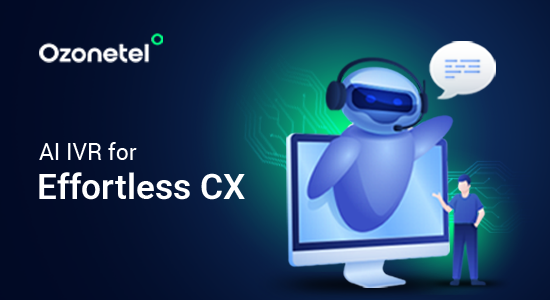
Remember when calling support meant sitting through “Press 1 for billing, press 2 for…” and hoping you picked right? That’s the IVR most of us grew up with — good at routing calls, terrible at actually understanding what you needed.
AI IVR has quietly rewritten that experience. Instead of decoding a menu tree, you just say what you want — “I need to check my refund status” — and the system gets it, the same way a person on the other end would.
For businesses, this shift means fewer dropped calls, faster resolutions, and support that scales without falling apart under load. Here’s everything you need to know.
Key Takeaways
- 70–90% of tier-1 queries resolved without an agent ever picking up — balance checks, ticket status, password resets, the stuff nobody wants to wait on hold for. That’s what AI IVR takes off your team’s plate.
- Customers just say what they need, no menu required — AI IVR uses NLP to figure out intent instead of forcing callers through a tree designed years before their actual problem existed.
- Routing based on urgency, sentiment, and history, not just department — a fraud complaint doesn’t land in the same queue as a billing question, which is what actually moves First Call Resolution.
- Every call becomes a data point— transcripts, sentiment, and escalation flags captured automatically, so CX teams stop relying on the odd call they happened to sample.
- Support runs across regional languages all day, every day — without hiring a new team for every market you expand into.
In this article, we will explore:
- 1. What is AI-Powered IVR?
- 2. How AI IVR Works: The Technology Behind It
- 3. AI IVR vs Traditional IVR
- 4. Business Benefits of AI IVR Systems
- 5. Applications of AI in IVR
- 6. Industry-Specific Use Cases
- 7. How Ozonetel's AI-Powered IVR Improves CX
- 8. What to Look for in an AI IVR Vendor
- 9. How Ozonetel Can Help
What is AI-Powered IVR?
AI IVR (AI-powered Interactive Voice Response) is a cloud-based phone system that uses natural language processing (NLP), speech recognition, and machine learning to understand what callers say in their own words, instead of forcing them through button-press menus, and route or resolve their request automatically.
Unlike rule-based IVR, which relies on rigid menu trees and button presses, conversational IVR understands what the caller is saying and responds contextually. It can resolve queries instantly, route calls based on urgency or sentiment, support multiple languages, and retain conversation history across sessions.
How AI IVR Works: The Technology Behind It
Every AI IVR interaction runs through four stages, from the moment a customer starts speaking to the moment they get an answer or get handed to an agent:AI IVR vs Traditional IVR
Traditional IVRs help route calls and automate basic interactions, but they often leave customers frustrated with long menus, repeated inputs, and disconnected journeys. Conversational IVR fixes that. It understands natural speech, responds in real time, and adapts based on intent, urgency, and user context.
Here’s how the two compare:
| Capability | Traditional IVR | Conversational AI IVR |
|---|---|---|
| Interaction Style | Menu-based navigation using button presses (DTMF) | Natural language conversations through voice or text |
| Routing Logic | Static menu options with predefined call flows | Dynamic, context-aware routing based on intent and sentiment |
| Self-Service Handling | Limited to predefined queries and workflows | Resolves 60–90% of Tier-1 customer queries without agent intervention |
| Context Awareness | No memory of previous interactions | Remembers customer history and resumes interrupted conversations |
| Agent Handoff | Basic transfer without conversation context | Transfers with full transcript, summary, and sentiment analysis |
| Analytics & Reporting | Basic call logs and call duration reports | Real-time transcripts, sentiment analysis, topic detection, and call scoring |
| Operational Efficiency | High agent dependency and longer average handle time (AHT) | Reduced handle times, fewer misrouted calls, and optimized workforce utilization |
| Customer Experience | Rigid, menu-driven, and often frustrating | Fast, intuitive, personalized, and conversational |
Business Benefits of AI IVR Systems
AI-powered IVR software solves deep-rooted service and efficiency gaps that legacy systems can’t. Businesses that adopt it see sharper performance across customer experience, support operations, and cost control. Here’s how.
Faster resolution
AI-based IVR systems don’t rely on button-press flows or rigid menu trees. Instead, they use natural language processing and intent recognition to understand customer needs in real time. Customers can speak naturally, for example, “I want to check my EMI schedule” or “cancel my broadband plan”, and the system responds appropriately.
The advantage is twofold: customers get to the outcome faster, and support teams are no longer overloaded with repetitive tasks. Businesses using this model report containment rates as high as 70–90% on tier-1 queries. Ozonetel clients in NBFC, for instance, have shifted a significant share of call volume to AI-led flows within 30 days of go-live.
Reduced agent workload
Menu-based routing often results in misdirected calls, extended wait times, and low first call resolution. AI solves this by using contextual signals, caller intent, sentiment, urgency, and even customer history, to route the call correctly the first time.
For example, if a customer says, “I think there’s a fraudulent charge on my account,” an AI IVR won’t send them to generic billing support. Instead, it flags the urgency, routes the call to a fraud specialist, and passes along the transcript and account history. This saves minutes per call, reduces customer frustration, and improves SLA adherence.
Cost savings without service compromise
Contact centers that switch to AI IVR often realize how much agent bandwidth was being spent on avoidable calls. With AI managing repetitive, low-skill interactions, teams can focus on complex or high-value cases, which has a direct impact on operational costs. Businesses that move to AI IVR commonly report meaningfully lower average handle time and a notable drop in overall support costs.
Improved accessibility
Traditional IVR handles multiple languages by duplicating every prompt, menu, and flow, which becomes expensive and time-consuming to maintain. Conversational AI IVR simplifies this entirely: it detects language preference from customer selection or speech patterns and switches languages, including dialect variations, in real time. This flexibility creates a more natural experience, especially for Tier 2 and Tier 3 customers who often drop off due to language limitations.
24/7 availability without extra staffing
AI IVR doesn’t sleep, doesn’t call in sick, and doesn’t need shift-based scheduling. It handles call flow day and night, whether it’s a late-night balance check, a weekend outage report, or a holiday callback. After-hours flows can adapt based on whether the customer is a premium user, whether the issue is critical, or whether a callback is more appropriate, reducing frustrated voicemails and abandoned calls.
Visibility into service gaps and trends
AI IVR turns every call into a structured data point. Each sentence spoken is logged, transcribed, and analyzed for sentiment, tone, keywords, escalation risk, and compliance flags, giving CX teams an always-on listening channel instead of relying on random call sampling or quarterly surveys. Teams get daily insight into what’s trending, where customers drop off, and what’s driving complaints. Ozonetel’s CXi pushes these analytics to dashboards in real time, closing the feedback loop for support and product teams alike.
Applications of AI in IVR
AI in IVR is about fixing broken service journeys, cutting operational dead weight, and improving speed without losing quality. Here are six high-impact use cases:
Natural language understanding (NLU) for real conversations
Old-school IVRs forced users through rigid menu trees. AI changes this: with NLU and intent recognition, callers can speak naturally, “I want to reschedule my EMI,” “I lost my card,” or “can you update my email?”, and the system identifies the purpose of the call and triggers the right flow. This reduces frustration, boosts containment, and trims call abandonment.
Smart call routing based on context and urgency
AI assesses what a customer wants and how critical the issue is. A caller reporting a security breach is prioritized over someone requesting a transaction history. Routing isn’t just department-based; it factors in issue severity, customer type, language, and historical complaints, improving First Call Resolution. Ozonetel’s clients in BFSI and logistics have seen both SLA improvement and queue efficiency gains with this model.
Self-service for high-volume repetitive queries
A large share of inbound queries across industries are repeat, low-complexity tasks, balance checks, password resets, ticket status updates. AI-powered IVR takes these off agent queues entirely. Instead of navigating five or six layers of menus, customers just say what they need, and the system pulls the relevant data from CRM or backend systems and completes the task on the spot. This directly impacts average handle time, frees up agent bandwidth, and lowers cost-per-resolution without hurting CX.
Multi-language, multi-accent support
For brands serving a pan-India or global customer base, regional language support isn’t optional. AI IVR supports a wide range of Indian and international languages, including regional accents, and adapts to how customers naturally speak, even when they switch between English and a vernacular language mid-sentence. This makes IVR genuinely accessible and improves success rates in Tier 2 and Tier 3 markets.
Compliance monitoring and risk flags in real time
Contact centers in BFSI and healthcare operate under constant regulatory pressure. AI in IVR plays a strong backend role here, scanning every call for non-compliant language, risky disclosures, or customer distress indicators. It flags problematic calls, scores conversations on tone, sentiment, and escalation risk, and pushes alerts to supervisors in real time. This helps insurance and healthcare brands maintain audit trails and reduce compliance lapses without a large dedicated QA team.
Conversational intelligence for journey analytics
Beyond automating interactions, AI in IVR logs what customers say, want, and drop off from. CX teams mine this to find gaps, improve IVR flows, spot emerging issues, and identify new service demand. If there’s a spike in “refund not received” queries after a product update, it’s flagged within hours, not weeks. Many Ozonetel customers push these insights directly to VOC dashboards or feed them into QA automation engines.
Industry-Specific Use Cases
Here’s how businesses across key sectors are using conversational IVR to solve real problems, improve efficiency, and deliver better CX:
Wakefit
Wakefit used Ozonetel’s visual IVR to automate query resolution, eliminating the need to reach out to executives for routine order, shipment, payment, refund, and replacement queries. They also built a funnel to identify repeat callers and routed them to a priority queue. As a result, the customer repeat rate dropped from an average of 2.7 to 2.0, leading to a 26% decrease in call volumes, and delivery failure rates fell 10% through proactive updates and preference collection.
HDB Financials
One of India’s largest NBFCs, HDB Financials, automated 70% of customer queries using self-service IVR for loan servicing, payment reminders, and policy requests. The system integrated with SugarCRM for a 360° customer view, giving agents real-time access to lead and ticket data. This led to a 90% First Call Resolution rate, a 5% lower turnaround time, and a notable jump in cross-sell effectiveness across loan products.
Acko
For Acko, a digital-first insurer, the biggest challenge was streamlining high-volume calls around policy changes, claims, and renewals. A carefully crafted, predictive IVR cut IVR time by 20%, improved routing accuracy by 20%, and delivered 50% faster resolutions, all while keeping CSAT at 90%, well above the industry average. The IVR now handles 3,000+ self-service queries monthly, significantly easing agent workload.
Angel One
Angel One, a leading broking house, adopted AI IVR to handle call spikes during volatile market sessions. The solution supports 40,000+ daily calls, routing them by query type, such as demat, RMS issues, or trading desk, and urgency. This reduced abandonment by 58%, improved FCR to 80%, and lowered handle times by 25%. Deep Salesforce integration also enabled contextual agent handoffs and real-time prioritization during high-load windows.
How Ozonetel’s AI-Powered IVR Improves CX
AI-powered IVR improves customer experience by removing friction from every interaction. It offers faster, more accurate responses while keeping service accessible around the clock:
- Faster resolution: Handles routine queries instantly, reducing wait times.
- Always-on support: Available 24/7, including weekends and holidays.
- Seamless self-service: Customers can get things done quickly without agent dependency.
- Multilingual assistance: Understands and responds in multiple languages and dialects.
- Consistent experience: Delivers the same quality of service, no matter when or how often the customer calls.
What to Look for in an AI IVR Vendor
Not all AI IVR platforms are built the same way, and the gap shows up the moment call volumes spike or a customer speaks a mix of languages in one sentence. A few criteria are worth checking before you commit to a vendor:
- Latency: Anything above roughly a second of response time breaks the illusion of a natural conversation. Ask vendors for real, under-load latency numbers, not lab benchmarks.
- Language and dialect coverage: Confirm the platform handles the specific languages, dialects, and code-switching patterns your customers actually use, not just a generic “multilingual” claim.
- CRM and backend integrations: Look for native, pre-built CRM and CTI integrations with the systems you already run, since custom integration work adds months to go-live.
- Fallback-to-human design: Every AI IVR fails on some calls by design. What matters is whether the handoff to a live agent is warm, with full transcript and context, or a cold transfer that makes the customer repeat themselves.
- Security and compliance: For regulated industries like BFSI and healthcare, check for encryption, number masking, audit trails, and compliance certifications. See how Ozonetel approaches this on its Trust & Compliance
Deployment speed and flexibility: A cloud-native, API-first platform should let you go live, test, and iterate in
Conclusion: How Ozonetel AI IVR Can Help
Legacy IVR systems are no longer enough. They’re rigid, impersonal, and can’t keep up with the scale or expectations of modern customer service. AI-powered IVR solves that, and Ozonetel offers everything you need to make that shift, fast and without friction.
Ozonetel’s AI IVR platform is built for real-world use, whether you’re looking to automate high-volume support, scale multilingual self-service, or drive more efficient call routing. As a fully cloud-based, API-first solution, it gives you the flexibility to deploy, test, and iterate quickly across any industry or use case.
With Ozonetel, you get:
- End-to-end AI IVR workflows using an intuitive visual builder.
- Real-time call insights, including sentiment analysis, transcripts, and summaries.
- Smart routing with full agent context for seamless escalations.
- Multilingual, human-like voice support across regions.
- Plug-and-play integrations with your CRM, ticketing, and analytics stack.
- Fully secure and scalable infrastructure, ready for enterprise deployments.
Resolve More Calls Instantly with Ozonetel's AI-Powered IVR
Frequently Asked Questions
AI-powered IVR offers five core benefits:
- Faster query resolution: Instantly handles routine requests like balance inquiries or password resets.
- Smarter call routing: Uses AI to understand caller intent and routes to the right team or agent.
- Cost savings: Reduces agent load by automating repetitive queries.
- 24/7 availability: Ensures customers are always served, even during non-working hours.
- Actionable insights: Analyzes voice data to understand sentiment, behavior trends, and operational gaps.
- Predicting call traffic patterns to adjust agent capacity ahead of time.
- Automatically resolving common issues without needing a human agent.
- Instantly routing calls based on urgency and query type, not just dial tones or menus.
The difference lies in how they interact with customers. AI-powered IVR upgrades traditional menu-based systems by adding NLP for understanding natural speech and routing better. Whereas, conversational IVR goes beyond that—it holds dynamic, human-like conversations, understands context, and adapts mid-interaction.
Yes, AI IVR can be integrated into legacy contact centers. It can overlay existing systems with minimal disruption, offering features like voice bots, NLP, and analytics without needing a full infrastructure overhaul.
Yes, AI IVR handles multiple languages and regional accents using NLP and speech recognition. This guarantees that there is an accurate understanding and consistent service across diverse customer segments.
Most businesses see containment rates of 70–90% on tier-1 queries, lower average handle time, reduced cost per interaction, and improved First Call Resolution within weeks of go-live. The exact numbers vary by industry and call mix, but the pattern holds across BFSI, insurance, logistics, and D2C deployments.
AI IVR runs on a stack of automatic speech recognition (ASR), natural language understanding (NLU), dialogue management, and text-to-speech (TTS), tied together with machine learning models that keep improving intent accuracy over time. See the full breakdown in how AI IVR works above.
They’re closely related but not identical. AI IVR specifically refers to the AI layer added to a traditional phone-based IVR menu system. A voicebot is a broader term that can operate across phone lines as well as apps, smart speakers, and other voice-enabled devices. In practice, most modern AI IVR platforms are powered by the same voicebot technology underneath.
A standard IVR routes calls and handles a fixed set of queries through menus or basic voice commands. An Intelligent Virtual Assistant (IVA) is a more advanced, AI-driven layer that can hold multi-turn conversations, remember context across a call, and complete tasks independently, which is effectively what conversational AI IVR is designed to do. For a detailed side-by-side breakdown, see IVR vs IVA: What’s the Difference
Prioritize low latency, genuine coverage of your customers’ languages and dialects, native CRM/CTI integrations, a well-designed fallback to a live agent, and strong security and compliance credentials. See “What to Look for in an AI IVR Vendor” above for the full checklist.
Enterprise-grade AI IVR platforms encrypt call data in transit and at rest, support number masking, maintain detailed audit trails, and are built to meet the compliance requirements of regulated sectors like BFSI, insurance, and healthcare. Ozonetel outlines its approach on the Trust & Compliance page.