- Resources
- A Comprehensive Guide to Conversational Intelligence in 2024
A Comprehensive Guide to Conversational Intelligence in 2024

Prashanth Kancherla
Apr 8, 2024 | 19 mins read
Conversation intelligence is like having a superpower for your customer-facing teams. It’s an AI-powered technology that analyzes customer interactions across all channels – phone calls, emails, chats, and more. Analyzing these conversations extracts key details and unlocks a wealth of insights you might have otherwise missed. It’s like having a team of super listeners working behind the scenes, uncovering hidden trends and emotions within your customer interactions.
Read along as we discuss everything you need to know about conversation intelligence. We’ll delve into how it works, its benefits, and how you can leverage its power to transform your customer experience, boost sales, and propel your business forward.
In this article, we will explore:
- 1. What is Conversational Intelligence?
- 2. Conversational Intelligence Vs. Call Tracking Software
- 3. Key Features of Conversational Intelligence Platforms
- 4. Intent Escalation & Routing
- 5. Elevating Customer Experience with Conversation Intelligence
- 6. Key Features of Conversational Intelligence Platforms
- 7. Use Cases of Conversation Intelligence
- 8. How Can Businesses Benefit from Ozonetel’s Conversational Intelligence?
- 9. Boosting Customer Lifetime Value with VoC Insights
- 10. Enhancing Citizen Experience with AI-based Speech Analytics
- 11. Real-time Conversation Analysis to Improve Sales & Customer Service
What is Conversational Intelligence?
Conversational intelligence is a cutting-edge technology that harnesses the power of artificial intelligence (AI) to derive invaluable insights from customer conversations.
By leveraging advanced natural language processing (NLP), automatic speech recognition (ASR), data mining and machine learning courses and techniques, you can unlock a wealth of knowledge embedded within speech or text-based interactions.
At its core, conversational intelligence platforms enable you to record, transcribe, and analyze customer interactions across various channels, including voice calls, chat transcripts, and emails. These platforms utilize NLP to comprehend human language, both spoken and written, and accurately capture the sentiment and intent behind each utterance. ASR technology further enhances this capability by converting speech into text, enabling seamless analysis of voice conversations.
Also, ML algorithms play a crucial role in conversational intelligence by identifying patterns and making data-driven predictions. These algorithms continuously learn from the gathered data, optimizing their ability to effectively comprehend and respond to human language. Data mining techniques complement this process by extracting valuable insights and trends from the vast amounts of conversational data, empowering you to make informed decisions and drive continuous improvement.
These platforms offer various features, including:
- Visual conversation builders: Users can design conversational flows using drag-and-drop tools, defining the chatbot’s responses and actions based on user inputs.
- Content management: Users can upload and manage the knowledge base or content the chatbot will use to respond.
- Integrations: Many no-code chatbot builders integrate with popular platforms like websites, messaging apps, CRMs, and e-commerce solutions, allowing users to deploy their chatbots across multiple channels.
- Analytics and reporting: Users can track chatbot performance and interactions and gain insights to improve the chatbot’s effectiveness.
- Testing and debugging tools: These platforms often provide tools to test and debug chatbot conversations before deployment.
Conversational Intelligence Vs. Call Tracking Software
No-code chatbot builders provide a visual, drag-and-drop interface that abstracts away the complexities of coding. This accessibility allows non-technical users, such as business owners, marketers, and customer service representatives, to create chatbots without needing extensive programming knowledge.
Here are a few more key points highlighting the importance of no-code chatbot builders:
User-Friendly Interfaces
The success of a no-code chatbot builder largely depends on its user-friendly interface. These platforms prioritize intuitive design, making it easy for users to navigate various features, configure chatbot flows, and customize responses. User-friendly interfaces reduce the learning curve, enabling faster adoption and increasing the likelihood of successful chatbot implementation across departments and organizations.
Rapid Prototyping and Iteration
No-code chatbot builders facilitate rapid prototyping and iteration cycles. Users can quickly build, test, and refine their chatbots without the overhead associated with traditional software development processes. This allows businesses to respond promptly to evolving customer needs, market trends, and feedback, ensuring their chatbots remain relevant and effective.
Cost-Effectiveness
Developing chatbots from scratch can be costly, especially for small and medium-sized businesses with small budgets. No-code chatbot builders offer a cost-effective alternative by eliminating the need for dedicated development resources and expensive coding efforts. This democratization of chatbot creation opens up opportunities for businesses of all sizes to leverage the power of conversational AI at a fraction of the cost.
Integration with Existing Systems
Many no-code chatbot builders provide seamless integration capabilities with multiple platforms, such as websites, mobile applications, messaging channels (e.g., Facebook Messenger, WhatsApp), and customer relationship management (CRM) systems.
This integration allows businesses to enhance customer touchpoints and workflows with conversational AI capabilities, improving customer engagement and operational efficiency.
Scalability and Maintenance
No-code chatbot builders often offer built-in scalability and maintenance features. As chatbots grow in complexity and usage, these platforms allow for easy scaling and updating of chatbot capabilities, ensuring seamless performance and minimizing downtime.
Additionally, many platforms provide automated updates, ensuring that chatbots remain up-to-date with the latest advancements in natural language processing and conversational AI technologies.
Advantages of Using No-Code Platforms for Chatbot Development
No-code chatbot platforms offer numerous advantages, making them an attractive option for businesses seeking to use the power of conversational AI. A few of the most common advantages of deploying no-code chatbot builders are:
Ease of Setup and Use
These platforms allow individuals without coding expertise to build chatbots using intuitive drag-and-drop interfaces and pre-built templates tailored to specific use cases. This accessibility empowers non-technical users to create and manage chatbot conversations, reducing the need for specialized development teams and enabling faster deployment.
Low Initial Investment
Unlike traditional chatbot development, which often requires substantial investments in hiring and retaining skilled developers, no-code platforms typically operate on a recurring monthly fee model, eliminating the need for a significant initial investment. This cost-effective approach makes conversational AI solutions more accessible to businesses of all sizes, including small and medium enterprises.
Quick Scaled Cross-Channel Deployment
Businesses can design, develop, test, and deploy chatbots across multiple channels, such as websites, mobile apps, and messaging platforms, with relative ease. Version control and testing environments allow for identifying and promoting high-performing chatbot versions, ensuring a seamless user experience across various touchpoints.
Easy to Integrate with Third-Party Apps
These platforms often provide pre-built integrations with popular CRM systems, content management systems (CMS), customer support portals, and other industry-leading applications. Some platforms offer on-demand API integration capabilities, allowing businesses to seamlessly connect their chatbots with custom or proprietary systems.
Easy to Update and Maintain
No-code chatbot platforms excel in this area by enabling business users to manage changes; tweak conversation flows, customize chatbot training, and increase deployment channels without relying heavily on technical resources. This adaptability ensures that chatbots can evolve alongside company needs and customer preferences, enhancing the overall user experience.
Choosing the Best No-Code Chatbot Builder: Factors to Consider
So, when choosing a chatbot creator platform for your business, what should you look for? For the most part, it’s the ability to personalize it without coding knowledge and excellent customer service from the chatbot provider. But that is not all. Let’s go through the most important aspects one by one.
User Interface
Look for a builder with an intuitive and user-friendly interface that lets you create chatbots easily, even if you have no prior experience. The platform should have a visual conversation builder with drag-and-drop capabilities and clear documentation or tutorials.
Language Understanding Capabilities
Evaluate the underlying language model powering the chatbot builder. Models like ChatGPT and GPT-4 are known for their advanced natural language processing capabilities, which can significantly improve the chatbot’s ability to understand and respond accurately to user queries.
Customization and Personalization Options
Consider how much you can customize the chatbot’s appearance, tone, and behavior to align with your brand identity. Look for platforms that offer flexible options for branding, conversation design, and content management.
Integration Capabilities
Assess whether the chatbot builder integrates seamlessly with the platforms and tools you already use, such as websites, messaging apps, CRMs, and e-commerce solutions. Seamless integrations can streamline deployment and enhance the chatbot’s functionality.
Scalability and Performance
As your chatbot usage grows, ensure the platform can handle increased traffic and interactions without compromising performance. Consider factors like response times, concurrent user support, and scalability options.
Training and Support
Evaluate the training resources, documentation, and customer support provided by the chatbot builder. An active community or dedicated support team can be invaluable when you need help or have questions.
Analytics and Reporting
Look for builders that offer robust analytics and reporting capabilities, allowing you to track chatbot performance and user interactions and gain insights for continuous improvement.
Pricing and Cost-Effectiveness
Consider the pricing structure and overall cost-effectiveness of the chatbot builder. While some platforms offer free plans or trials, evaluate the long-term costs, including additional fees for advanced features or integrations.
Security and Compliance
If you’re handling sensitive data or operating in regulated industries, ensure the chatbot builder adheres to relevant security standards and compliance requirements, such as data encryption and privacy regulations.
Conversational Intelligence Vs. Call Tracking Software
Conversational intelligence software revolves around understanding and improving human interactions, while call tracking software primarily monitors and analyzes phone calls for various purposes, including sales analytics and contact center compliance. Here are a few more differences between the two software to help you get a better understanding:
| Aspect | Conversational intelligence | Call tracking software |
| Purpose | Enhances human interactions | Monitors and analyzes phone calls |
| Functionality | Analyzes spoken or written language | Records and tracks phone calls |
| Data source | Conversations, messages, emails, etc. | Phone calls, call recordings |
| Analysis depth | Understands context and sentiment | Focuses on call metrics and data |
| Key features | Gupshup | Call recording, call duration, etc. |
| Use cases | Customer support, sales, marketing | Sales analytics, compliance, etc. |
| Insights | Provides actionable insights | Generates call reports and statistics |
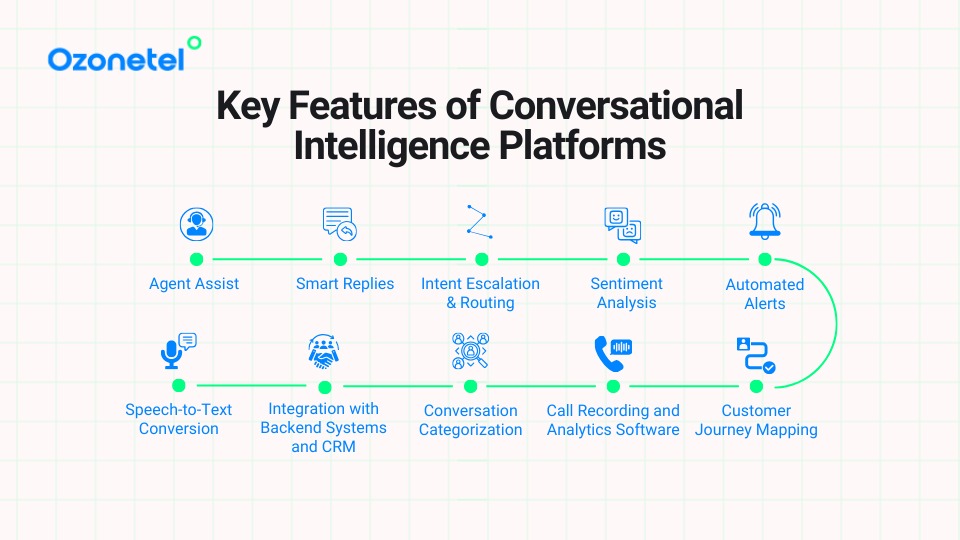
Key Features of Conversational Intelligence Platforms
Conversational intelligence platforms harness the power of advanced natural language processing (NLP) and machine learning (ML) algorithms to develop intelligent chatbots capable of understanding and responding to human-like conversations.
These chatbots can comprehend complex queries, provide accurate and contextual responses, and engage in seamless dialogues across multiple channels such as websites, mobile applications, and messaging platforms.
A few more key features of conversational intelligence platforms are:
Fix Grammar
Conversational intelligence platforms offer robust grammar correction capabilities that ensure your chatbots communicate with impeccable language and clarity. These platforms employ advanced natural language processing techniques to identify and rectify grammatical errors, ensuring your chatbots’ responses are always well-structured, coherent, and free from linguistic mistakes. This feature is important to maintain a professional and polished brand image while enhancing the user experience.
Agent Assist
Agent Assist is a powerful feature that augments human agents’ capabilities by providing real-time assistance during customer interactions. The platform analyzes ongoing conversations and intelligently suggests relevant information, knowledge base articles, or potential responses, empowering your agents to deliver faster and more accurate resolutions. This improves agent productivity and ensures consistent and high-quality customer service across all channels.
Smart Replies
Smart Replies leverage machine learning algorithms to analyze customer inquiries and suggest relevant, predefined responses to your agents. This feature streamlines the response process, reduces typing time, and ensures consistent messaging across all customer interactions. Smart Replies can be customized and tailored to your specific business needs, enabling you to provide prompt and efficient resolutions to common customer queries.
Integration Capabilities
Assess whether the chatbot builder integrates seamlessly with the platforms and tools you already use, such as websites, messaging apps, CRMs, and e-commerce solutions. Seamless integrations can streamline deployment and enhance the chatbot’s functionality.
Intent Escalation & Routing
By using conversational intelligence, your system can automatically discern caller intent and direct calls to agents with the requisite skill and expertise. Ensure smooth transitions between bots and agents, as well as among agents themselves, to elevate the customer experience. This significantly reduces wait times and improves resolution rates, leading to enhanced customer satisfaction and loyalty.
Sentiment Analysis
Conversational intelligence platforms offer advanced sentiment analysis capabilities that allow you to gauge the emotional tone of customer interactions. By analyzing the language used in conversations, the platform can detect positive, negative, or neutral sentiments, enabling you to address customer frustrations and prioritize high-risk interactions proactively. This provides valuable insights into customer satisfaction levels and helps you identify areas for improvement in your customer service operations.
Customer Journey Mapping
Understanding the customer journey helps optimize your customer experience strategy. Conversational intelligence platforms offer powerful customer journey mapping tools that visually represent customers’ various touchpoints and interactions with your brand. By analyzing these journey maps, you can identify pain points, bottlenecks, and areas for improvement, enabling you to streamline processes and deliver top-notch customer experiences.
Automated Alerts
Automated alerts are essential to ensure timely and proactive responses to critical customer interactions. The platform continuously monitors conversations and triggers alerts based on predefined rules, such as detecting specific keywords, sentiment levels, or escalation requests. These alerts notify your customer service team in real-time, allowing them to prioritize and respond to urgent matters promptly, thereby minimizing customer frustration and enhancing overall satisfaction.
Conversation Categorization
Conversation categorization is a powerful feature that automatically organizes and classifies customer interactions based on predefined categories or topics. This feature leverages natural language processing and machine learning algorithms to analyze the content of conversations and assign them to relevant categories. By categorizing conversations, you gain valuable insights into customer pain points, common issues, and emerging trends, enabling you to optimize your support processes and prioritize resources effectively.
Call Recording and Analytics Software
Conversational intelligence platforms often integrate with call recording and analytics software, allowing you to capture and analyze customer interactions across multiple channels, including voice calls. This feature enables you to review past conversations, recognize areas for improvement, and extract valuable insights for training and quality assurance purposes. Additionally, advanced speech-to-text conversion capabilities facilitate seamless transcription and analysis of recorded conversations.
Speech-to-Text Conversion
Speech-to-text conversion is a critical feature that enables seamless integration of voice interactions into your conversational intelligence platform. By accurately transcribing spoken words into text, the platform can analyze and process voice conversations in real-time, enabling your chatbots and agents to provide intelligent and contextual responses. This feature is particularly helpful for industries that rely heavily on voice interactions, such as customer service, sales, and support.
Integration with Backend Systems and CRM
Conversational intelligence platforms integrate your existing backend systems and customer relationship management (CRM) software seamlessly. This integration allows for bi-directional data exchange, ensuring customer interactions, preferences, and historical data are readily available to your chatbots and agents. By leveraging this feature, you can deliver personalized and contextual experiences, streamline processes, and enhance operational efficiency.
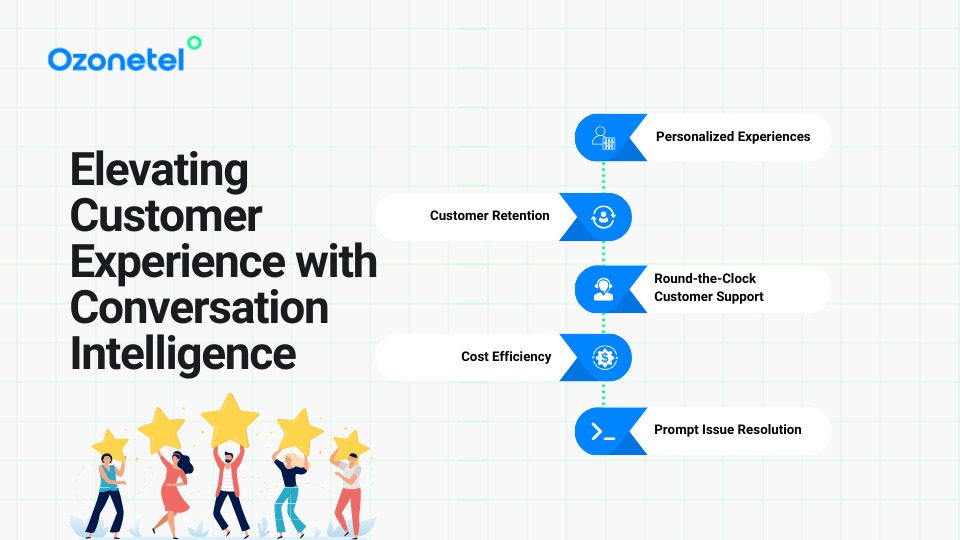
Elevating Customer Experience with Conversation Intelligence
Conversational intelligence allows you to delve deeply into customer interactions and grasp their unique preferences, pain points, and behaviors. Through meticulous analysis of conversations, you gain invaluable insights into what genuinely matters to your customers. Then, with this knowledge, you can tailor your services and support to meet individual customer needs effectively, fostering a personalized and meaningful experience.
Some other reasons that drive the importance of conversation intelligence platforms in boosting customer experience are:
Personalized Experiences
Personalized experiences are the cornerstone of customer loyalty and retention, impacting customer lifetime value. You can create highly personalized customer experiences tailored to individual preferences, purchase histories, and emotional states by analyzing past conversations. By recognizing and catering to these nuances, your customer service representatives can provide customized recommendations and solutions that resonate with each customer, fostering a deep connection and trust.
Customer Retention
Conversational intelligence assists you in pinpointing areas for enhancement within your customer service operations, effectively reducing churn and elevating customer retention rates. By continuously improving your customer experience strategies based on insights derived from conversational data, you can foster long-lasting relationships with your customers, driving sustainable growth and profitability.
Round-the-Clock Customer Support
The 24/7 availability of conversational AI is a significant benefit that sets it apart from traditional customer support channels. Unlike human agents, who are limited by business hours or time zones, conversational AI systems are always accessible. This means that customers can seek support, gather information, or have their inquiries addressed promptly, regardless of the time of day or night.
Also, this round-the-clock availability is valuable for customers with urgent inquiries or those who require immediate assistance outside regular business hours. It eliminates the frustration of waiting until the next day or until support teams are available, ensuring a seamless and efficient experience.
Cost Efficiency
Efficient utilization of conversational intelligence can result in significant cost savings within your customer service operations. You can significantly reduce operational costs by improving agent efficiency and implementing customer self-service options. Conversational AI systems can automate routine tasks and equip your agents with the necessary information, enabling them to handle more customer inquiries while optimizing resource allocation.
Prompt Issue Resolution
By leveraging conversational intelligence tools, your customer service teams can promptly identify and address customer queries and concerns in real-time. This agility leads to quicker issue resolution, enhancing overall customer satisfaction. Moreover, providing customers with timely and relevant information during their buying or renewal journey can increase sales and revenue, further solidifying the importance of prompt and efficient service.
Use Cases of Conversation Intelligence
Conversational Artificial Intelligence has found widespread applications across numerous departments and industries, from simple customer support to conversational interfaces and complex banking operations. The following are some of the top industry use cases, all aimed at improving customer service, enhancing customer interactions, and delivering an exceptional user experience:
Retail and E-commerce
In retail and e-commerce, you can leverage conversational intelligence to gain invaluable customer insights and enhance the shopping experience. By analyzing customer conversations, you can:
- Gather Customer Data: Transcribe and analyze customer interactions to uncover preferences, pain points, and needs related to your products and services. For instance, Ozonetel allows you to record and make customer conversations searchable, enabling you to identify frequently asked queries and areas for improvement.
- Recommend Products: Leverage conversational AI to provide personalized product recommendations based on customer interactions, increasing the likelihood of successful sales and improving customer satisfaction.
- Track Inventory: Utilize conversational AI to automatically track inventory levels and offer real-time updates to customers, ensuring transparency and enhancing the overall shopping experience.
Healthcare
Conversational intelligence has the potential to revolutionize the healthcare sector by streamlining processes and improving patient care. Some key use cases include:
- Diagnosis: Conversational AI tools can assist in diagnosing health conditions by engaging patients in conversational interactions, gathering relevant information, and providing preliminary assessments. This can help expedite the diagnosis process and reduce waiting times for medical professionals.
- Medical Scheduling: Conversational AI platforms can aid patients in scheduling appointments, managing paperwork, providing information about upcoming visits, streamlining administrative tasks, and enhancing the overall patient experience.
- Therapy: Conversational AI chatbots can offer a private and secure space for patients to express their emotions while assisting therapists by taking notes and summarizing sessions. This can help bridge the gap between practitioners and patients, providing 24/7 support and reducing the workload on human therapists.
- Virtual Assistants for Patients and Practitioners: Intelligent virtual assistants powered by conversational AI can help patients and practitioners understand complex medical topics, reducing stress and freeing staff to focus on more pressing tasks.
Internet of Things (IoT) Devices
Conversational AI has become integral to modern smart home devices, enabling seamless voice-based interactions. Some applications include:
- Controlling home appliances using voice commands through devices like Amazon Echo or Google Home.
- Monitoring and controlling IoT devices that can dial phone numbers or send user messages.
- Enabling voice-based ordering of food, groceries, or other products through virtual assistants like Amazon Alexa, which can learn user preferences and provide personalized recommendations.
Finance and Banking
In finance and banking, conversational AI offers numerous opportunities to enhance customer experience, reduce operational costs, and improve security. Key use cases include:
- Virtual Banking Assistants: Conversational AI-powered virtual assistants can check account balances, process transactions, and detect potentially fraudulent activities using automatic speech recognition (ASR) and keyword analysis. For example, Ozonetel allows you to feed fraud-related keywords and phrases to the AI, enabling proactive fraud detection and prevention.
- Spending Pattern Analysis: By analyzing users’ spending patterns and bank accounts, conversational AI can provide personalized financial advice and guidance on money management.
- Customer Query Resolution: Conversational AI can automate repetitive processes and resolve customer queries more efficiently than human agents, improving credibility and customer satisfaction in the banking industry.
Customer Service
Conversational AI has become a game-changer in the customer service domain, enabling businesses to automate support functions and deliver exceptional customer experiences. Some notable use cases include:
- Travel Assistance: Intelligent virtual assistants can assist customers in booking flights, answering frequently asked questions about traveling with babies or pets, and providing personalized travel recommendations.
- Billing Support and Complaint Management: Conversational AI systems can engage with customers through various channels, such as voice and SMS, to resolve billing inquiries, manage complaints, and offer tailored solutions or upsell opportunities.
- Agent Assist: Conversational AI can support human agents by populating relevant information on their screens based on customer queries or keywords during real-time interactions. This co-pilot approach enhances agent productivity and efficiency.
- Reservations and Appointments: Conversational AI can streamline the booking process for businesses that deal with appointments or reservations, providing customers with a seamless experience.
Sales and Marketing
In sales and marketing, conversational AI empowers businesses to deliver personalized experiences and drive conversions. Some key applications include:
- Conversational Marketing: Leverage conversational AI for conversational marketing campaigns, engaging with customers in real time and providing tailored recommendations or offers.
- Lead Generation and Conversion: Utilize conversational AI through voice and SMS channels to nurture leads and drive sales. Tools like Ozonetel Insights can help identify keywords and phrases that trigger customer interest, enabling you to optimize your sales strategies.
How Can Businesses Benefit from Ozonetel’s Conversational Intelligence?
Ozonetel’s conversational intelligence capability is powered by ChatGPT to assist agents and enhance customer experience in contact centers. The platform provides agent assist capabilities with real-time insights on customer sentiment, demographics, and recent interactions, enabling agents to personalize conversations and be more empathetic.
It also offers smart reply suggestions generated by AI to help agents deliver quick and intelligent responses on calls and chat, resolving queries faster. The platform can fix grammar and correct spelling and help agents communicate clearly.
Now, let’s look at some case studies that highlight Ozonetel’s offerings and prove it a leader as a call center solution provider:
Improving Site visits with AI-based insights
In the highly competitive real estate industry, securing property site visits from prospective buyers is critical in driving sales and growth. However, many real estate companies face significant challenges in optimizing their sales conversations and ensuring that their agents effectively pitch site visits and handle objections.
Moreover, monitoring and evaluating the performance of a large sales force across multiple locations and projects can be a challenging task, making it difficult to identify areas for improvement and provide targeted coaching.
Solution
To address these challenges, a leading real estate company partnered with Ozonetel to implement its conversational intelligence solution. Ozonetel’s AI-based solutions allowed the real estate company to transcribe and analyze over 130,000 sales conversations in near real-time, enabling supervisors and business heads to gain a 360-degree view of the performance of hundreds of sales agents, projects, and sales campaigns.
The conversational intelligence platform monitored various aspects of sales interactions, including agent interruptions, pricing discussions, background noise, speech rate and clarity, empathy, active listening, and objection handling. This comprehensive analysis empowered the company to identify top-performing agents, pinpoint specific areas for improvement, and customize training programs accordingly.
Furthermore, the solution provided real-time cues and suggestions to agents during their conversations, eliminating the need for note-taking and call dispositions. Successful sales pitches were analyzed to fine-tune scripts and improve overall team performance.
Results
By implementing Ozonetel’s conversational intelligence solution, the real estate company experienced remarkable results:
- Increased Site Visits: Pitches for site visits during sales conversations increased by 67%, directly contributing to higher sales and a 20x return on investment.
- Streamlined Evaluation: The company built a custom dashboard with near real-time speech transcription across eight vernacular languages, enabling supervisors to evaluate agents consistently and objectively.
- Proactive Alerts: Supervisors received regular alerts whenever an agent missed pitching a site visit, allowing for timely intervention and coaching.
- Enhanced Sales Performance: Sales team efficiency grew significantly, with automated transcripts providing detailed insights into successful sales strategies and areas for improvement.
Overall, Ozonetel’s conversational intelligence solution empowered the real estate company to optimize its sales processes, improve agent performance, and drive better customer engagement, ultimately leading to increased property site visits and sales.
Boosting Customer Lifetime Value with VoC Insights
BigBasket, a leading e-commerce grocery giant, struggled to maintain exceptional customer experience and foster loyalty among its vast customer base. With a staggering 15 million orders per month and operations spanning 400 cities, ensuring consistent quality and addressing customer concerns promptly was crucial.
Additionally, BigBasket recognized the importance of deeply understanding customer needs, preferences, and pain points to continuously improve its offerings and solidify its position as an industry leader.
Solution:
Using our conversational analytics, all calls were analyzed, providing transcription, summarization, and topic modeling using AI. For instance, for issues like milk packet leaks, sentiment analysis was conducted. The solution retrieved transcripts and summaries for specific complaints from the database.
Agent time was saved by avoiding manual entry of call remarks into CRM. With GenAI, remarks were made concise and automatically pushed to the CX tool (Kapture).
In BigBasket, if agents didn’t mark dispositions in Kapture within 5 minutes, the solution picks it up for analysis to identify complaint calls. This resulted in time savings for agents of around 30-60 seconds for each call, equating to approximately 1200 calls per day. Consequently, over 750 hours were saved per month for after-call work.
Ozonetel’s solution enabled BigBasket to capture and analyze customer interactions across multiple channels, including voice calls, chat transcripts, and emails. This valuable data empowered BigBasket to identify recurring issues, uncover customer pain points, and proactively address them, improving customer satisfaction and reducing complaints.
Results
By using Ozonetel’s conversational intelligence solution and prioritizing customer experience, BigBasket achieved remarkable results:
- Industry-leading Customer Retention: BigBasket maintained an impressive customer retention rate of 85%, among the highest in the e-grocery sector.
- Increased Revenue: Timely resolution of customer concerns and improved customer experience led to a 5% improvement in sales.
- Wallet Share Growth: By addressing customer needs effectively, BigBasket achieved a 1.5x improvement in order value, indicating increased customer loyalty and trust.
- Lifetime Value Boost: Repeat orders increased by 20%, reflecting the success of BigBasket’s customer-centric approach.
- Seamless Customer Support: Leveraging Ozonetel’s omni-channel capabilities, BigBasket ensured easy access to support across multiple channels, providing customers with a convenient and personalized experience.
Through its partnership with Ozonetel and a relentless focus on understanding and meeting customer needs, BigBasket successfully built a loyal customer base, delivered exceptional customer experiences, and solidified its position as a leader in the e-grocery industry.
Enhancing Citizen Experience with AI-based Speech Analytics
Serving over 550 million Indians for hospitalization care, the NHA wanted to ensure comprehensive and effective support for beneficiaries. They wanted to leverage technology to gain deeper insights into beneficiary needs, automate call quality monitoring, and enhance training. The focus was on identifying improvement areas, enabling advisors to address beneficiary concerns more effectively.
Solution
With Ozonetel, NHA analyzed more than 122K hours of conversations in 11 vernacular languages across a sample set of 1.2 million calls. Our AI-based solution automatically generated agent scores for each call and campaign, considering factors such as participation ratio, information retrieval time, advisor and
beneficiary sentiment, and frequency of interruptions.
NHA team utilized our solution for the Ayushman Bharat Digital Mission. They deployed our progressive and predictive dialers to collect feedback from PM-JAY beneficiaries and assess their health status.
Ozonetel’s Speech Analytics solutions enabled NHA team to delve deeper into customer conversations, evaluating the overall sentiment of calls using metrics like rate of speech, volume, pitch, tone, and spectral changes
Result
Enhanced Dashboard Functionality: Managers can now filter and view the scores of 900+ healthcare advisors based on date, campaign, advisors, or conversational intent, streamlining supervision.
Increased Efficiency: Implementation resulted in significant time savings, with floor managers typically saving around 30 hours per month on call analysis.
Advanced Call Classification: A proprietary algorithm classified calls as negative or neutral, enabling more focused training programs for advisors and boosting first contact resolution through predictive analysis of beneficiary queries and behaviors.
Our solution simplified supervision for the NHA team and contributed to an overall improvement in contact center efficiency and citizen satisfaction.
Real-time Conversation Analysis to Improve Sales & Customer Service
The real estate company wanted to handle and analyze a large volume of conversations efficiently and extract valuable insights in real-time. The goal was to extract conversation insights, identify trending topics and perform sentiment analysis.
Solution
With Ozonetel’s GenAI solution, they have put in place a robust system that could process and analyze large volumes of data to deliver actionable insights for improving sales conversion. After the Salesforce-Ozonetel integration, the system automatically pushed call summaries to the CRM and identified trends in topic discussions, such as Unit Transfer, Cancellation, Unit Upgrade, and Possession Delay (real estate).
Result
Since October 2023, over 68,000 conversations have been analyzed, providing actionable insights for decision-making. A backlog of 73,000+ old conversations was also processed, enabling comprehensive analysis and informed business strategies. This real-time data processing and analysis have enhanced operational efficiency and improved sales and customer service.
Conclusion
Conversational intelligence is not limited to sales conversations; it can be applied to internal and external business meetings, providing a comprehensive understanding of communication dynamics across your organization. By embracing this technology, you gain a competitive edge, empowering your teams to deliver exceptional customer experiences, optimize operational efficiencies, and drive sustainable business growth.
Ozonetel’s conversational intelligence platform helps agents enhance the customer experience in contact centers. They use real-time insights on customer sentiment and recent interactions, enabling sales representatives to personalize conversations. It can also identify caller intent in real-time, escalate calls to agents with the right expertise, and enable seamless bot-to-agent and agent-to-agent handoffs for enhanced customer experience. Additionally, Ozonetel’s conversational AI platform is tailored for contact centers across various industries, leveraging the company’s over a decade of experience building call center solutions.
Frequently Asked Questions
Conversational intelligence is the ability to effectively communicate, understand, and engage in conversations with others. It involves skills such as active listening, empathy, and adaptability in communication styles to build rapport and foster meaningful interactions.
Chatbots are examples of conversational artificial intelligence designed to simulate human-like conversations. These chatbots can interact with users in natural language, answer questions, provide assistance, and even perform tasks like making reservations or providing customer support.
The difference between conversation intelligence and conversational intelligence lies in their scopes. Conversation intelligence typically refers to analyzing and understanding the dynamics and patterns within conversations, often in a business or organizational context. On the other hand, conversational intelligence focuses on the ability of individuals or systems to engage in effective conversations.
Technology plays a crucial role in enhancing conversational intelligence by providing tools and platforms for communication, such as messaging apps, video conferencing software, and AI-driven conversational interfaces. These technologies enable real-time interaction, access to information, and automation of certain aspects of conversation, ultimately facilitating more efficient and productive communication processes.
Prashanth Kancherla
Chief Operating Officer, Ozonetel Communications
Over the past decade, Prashanth has worked with 3000+ customer experience and contact center leaders...
Chief Operating Officer, Ozonetel Communications
Over the past decade, Prashanth has worked with 3000+ customer experience and contact center leaders to comprehensively understand the need for effective and efficient customer communications at every step of their journey with a brand. Deeply embedded in today’s CCaaS ecosystem, he has been instrumental in Ozonetel's growth and contributed in various roles including product management, sales, and solution architecture.
Related resources






Lorem ipsum dolor sit amet, consectetur adipiscing elit. Ut elit tellus, luctus nec ullamcorper mattis, pulvinar dapibus leo.
Lorem ipsum dolor sit amet, consectetur adipiscing elit. Ut elit tellus, luctus nec ullamcorper mattis, pulvinar dapibus leo.

Filter by Tags






- Resources
- A Comprehensive Guide to Conversational Intelligence in 2024
A Comprehensive Guide to Conversational Intelligence in 2024
Prashanth Kancherla
Apr 8, 2024 | 19 mins read
Conversation intelligence is like having a superpower for your customer-facing teams. It’s an AI-powered technology that analyzes customer interactions across all channels – phone calls, emails, chats, and more. Analyzing these conversations extracts key details and unlocks a wealth of insights you might have otherwise missed. It’s like having a team of super listeners working behind the scenes, uncovering hidden trends and emotions within your customer interactions.
Read along as we discuss everything you need to know about conversation intelligence. We’ll delve into how it works, its benefits, and how you can leverage its power to transform your customer experience, boost sales, and propel your business forward.
In this article, we will explore:
- 1. What is Conversational Intelligence?
- 2. Conversational Intelligence Vs. Call Tracking Software
- 3. Key Features of Conversational Intelligence Platforms
- 4. Intent Escalation & Routing
- 5. Elevating Customer Experience with Conversation Intelligence
- 6. Key Features of Conversational Intelligence Platforms
- 7. Use Cases of Conversation Intelligence
- 8. How Can Businesses Benefit from Ozonetel’s Conversational Intelligence?
- 9. Boosting Customer Lifetime Value with VoC Insights
- 10. Enhancing Citizen Experience with AI-based Speech Analytics
- 11. Real-time Conversation Analysis to Improve Sales & Customer Service
What is Conversational Intelligence?
Conversational intelligence is a cutting-edge technology that harnesses the power of artificial intelligence (AI) to derive invaluable insights from customer conversations.
By leveraging advanced natural language processing (NLP), automatic speech recognition (ASR), data mining and machine learning courses and techniques, you can unlock a wealth of knowledge embedded within speech or text-based interactions.
At its core, conversational intelligence platforms enable you to record, transcribe, and analyze customer interactions across various channels, including voice calls, chat transcripts, and emails. These platforms utilize NLP to comprehend human language, both spoken and written, and accurately capture the sentiment and intent behind each utterance. ASR technology further enhances this capability by converting speech into text, enabling seamless analysis of voice conversations.
Also, ML algorithms play a crucial role in conversational intelligence by identifying patterns and making data-driven predictions. These algorithms continuously learn from the gathered data, optimizing their ability to effectively comprehend and respond to human language. Data mining techniques complement this process by extracting valuable insights and trends from the vast amounts of conversational data, empowering you to make informed decisions and drive continuous improvement.
These platforms offer various features, including:
- Visual conversation builders: Users can design conversational flows using drag-and-drop tools, defining the chatbot’s responses and actions based on user inputs.
- Content management: Users can upload and manage the knowledge base or content the chatbot will use to respond.
- Integrations: Many no-code chatbot builders integrate with popular platforms like websites, messaging apps, CRMs, and e-commerce solutions, allowing users to deploy their chatbots across multiple channels.
- Analytics and reporting: Users can track chatbot performance and interactions and gain insights to improve the chatbot’s effectiveness.
- Testing and debugging tools: These platforms often provide tools to test and debug chatbot conversations before deployment.
Conversational Intelligence Vs. Call Tracking Software
No-code chatbot builders provide a visual, drag-and-drop interface that abstracts away the complexities of coding. This accessibility allows non-technical users, such as business owners, marketers, and customer service representatives, to create chatbots without needing extensive programming knowledge.
Here are a few more key points highlighting the importance of no-code chatbot builders:
User-Friendly Interfaces
The success of a no-code chatbot builder largely depends on its user-friendly interface. These platforms prioritize intuitive design, making it easy for users to navigate various features, configure chatbot flows, and customize responses. User-friendly interfaces reduce the learning curve, enabling faster adoption and increasing the likelihood of successful chatbot implementation across departments and organizations.
Rapid Prototyping and Iteration
No-code chatbot builders facilitate rapid prototyping and iteration cycles. Users can quickly build, test, and refine their chatbots without the overhead associated with traditional software development processes. This allows businesses to respond promptly to evolving customer needs, market trends, and feedback, ensuring their chatbots remain relevant and effective.
Cost-Effectiveness
Developing chatbots from scratch can be costly, especially for small and medium-sized businesses with small budgets. No-code chatbot builders offer a cost-effective alternative by eliminating the need for dedicated development resources and expensive coding efforts. This democratization of chatbot creation opens up opportunities for businesses of all sizes to leverage the power of conversational AI at a fraction of the cost.
Integration with Existing Systems
Many no-code chatbot builders provide seamless integration capabilities with multiple platforms, such as websites, mobile applications, messaging channels (e.g., Facebook Messenger, WhatsApp), and customer relationship management (CRM) systems.
This integration allows businesses to enhance customer touchpoints and workflows with conversational AI capabilities, improving customer engagement and operational efficiency.
Scalability and Maintenance
No-code chatbot builders often offer built-in scalability and maintenance features. As chatbots grow in complexity and usage, these platforms allow for easy scaling and updating of chatbot capabilities, ensuring seamless performance and minimizing downtime.
Additionally, many platforms provide automated updates, ensuring that chatbots remain up-to-date with the latest advancements in natural language processing and conversational AI technologies.
Advantages of Using No-Code Platforms for Chatbot Development
No-code chatbot platforms offer numerous advantages, making them an attractive option for businesses seeking to use the power of conversational AI. A few of the most common advantages of deploying no-code chatbot builders are:
Ease of Setup and Use
These platforms allow individuals without coding expertise to build chatbots using intuitive drag-and-drop interfaces and pre-built templates tailored to specific use cases. This accessibility empowers non-technical users to create and manage chatbot conversations, reducing the need for specialized development teams and enabling faster deployment.
Low Initial Investment
Unlike traditional chatbot development, which often requires substantial investments in hiring and retaining skilled developers, no-code platforms typically operate on a recurring monthly fee model, eliminating the need for a significant initial investment. This cost-effective approach makes conversational AI solutions more accessible to businesses of all sizes, including small and medium enterprises.
Quick Scaled Cross-Channel Deployment
Businesses can design, develop, test, and deploy chatbots across multiple channels, such as websites, mobile apps, and messaging platforms, with relative ease. Version control and testing environments allow for identifying and promoting high-performing chatbot versions, ensuring a seamless user experience across various touchpoints.
Easy to Integrate with Third-Party Apps
These platforms often provide pre-built integrations with popular CRM systems, content management systems (CMS), customer support portals, and other industry-leading applications. Some platforms offer on-demand API integration capabilities, allowing businesses to seamlessly connect their chatbots with custom or proprietary systems.
Easy to Update and Maintain
No-code chatbot platforms excel in this area by enabling business users to manage changes; tweak conversation flows, customize chatbot training, and increase deployment channels without relying heavily on technical resources. This adaptability ensures that chatbots can evolve alongside company needs and customer preferences, enhancing the overall user experience.
Choosing the Best No-Code Chatbot Builder: Factors to Consider
So, when choosing a chatbot creator platform for your business, what should you look for? For the most part, it’s the ability to personalize it without coding knowledge and excellent customer service from the chatbot provider. But that is not all. Let’s go through the most important aspects one by one.
User Interface
Look for a builder with an intuitive and user-friendly interface that lets you create chatbots easily, even if you have no prior experience. The platform should have a visual conversation builder with drag-and-drop capabilities and clear documentation or tutorials.
Language Understanding Capabilities
Evaluate the underlying language model powering the chatbot builder. Models like ChatGPT and GPT-4 are known for their advanced natural language processing capabilities, which can significantly improve the chatbot’s ability to understand and respond accurately to user queries.
Customization and Personalization Options
Consider how much you can customize the chatbot’s appearance, tone, and behavior to align with your brand identity. Look for platforms that offer flexible options for branding, conversation design, and content management.
Integration Capabilities
Assess whether the chatbot builder integrates seamlessly with the platforms and tools you already use, such as websites, messaging apps, CRMs, and e-commerce solutions. Seamless integrations can streamline deployment and enhance the chatbot’s functionality.
Scalability and Performance
As your chatbot usage grows, ensure the platform can handle increased traffic and interactions without compromising performance. Consider factors like response times, concurrent user support, and scalability options.
Training and Support
Evaluate the training resources, documentation, and customer support provided by the chatbot builder. An active community or dedicated support team can be invaluable when you need help or have questions.
Analytics and Reporting
Look for builders that offer robust analytics and reporting capabilities, allowing you to track chatbot performance and user interactions and gain insights for continuous improvement.
Pricing and Cost-Effectiveness
Consider the pricing structure and overall cost-effectiveness of the chatbot builder. While some platforms offer free plans or trials, evaluate the long-term costs, including additional fees for advanced features or integrations.
Security and Compliance
If you’re handling sensitive data or operating in regulated industries, ensure the chatbot builder adheres to relevant security standards and compliance requirements, such as data encryption and privacy regulations.
Conversational Intelligence Vs. Call Tracking Software
Conversational intelligence software revolves around understanding and improving human interactions, while call tracking software primarily monitors and analyzes phone calls for various purposes, including sales analytics and contact center compliance. Here are a few more differences between the two software to help you get a better understanding:
| Aspect | Conversational intelligence | Call tracking software |
| Purpose | Enhances human interactions | Monitors and analyzes phone calls |
| Functionality | Analyzes spoken or written language | Records and tracks phone calls |
| Data source | Conversations, messages, emails, etc. | Phone calls, call recordings |
| Analysis depth | Understands context and sentiment | Focuses on call metrics and data |
| Key features | Gupshup | Call recording, call duration, etc. |
| Use cases | Customer support, sales, marketing | Sales analytics, compliance, etc. |
| Insights | Provides actionable insights | Generates call reports and statistics |
Key Features of Conversational Intelligence Platforms
Conversational intelligence platforms harness the power of advanced natural language processing (NLP) and machine learning (ML) algorithms to develop intelligent chatbots capable of understanding and responding to human-like conversations.
These chatbots can comprehend complex queries, provide accurate and contextual responses, and engage in seamless dialogues across multiple channels such as websites, mobile applications, and messaging platforms.
A few more key features of conversational intelligence platforms are:
Fix Grammar
Conversational intelligence platforms offer robust grammar correction capabilities that ensure your chatbots communicate with impeccable language and clarity. These platforms employ advanced natural language processing techniques to identify and rectify grammatical errors, ensuring your chatbots’ responses are always well-structured, coherent, and free from linguistic mistakes. This feature is important to maintain a professional and polished brand image while enhancing the user experience.
Agent Assist
Agent Assist is a powerful feature that augments human agents’ capabilities by providing real-time assistance during customer interactions. The platform analyzes ongoing conversations and intelligently suggests relevant information, knowledge base articles, or potential responses, empowering your agents to deliver faster and more accurate resolutions. This improves agent productivity and ensures consistent and high-quality customer service across all channels.
Smart Replies
Smart Replies leverage machine learning algorithms to analyze customer inquiries and suggest relevant, predefined responses to your agents. This feature streamlines the response process, reduces typing time, and ensures consistent messaging across all customer interactions. Smart Replies can be customized and tailored to your specific business needs, enabling you to provide prompt and efficient resolutions to common customer queries.
Integration Capabilities
Assess whether the chatbot builder integrates seamlessly with the platforms and tools you already use, such as websites, messaging apps, CRMs, and e-commerce solutions. Seamless integrations can streamline deployment and enhance the chatbot’s functionality.
Intent Escalation & Routing
By using conversational intelligence, your system can automatically discern caller intent and direct calls to agents with the requisite skill and expertise. Ensure smooth transitions between bots and agents, as well as among agents themselves, to elevate the customer experience. This significantly reduces wait times and improves resolution rates, leading to enhanced customer satisfaction and loyalty.
Sentiment Analysis
Conversational intelligence platforms offer advanced sentiment analysis capabilities that allow you to gauge the emotional tone of customer interactions. By analyzing the language used in conversations, the platform can detect positive, negative, or neutral sentiments, enabling you to address customer frustrations and prioritize high-risk interactions proactively. This provides valuable insights into customer satisfaction levels and helps you identify areas for improvement in your customer service operations.
Customer Journey Mapping
Understanding the customer journey helps optimize your customer experience strategy. Conversational intelligence platforms offer powerful customer journey mapping tools that visually represent customers’ various touchpoints and interactions with your brand. By analyzing these journey maps, you can identify pain points, bottlenecks, and areas for improvement, enabling you to streamline processes and deliver top-notch customer experiences.
Automated Alerts
Automated alerts are essential to ensure timely and proactive responses to critical customer interactions. The platform continuously monitors conversations and triggers alerts based on predefined rules, such as detecting specific keywords, sentiment levels, or escalation requests. These alerts notify your customer service team in real-time, allowing them to prioritize and respond to urgent matters promptly, thereby minimizing customer frustration and enhancing overall satisfaction.
Conversation Categorization
Conversation categorization is a powerful feature that automatically organizes and classifies customer interactions based on predefined categories or topics. This feature leverages natural language processing and machine learning algorithms to analyze the content of conversations and assign them to relevant categories. By categorizing conversations, you gain valuable insights into customer pain points, common issues, and emerging trends, enabling you to optimize your support processes and prioritize resources effectively.
Call Recording and Analytics Software
Conversational intelligence platforms often integrate with call recording and analytics software, allowing you to capture and analyze customer interactions across multiple channels, including voice calls. This feature enables you to review past conversations, recognize areas for improvement, and extract valuable insights for training and quality assurance purposes. Additionally, advanced speech-to-text conversion capabilities facilitate seamless transcription and analysis of recorded conversations.
Speech-to-Text Conversion
Speech-to-text conversion is a critical feature that enables seamless integration of voice interactions into your conversational intelligence platform. By accurately transcribing spoken words into text, the platform can analyze and process voice conversations in real-time, enabling your chatbots and agents to provide intelligent and contextual responses. This feature is particularly helpful for industries that rely heavily on voice interactions, such as customer service, sales, and support.
Integration with Backend Systems and CRM
Conversational intelligence platforms integrate your existing backend systems and customer relationship management (CRM) software seamlessly. This integration allows for bi-directional data exchange, ensuring customer interactions, preferences, and historical data are readily available to your chatbots and agents. By leveraging this feature, you can deliver personalized and contextual experiences, streamline processes, and enhance operational efficiency.
Elevating Customer Experience with Conversation Intelligence
Conversational intelligence allows you to delve deeply into customer interactions and grasp their unique preferences, pain points, and behaviors. Through meticulous analysis of conversations, you gain invaluable insights into what genuinely matters to your customers. Then, with this knowledge, you can tailor your services and support to meet individual customer needs effectively, fostering a personalized and meaningful experience.
Some other reasons that drive the importance of conversation intelligence platforms in boosting customer experience are:
Personalized Experiences
Personalized experiences are the cornerstone of customer loyalty and retention, impacting customer lifetime value. You can create highly personalized customer experiences tailored to individual preferences, purchase histories, and emotional states by analyzing past conversations. By recognizing and catering to these nuances, your customer service representatives can provide customized recommendations and solutions that resonate with each customer, fostering a deep connection and trust.
Customer Retention
Conversational intelligence assists you in pinpointing areas for enhancement within your customer service operations, effectively reducing churn and elevating customer retention rates. By continuously improving your customer experience strategies based on insights derived from conversational data, you can foster long-lasting relationships with your customers, driving sustainable growth and profitability.
Round-the-Clock Customer Support
The 24/7 availability of conversational AI is a significant benefit that sets it apart from traditional customer support channels. Unlike human agents, who are limited by business hours or time zones, conversational AI systems are always accessible. This means that customers can seek support, gather information, or have their inquiries addressed promptly, regardless of the time of day or night.
Also, this round-the-clock availability is valuable for customers with urgent inquiries or those who require immediate assistance outside regular business hours. It eliminates the frustration of waiting until the next day or until support teams are available, ensuring a seamless and efficient experience.
Cost Efficiency
Efficient utilization of conversational intelligence can result in significant cost savings within your customer service operations. You can significantly reduce operational costs by improving agent efficiency and implementing customer self-service options. Conversational AI systems can automate routine tasks and equip your agents with the necessary information, enabling them to handle more customer inquiries while optimizing resource allocation.
Prompt Issue Resolution
By leveraging conversational intelligence tools, your customer service teams can promptly identify and address customer queries and concerns in real-time. This agility leads to quicker issue resolution, enhancing overall customer satisfaction. Moreover, providing customers with timely and relevant information during their buying or renewal journey can increase sales and revenue, further solidifying the importance of prompt and efficient service.
Use Cases of Conversation Intelligence
Conversational Artificial Intelligence has found widespread applications across numerous departments and industries, from simple customer support to conversational interfaces and complex banking operations. The following are some of the top industry use cases, all aimed at improving customer service, enhancing customer interactions, and delivering an exceptional user experience:
Retail and E-commerce
In retail and e-commerce, you can leverage conversational intelligence to gain invaluable customer insights and enhance the shopping experience. By analyzing customer conversations, you can:
- Gather Customer Data: Transcribe and analyze customer interactions to uncover preferences, pain points, and needs related to your products and services. For instance, Ozonetel allows you to record and make customer conversations searchable, enabling you to identify frequently asked queries and areas for improvement.
- Recommend Products: Leverage conversational AI to provide personalized product recommendations based on customer interactions, increasing the likelihood of successful sales and improving customer satisfaction.
- Track Inventory: Utilize conversational AI to automatically track inventory levels and offer real-time updates to customers, ensuring transparency and enhancing the overall shopping experience.
Healthcare
Conversational intelligence has the potential to revolutionize the healthcare sector by streamlining processes and improving patient care. Some key use cases include:
- Diagnosis: Conversational AI tools can assist in diagnosing health conditions by engaging patients in conversational interactions, gathering relevant information, and providing preliminary assessments. This can help expedite the diagnosis process and reduce waiting times for medical professionals.
- Medical Scheduling: Conversational AI platforms can aid patients in scheduling appointments, managing paperwork, providing information about upcoming visits, streamlining administrative tasks, and enhancing the overall patient experience.
- Therapy: Conversational AI chatbots can offer a private and secure space for patients to express their emotions while assisting therapists by taking notes and summarizing sessions. This can help bridge the gap between practitioners and patients, providing 24/7 support and reducing the workload on human therapists.
- Virtual Assistants for Patients and Practitioners: Intelligent virtual assistants powered by conversational AI can help patients and practitioners understand complex medical topics, reducing stress and freeing staff to focus on more pressing tasks.
Internet of Things (IoT) Devices
Conversational AI has become integral to modern smart home devices, enabling seamless voice-based interactions. Some applications include:
- Controlling home appliances using voice commands through devices like Amazon Echo or Google Home.
- Monitoring and controlling IoT devices that can dial phone numbers or send user messages.
- Enabling voice-based ordering of food, groceries, or other products through virtual assistants like Amazon Alexa, which can learn user preferences and provide personalized recommendations.
Finance and Banking
In finance and banking, conversational AI offers numerous opportunities to enhance customer experience, reduce operational costs, and improve security. Key use cases include:
- Virtual Banking Assistants: Conversational AI-powered virtual assistants can check account balances, process transactions, and detect potentially fraudulent activities using automatic speech recognition (ASR) and keyword analysis. For example, Ozonetel allows you to feed fraud-related keywords and phrases to the AI, enabling proactive fraud detection and prevention.
- Spending Pattern Analysis: By analyzing users’ spending patterns and bank accounts, conversational AI can provide personalized financial advice and guidance on money management.
- Customer Query Resolution: Conversational AI can automate repetitive processes and resolve customer queries more efficiently than human agents, improving credibility and customer satisfaction in the banking industry.
Customer Service
Conversational AI has become a game-changer in the customer service domain, enabling businesses to automate support functions and deliver exceptional customer experiences. Some notable use cases include:
- Travel Assistance: Intelligent virtual assistants can assist customers in booking flights, answering frequently asked questions about traveling with babies or pets, and providing personalized travel recommendations.
- Billing Support and Complaint Management: Conversational AI systems can engage with customers through various channels, such as voice and SMS, to resolve billing inquiries, manage complaints, and offer tailored solutions or upsell opportunities.
- Agent Assist: Conversational AI can support human agents by populating relevant information on their screens based on customer queries or keywords during real-time interactions. This co-pilot approach enhances agent productivity and efficiency.
- Reservations and Appointments: Conversational AI can streamline the booking process for businesses that deal with appointments or reservations, providing customers with a seamless experience.
Sales and Marketing
In sales and marketing, conversational AI empowers businesses to deliver personalized experiences and drive conversions. Some key applications include:
- Conversational Marketing: Leverage conversational AI for conversational marketing campaigns, engaging with customers in real time and providing tailored recommendations or offers.
- Lead Generation and Conversion: Utilize conversational AI through voice and SMS channels to nurture leads and drive sales. Tools like Ozonetel Insights can help identify keywords and phrases that trigger customer interest, enabling you to optimize your sales strategies.
How Can Businesses Benefit from Ozonetel’s Conversational Intelligence?
Ozonetel’s conversational intelligence capability is powered by ChatGPT to assist agents and enhance customer experience in contact centers. The platform provides agent assist capabilities with real-time insights on customer sentiment, demographics, and recent interactions, enabling agents to personalize conversations and be more empathetic.
It also offers smart reply suggestions generated by AI to help agents deliver quick and intelligent responses on calls and chat, resolving queries faster. The platform can fix grammar and correct spelling and help agents communicate clearly.
Now, let’s look at some case studies that highlight Ozonetel’s offerings and prove it a leader as a call center solution provider:
Improving Site visits with AI-based insights
In the highly competitive real estate industry, securing property site visits from prospective buyers is critical in driving sales and growth. However, many real estate companies face significant challenges in optimizing their sales conversations and ensuring that their agents effectively pitch site visits and handle objections.
Moreover, monitoring and evaluating the performance of a large sales force across multiple locations and projects can be a challenging task, making it difficult to identify areas for improvement and provide targeted coaching.
Solution
To address these challenges, a leading real estate company partnered with Ozonetel to implement its conversational intelligence solution. Ozonetel’s AI-based solutions allowed the real estate company to transcribe and analyze over 130,000 sales conversations in near real-time, enabling supervisors and business heads to gain a 360-degree view of the performance of hundreds of sales agents, projects, and sales campaigns.
The conversational intelligence platform monitored various aspects of sales interactions, including agent interruptions, pricing discussions, background noise, speech rate and clarity, empathy, active listening, and objection handling. This comprehensive analysis empowered the company to identify top-performing agents, pinpoint specific areas for improvement, and customize training programs accordingly.
Furthermore, the solution provided real-time cues and suggestions to agents during their conversations, eliminating the need for note-taking and call dispositions. Successful sales pitches were analyzed to fine-tune scripts and improve overall team performance.
Results
By implementing Ozonetel’s conversational intelligence solution, the real estate company experienced remarkable results:
- Increased Site Visits: Pitches for site visits during sales conversations increased by 67%, directly contributing to higher sales and a 20x return on investment.
- Streamlined Evaluation: The company built a custom dashboard with near real-time speech transcription across eight vernacular languages, enabling supervisors to evaluate agents consistently and objectively.
- Proactive Alerts: Supervisors received regular alerts whenever an agent missed pitching a site visit, allowing for timely intervention and coaching.
- Enhanced Sales Performance: Sales team efficiency grew significantly, with automated transcripts providing detailed insights into successful sales strategies and areas for improvement.
Overall, Ozonetel’s conversational intelligence solution empowered the real estate company to optimize its sales processes, improve agent performance, and drive better customer engagement, ultimately leading to increased property site visits and sales.
Boosting Customer Lifetime Value with VoC Insights
BigBasket, a leading e-commerce grocery giant, struggled to maintain exceptional customer experience and foster loyalty among its vast customer base. With a staggering 15 million orders per month and operations spanning 400 cities, ensuring consistent quality and addressing customer concerns promptly was crucial.
Additionally, BigBasket recognized the importance of deeply understanding customer needs, preferences, and pain points to continuously improve its offerings and solidify its position as an industry leader.
Solution:
Using our conversational analytics, all calls were analyzed, providing transcription, summarization, and topic modeling using AI. For instance, for issues like milk packet leaks, sentiment analysis was conducted. The solution retrieved transcripts and summaries for specific complaints from the database.
Agent time was saved by avoiding manual entry of call remarks into CRM. With GenAI, remarks were made concise and automatically pushed to the CX tool (Kapture).
In BigBasket, if agents didn’t mark dispositions in Kapture within 5 minutes, the solution picks it up for analysis to identify complaint calls. This resulted in time savings for agents of around 30-60 seconds for each call, equating to approximately 1200 calls per day. Consequently, over 750 hours were saved per month for after-call work.
Ozonetel’s solution enabled BigBasket to capture and analyze customer interactions across multiple channels, including voice calls, chat transcripts, and emails. This valuable data empowered BigBasket to identify recurring issues, uncover customer pain points, and proactively address them, improving customer satisfaction and reducing complaints.
Results
By using Ozonetel’s conversational intelligence solution and prioritizing customer experience, BigBasket achieved remarkable results:
- Industry-leading Customer Retention: BigBasket maintained an impressive customer retention rate of 85%, among the highest in the e-grocery sector.
- Increased Revenue: Timely resolution of customer concerns and improved customer experience led to a 5% improvement in sales.
- Wallet Share Growth: By addressing customer needs effectively, BigBasket achieved a 1.5x improvement in order value, indicating increased customer loyalty and trust.
- Lifetime Value Boost: Repeat orders increased by 20%, reflecting the success of BigBasket’s customer-centric approach.
- Seamless Customer Support: Leveraging Ozonetel’s omni-channel capabilities, BigBasket ensured easy access to support across multiple channels, providing customers with a convenient and personalized experience.
Through its partnership with Ozonetel and a relentless focus on understanding and meeting customer needs, BigBasket successfully built a loyal customer base, delivered exceptional customer experiences, and solidified its position as a leader in the e-grocery industry.
Enhancing Citizen Experience with AI-based Speech Analytics
Serving over 550 million Indians for hospitalization care, the NHA wanted to ensure comprehensive and effective support for beneficiaries. They wanted to leverage technology to gain deeper insights into beneficiary needs, automate call quality monitoring, and enhance training. The focus was on identifying improvement areas, enabling advisors to address beneficiary concerns more effectively.
Solution
With Ozonetel, NHA analyzed more than 122K hours of conversations in 11 vernacular languages across a sample set of 1.2 million calls. Our AI-based solution automatically generated agent scores for each call and campaign, considering factors such as participation ratio, information retrieval time, advisor and
beneficiary sentiment, and frequency of interruptions.
NHA team utilized our solution for the Ayushman Bharat Digital Mission. They deployed our progressive and predictive dialers to collect feedback from PM-JAY beneficiaries and assess their health status.
Ozonetel’s Speech Analytics solutions enabled NHA team to delve deeper into customer conversations, evaluating the overall sentiment of calls using metrics like rate of speech, volume, pitch, tone, and spectral changes
Result
Enhanced Dashboard Functionality: Managers can now filter and view the scores of 900+ healthcare advisors based on date, campaign, advisors, or conversational intent, streamlining supervision.
Increased Efficiency: Implementation resulted in significant time savings, with floor managers typically saving around 30 hours per month on call analysis.
Advanced Call Classification: A proprietary algorithm classified calls as negative or neutral, enabling more focused training programs for advisors and boosting first contact resolution through predictive analysis of beneficiary queries and behaviors.
Our solution simplified supervision for the NHA team and contributed to an overall improvement in contact center efficiency and citizen satisfaction.
Real-time Conversation Analysis to Improve Sales & Customer Service
The real estate company wanted to handle and analyze a large volume of conversations efficiently and extract valuable insights in real-time. The goal was to extract conversation insights, identify trending topics and perform sentiment analysis.
Solution
With Ozonetel’s GenAI solution, they have put in place a robust system that could process and analyze large volumes of data to deliver actionable insights for improving sales conversion. After the Salesforce-Ozonetel integration, the system automatically pushed call summaries to the CRM and identified trends in topic discussions, such as Unit Transfer, Cancellation, Unit Upgrade, and Possession Delay (real estate).
Result
Since October 2023, over 68,000 conversations have been analyzed, providing actionable insights for decision-making. A backlog of 73,000+ old conversations was also processed, enabling comprehensive analysis and informed business strategies. This real-time data processing and analysis have enhanced operational efficiency and improved sales and customer service.
Conclusion
Conversational intelligence is not limited to sales conversations; it can be applied to internal and external business meetings, providing a comprehensive understanding of communication dynamics across your organization. By embracing this technology, you gain a competitive edge, empowering your teams to deliver exceptional customer experiences, optimize operational efficiencies, and drive sustainable business growth.
Ozonetel’s conversational intelligence platform helps agents enhance the customer experience in contact centers. They use real-time insights on customer sentiment and recent interactions, enabling sales representatives to personalize conversations. It can also identify caller intent in real-time, escalate calls to agents with the right expertise, and enable seamless bot-to-agent and agent-to-agent handoffs for enhanced customer experience. Additionally, Ozonetel’s conversational AI platform is tailored for contact centers across various industries, leveraging the company’s over a decade of experience building call center solutions.
Want to see what Ozonetel can do for your company? Sign up today for a free 7-day trial.
Frequently Asked Questions
Conversational intelligence is the ability to effectively communicate, understand, and engage in conversations with others. It involves skills such as active listening, empathy, and adaptability in communication styles to build rapport and foster meaningful interactions.
Chatbots are examples of conversational artificial intelligence designed to simulate human-like conversations. These chatbots can interact with users in natural language, answer questions, provide assistance, and even perform tasks like making reservations or providing customer support.
The difference between conversation intelligence and conversational intelligence lies in their scopes. Conversation intelligence typically refers to analyzing and understanding the dynamics and patterns within conversations, often in a business or organizational context. On the other hand, conversational intelligence focuses on the ability of individuals or systems to engage in effective conversations.
Technology plays a crucial role in enhancing conversational intelligence by providing tools and platforms for communication, such as messaging apps, video conferencing software, and AI-driven conversational interfaces. These technologies enable real-time interaction, access to information, and automation of certain aspects of conversation, ultimately facilitating more efficient and productive communication processes.
Prashanth Kancherla
Chief Operating Officer, Ozonetel Communications
Over the past decade, Prashanth has worked with 3000+ customer experience and contact center leaders...
Chief Operating Officer, Ozonetel Communications
Over the past decade, Prashanth has worked with 3000+ customer experience and contact center leaders to comprehensively understand the need for effective and efficient customer communications at every step of their journey with a brand. Deeply embedded in today’s CCaaS ecosystem, he has been instrumental in Ozonetel's growth and contributed in various roles including product management, sales, and solution architecture.
Related resources
Lorem ipsum dolor sit amet, consectetur adipiscing elit. Ut elit tellus, luctus nec ullamcorper mattis, pulvinar dapibus leo.
Lorem ipsum dolor sit amet, consectetur adipiscing elit. Ut elit tellus, luctus nec ullamcorper mattis, pulvinar dapibus leo.
Ozonetel Live
Upcoming Webinar

Make it easy for your customers to reach you wherever, whenever, or to help themselves through bots pre-trained to solve retail use cases.
Learn more
Description, experiences: Curating communicative & collaborative customer journeys in Real Estate
Description, experiences: Curating communicative & collaborative customer journeys in Real Estate
Description, experiences: Curating communicative & collaborative customer journeys in Real Estate
Description, experiences: Curating communicative & collaborative customer journeys in Real Estate
Description, experiences: Curating communicative & collaborative customer journeys in Real Estate
Description, experiences: Curating communicative & collaborative customer journeys in Real Estate