Best Chatbot Platforms in 2026

Prashanth Kancherla

May 14, 2026 | 12 mins read
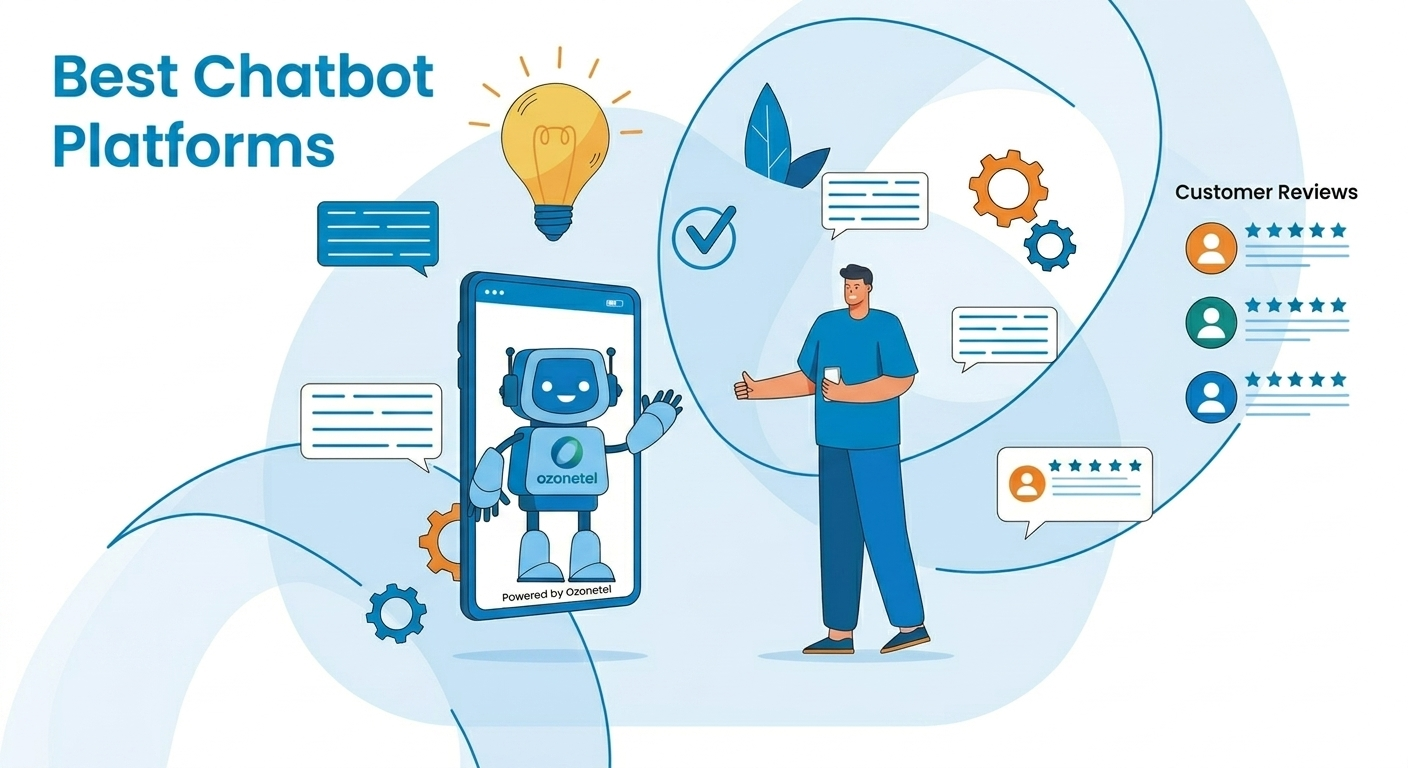
Choosing the wrong chatbot platform costs more than the subscription fee — it costs you handle time, agent morale, and customers who never came back. This guide cuts through vendor noise and compares the 11 best AI chatbot platforms in 2026 based on deployment complexity, customer service fit, integration depth, and real-world enterprise performance.

Whether you’re running a contact centre handling thousands of daily interactions or a lean support team looking to automate FAQs overnight, there’s a platform here built for your scale.

Key Takeaways

  • Platform fit matters more than features. There is no single best chatbot platform — the right choice depends on your use case (customer service, lead gen, or social commerce), your existing tech stack, and conversation volume.
  • Enterprise contact centres need more than a chat widget. High-volume operations require multi-agent orchestration, voice AI, context-preserving escalation, and deep CRM integration — capabilities only a few platforms on this list provide end-to-end.
  • Containment rate is the metric that matters. A bot that escalates 90% of conversations to human agents is not automating support — it is delaying it. Evaluate platforms on intent-level containment data, not overall deflection volume.
  • Integration depth determines real-world value. Native CRM, ticketing, and telephony connections drive faster deployment and better agent context. Avoid platforms that rely on middleware workarounds for core integrations.
  • SMB and enterprise needs diverge sharply. Tidio and HubSpot Chatflows deliver genuine value for small teams with minimal setup. LivePerson and Ozonetel are engineered for large-scale deployments where compliance, uptime, and multi-channel orchestration are non-negotiable.
  • Deployment timeline is a real differentiator. Go-live timelines range from a few hours (Tidio, HubSpot) to eight weeks or more (LivePerson enterprise). Factor implementation effort into your total cost of ownership, not just subscription pricing.
  • Multilingual support is a strategic requirement, not a bonus. For Indian and regional deployments, native Indic script handling — not just translation APIs — is essential for accurate intent recognition and customer trust.

Quick Comparison: Best Chatbot Platforms in 2026

PlatformBest ForDeploymentFree PlanStarting Price
OzonetelEnterprise CX + voice AICloud / On-premNoCustom quote
IntercomProduct-led growth + supportCloudNo~$39/seat/mo
FreshchatSMB to mid-market supportCloudYes$19/agent/mo
Zendesk AIUnified support operationsCloudNo$55/agent/mo
HubSpot ChatflowsCRM-connected lead captureCloudYesFree (HubSpot plan)
TidioE-commerce & small businessCloudYes$29/mo
LivePersonLarge enterprise, voice + digitalCloud/HybridNoCustom quote
ManyChatWhatsApp & Instagram DMsCloudYes$15/mo
Yellow.aiEnterprise omnichannel AICloudNoCustom quote
BotpressOpen-source / developer teamsSelf-hostedYesFree (cloud $495/mo)
DriftB2B pipeline + ABMCloudNoCustom quote

How We Evaluated These Platforms

Every platform on this list was assessed against five criteria that matter to CX leaders:

Conversational intelligence — Can it handle intent variations, mid-conversation topic shifts, and language nuance, or does it fall apart outside scripted flows?

Integration depth — Does it connect natively to the CRMs, ticketing systems, and telephony stacks your team already uses?

Escalation handling — How gracefully does it transfer to a human agent when the conversation needs one — with full context, not a cold handoff?

Enterprise readiness — Compliance posture, SLA commitments, data residency options, and dedicated support versus community forums.

Time to first value — Can a CX team go live with a useful bot in days, or does it require months of training data and developer effort?

11 Best Chatbot Platforms in 2026

1. Ozonetel
Overview

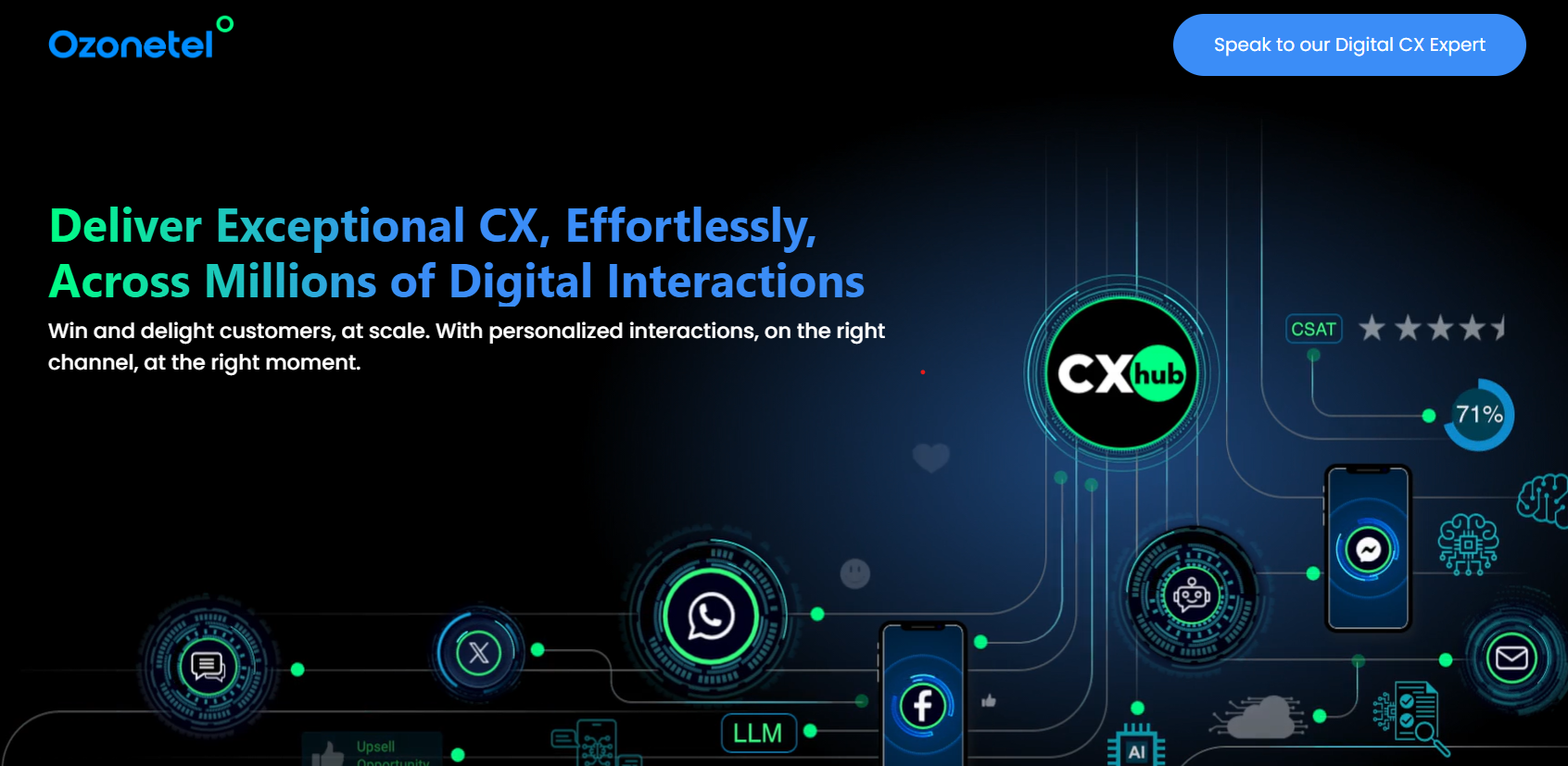
Ozonetel is India’s leading AI-powered CX platform, purpose-built for enterprises running high-volume contact centres. Unlike standalone chatbot tools, Ozonetel’s conversational AI sits inside a unified platform that also handles inbound/outbound voice, omnichannel routing, AI Quality Audits, and Voice of Customer analytics — which means your bot and your agents work from the same system, with shared context throughout.

The architecture behind Ozonetel’s chatbot reflects a key design principle: one general-purpose agent handling billing, technical support, upgrades, and complaints will be mediocre at all of them. Ozonetel instead deploys multiple specialised agents — each trained on a distinct workflow and domain — orchestrated by a routing layer that detects intent and hands off cleanly between them. This is the same approach that allows the platform to handle 580+ distinct government services, or separate DTH activation, error resolution, and VAS queries, without a single agent trying to do everything.

Best for: Enterprises in BFSI, government, D2C, and automotive that run multi-channel contact centres and need true agentic AI — not scripted decision trees dressed up with NLU.

Key features

  • Multi-agent orchestration — domain-specific agents for distinct workflows (billing, support, sales, service), routed by detected intent; not one general agent stretched across use cases
  • Multi-intent recognition — a customer asking about an order and a return policy in the same message gets both answers in a single turn, not two separate flows
  • Context-preserving escalation — when handoff to a human agent is required, the full conversation context travels with it; agents never ask the customer to repeat themselves
  • Omnichannel chatbot — web, WhatsApp, and in-app with native handoff to live agents
  • Agent Assist — real-time suggestions, knowledge retrieval, and next-best-action guidance for agents handling escalated conversations
  • AI Quality Audits — automated scoring across 100% of voice and chat interactions
  • Voice of Customer (CXi Pulse) — post-interaction analytics surfacing intent trends, sentiment, and resolution gaps
  • Native integrations — Salesforce, Zendesk, Freshdesk, Zoho, HubSpot, LeadSquared; cloud, hybrid, and on-premise deployment options

Pricing: Custom quote, use-case and volume-based. Typically quoted within 24 hours.

G2 rating: 4.3/5 (see Ozonetel on G2)

2. Intercom
Overview

Intercom built its reputation on in-app messaging and has evolved into a full-stack customer support platform with its Fin AI Agent at the centre. Fin is one of the better-performing LLM-based bots for resolving support tickets without scripts — it answers from your knowledge base directly.

Best for: SaaS companies and product teams with a strong self-service knowledge base looking to deflect L1 support volume.

Key features

  • Fin AI Agent (LLM-powered, knowledge-base-driven resolution)
  • Omnichannel inbox: email, chat, WhatsApp, Instagram
  • Workflows automation builder (no-code)
  • Proactive messaging and product tours

Pricing: From ~$39/seat/month. Fin AI has additional resolution-based pricing.

G2 rating: ~4.5/5

3. Freshchat (Freshworks)
Overview

Freshchat sits within the Freshworks ecosystem and is a pragmatic choice if your team already uses Freshdesk for ticketing. The bot builder is visual and accessible to non-technical users, and the platform scales from small support teams to mid-market operations without a steep learning curve.

Best for: Teams already on Freshdesk/Freshworks looking to add chatbot without a new vendor relationship.

Key features

  • Freddy AI bot with intent detection
  • Unified inbox across chat, email, and social
  • Native Freshdesk integration for ticket creation
  • Free plan available for small teams

Pricing: From $19/agent/month (Growth plan).

G2 rating:

4. Zendesk AI
Overview

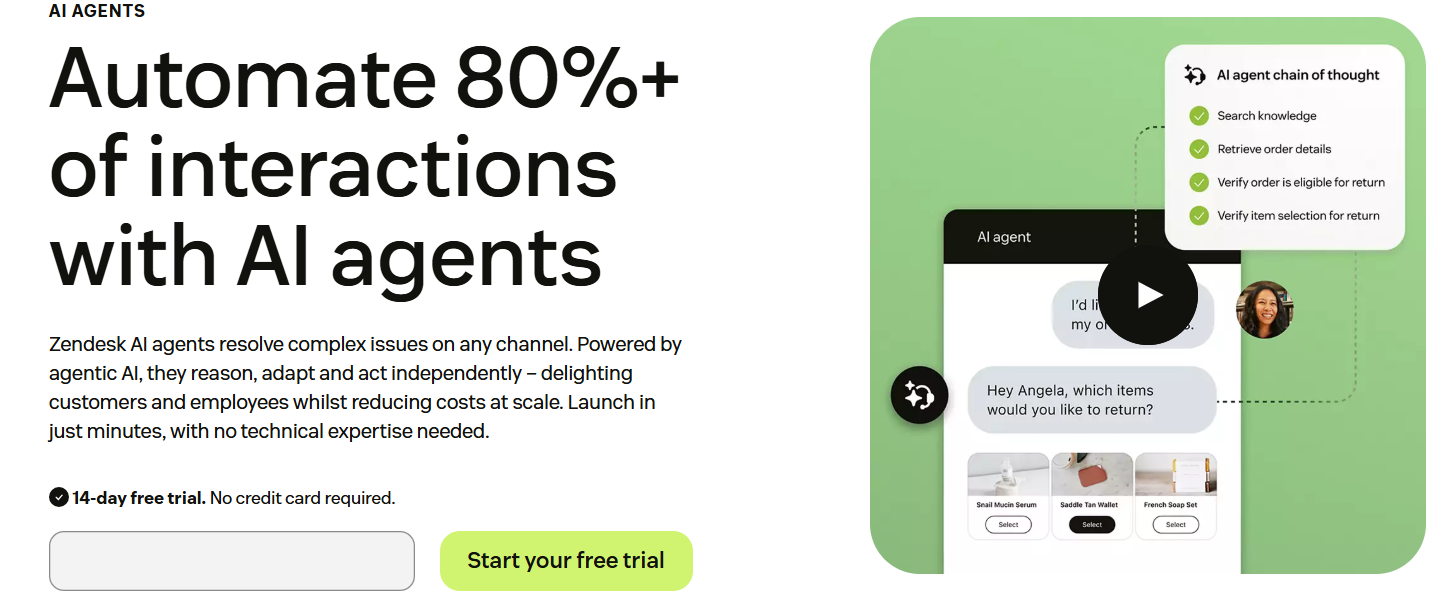
Zendesk’s AI layer has matured considerably. For operations already on Zendesk Support, activating the AI features is a natural extension — it shares the same ticket data, macros, and agent context rather than operating in a silo.

Best for: Enterprises with existing Zendesk deployments wanting AI automation without a platform migration.

Key features

  • AI-powered intent recognition and auto-triage
  • Intelligent triage across email, chat, and voice
  • Sunshine Conversations for API-based channel extensibility
  • Reporting integrated with Zendesk Explore

Pricing: AI features from $55/agent/month (Suite plans).

G2 rating: ~4.3/5

5. HubSpot Chatflows
Overview

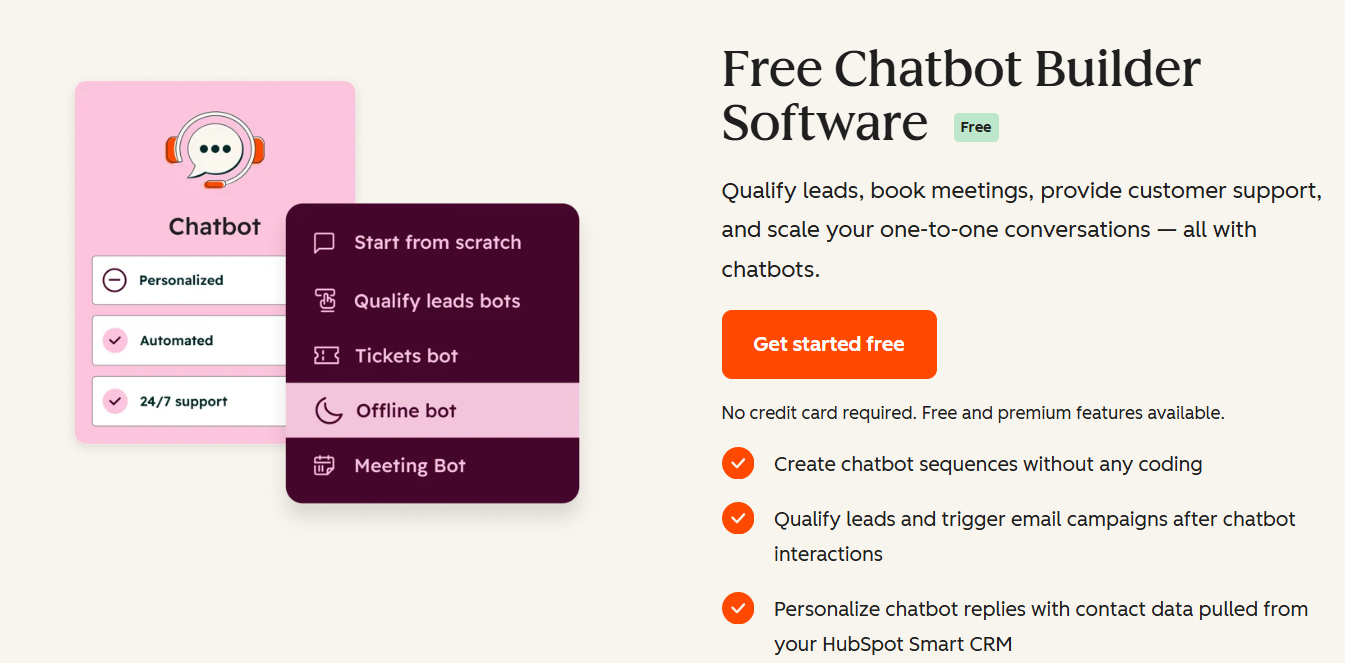
HubSpot’s chatbot builder is native to the CRM, which makes it compelling for marketing and sales teams rather than service-heavy operations. If your primary use case is lead capture and qualification on a B2B website, the free version is hard to beat.

Best for: Marketing teams and SMBs wanting to qualify and capture leads via chat without a separate tool.

Key features

  • Visual flow builder, no code required
  • Native CRM integration (contact creation, deal update)
  • Meeting booking bot
  • Free on HubSpot Free CRM tier

Pricing: Free on HubSpot Free. Advanced features on Marketing Hub (from $800/month).

G2 rating: ~4.4/5

6. Tidio
Overview

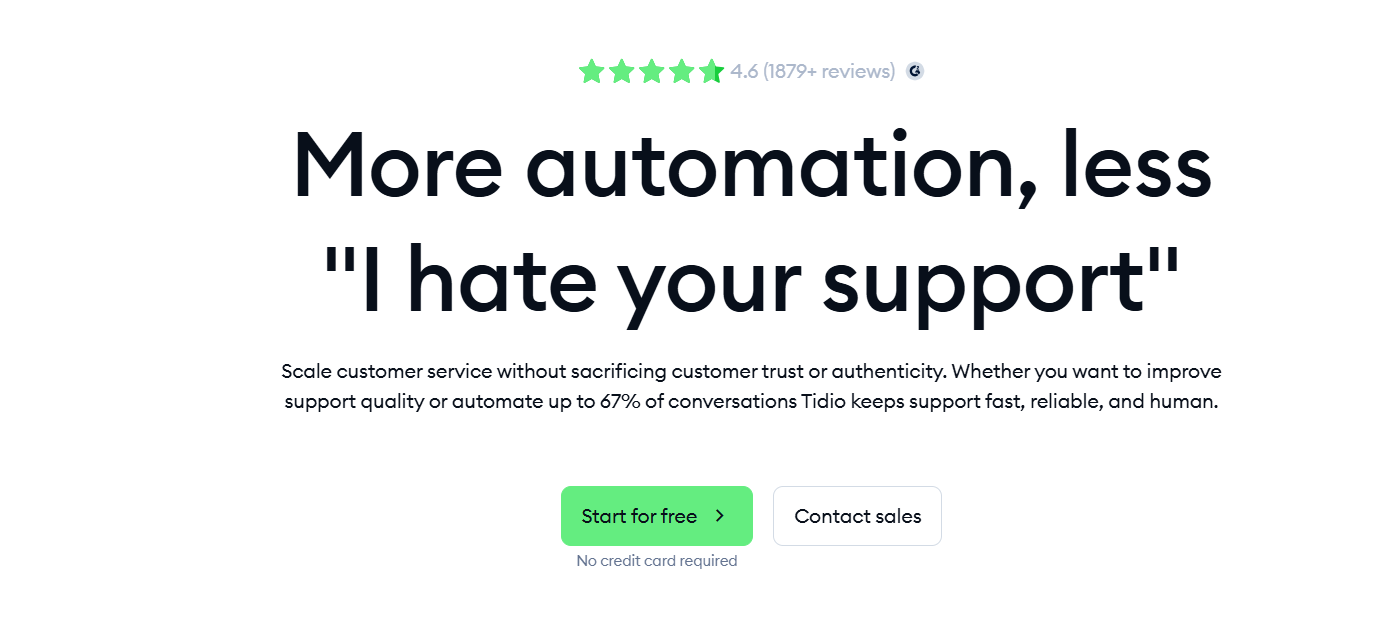
Tidio is one of the most accessible chatbot platforms for small businesses and e-commerce stores. Setup takes under an hour, and the Lyro AI agent handles customer FAQs with reasonable accuracy out of the box.

Best for: E-commerce stores (especially Shopify) and small businesses wanting fast, affordable AI chat with minimal setup.

Key features

  • Lyro AI agent (conversational FAQ resolution)
  • Live chat + email + Messenger in one inbox
  • Shopify and WooCommerce integrations
  • Free plan for up to 50 conversations/month

Pricing: From $29/month.

G2 rating: ~4.7/5

7. LivePerson
Overview

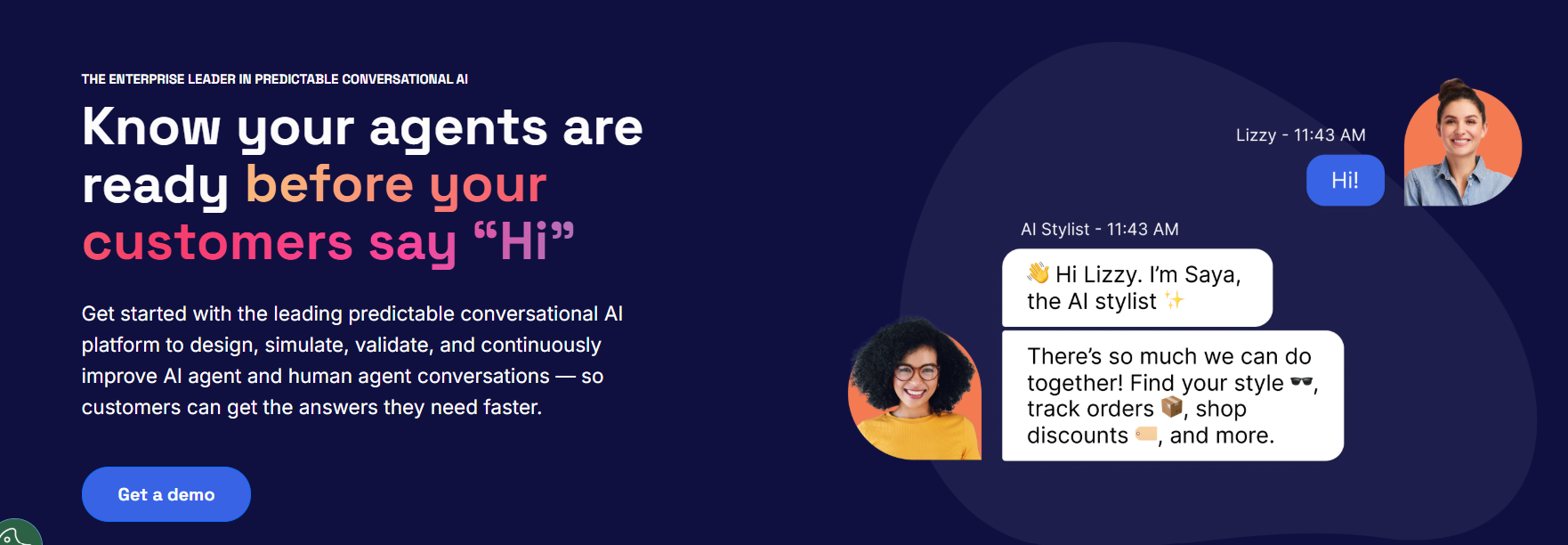
LivePerson is built for large enterprises and sits at the intersection of voice, messaging, and AI. Its Conversational Cloud handles billions of interactions annually across some of the world’s largest financial services and telecom brands. The platform is powerful but has a steeper implementation curve.

Best for: Large enterprises in banking, insurance, and telecom requiring enterprise-grade compliance, voice + digital AI, and dedicated implementation support.

Key features

  • Conversational AI across voice, SMS, WhatsApp, and web
  • Intent Manager and Conversation Orchestrator
  • Agent workspace with AI assist
  • HIPAA, SOC 2, GDPR compliance posture

Pricing: Custom quote.

G2 rating: ~4.2/5

8. ManyChat

Overview

ManyChat specialises in conversational marketing on social channels — primarily Instagram DMs, WhatsApp, and Facebook Messenger. For D2C and e-commerce brands running acquisition campaigns, it handles automated conversation flows exceptionally well.

Best for: D2C brands and e-commerce marketers running campaigns on Instagram, WhatsApp, or Facebook.

Key features

  • Visual drag-and-drop flow builder
  • Instagram DM automation (including comment triggers)
  • WhatsApp Business integration
  • Broadcast messaging and sequences

Pricing: From $15/month.

G2 rating: ~4.6/5

9. Yellow.ai
Overview

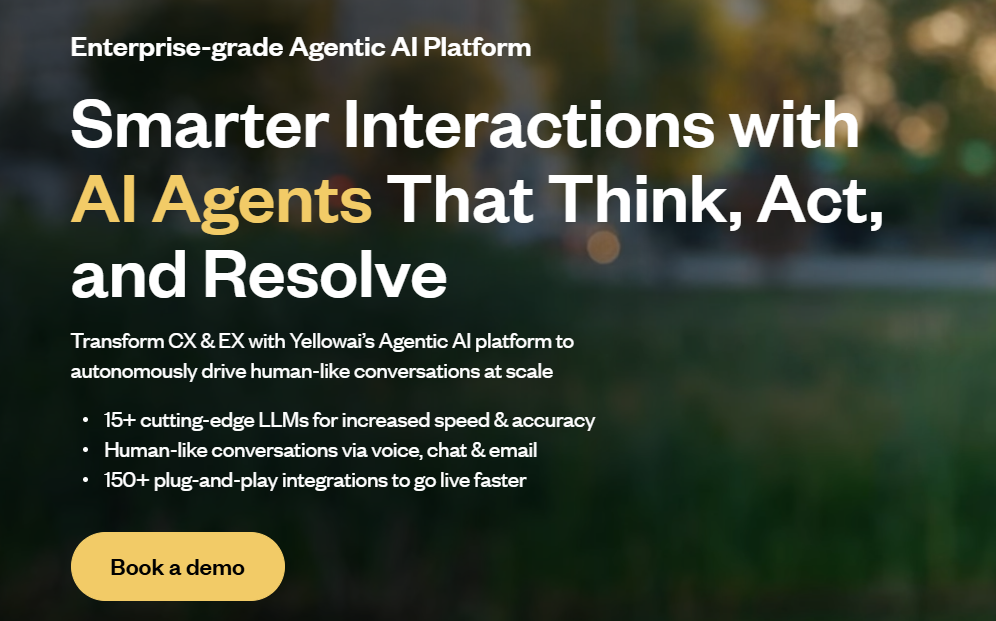
Yellow.ai is an enterprise conversational AI platform with strong traction in India and the Middle East. Its Dynamic AI Agents are trained for specific industry use cases, and the platform supports over 135 languages — a genuine differentiator for regional and multilingual deployments.

Best for: Enterprises in BFSI, retail, and healthcare needing multilingual AI bots with pre-built industry templates.

Key features

  • Dynamic AI Agents with pre-built industry flows
  • Omnichannel: voice, web, WhatsApp, app
  • 135+ language support with native scripts
  • Analytics and conversation intelligence dashboard

Pricing: Custom quote.

G2 rating: ~4.4/5

10. Botpress
Overview

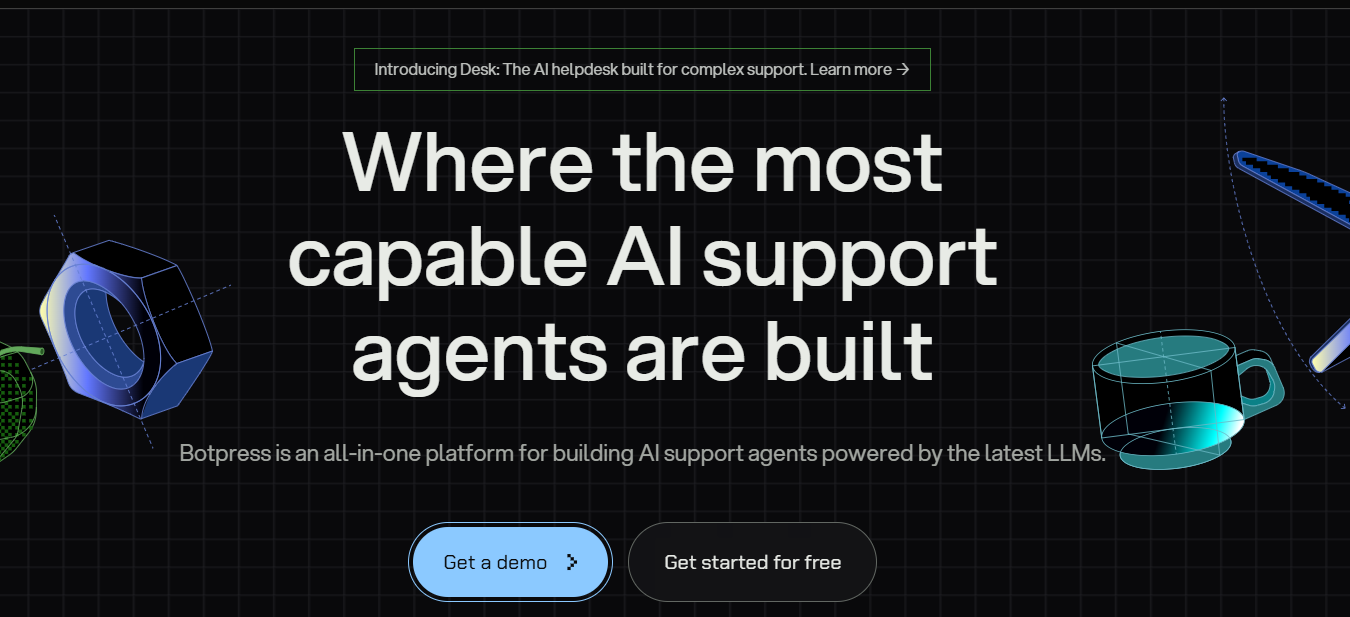
Botpress is the developer’s choice — an open-source conversational AI framework with a cloud version for teams that want flexibility without building infrastructure from scratch.

Best for: Developer teams and startups wanting open-source control with active community support.

Key features

  • Open-source core (MIT licensed)
  • Visual flow studio + code editor
  • LLM integration (GPT-4, Claude, Mistral)
  • Self-hosted or cloud deployment

Pricing: Open-source free; cloud plans from $495/month.

G2 rating: ~4.6/5

11. Drift (Salesloft)
Overview

Drift pioneered conversational marketing and is now part of Salesloft. Its strength is account-based marketing — identifying target accounts visiting your site and routing them to the right sales rep or a personalised bot experience.

Best for: B2B enterprise sales teams running ABM campaigns and wanting real-time buyer engagement on their website.

Key features

  • AI-powered site personalisation based on company/account data
  • Bionic chatbots with meeting scheduling
  • Revenue Acceleration dashboards
  • Salesforce and HubSpot integrations

Pricing: Custom quote.

G2 rating: ~4.4/5
Ozonetel Chatbot in Practice: Three Enterprise Deployments

Telangana State Government — Agentic AI across 580+ public services

The Telangana government’s MeeSeva programme — covering certificates, payments, and registrations for millions of citizens — had already exhausted what rule-based chatbots could do. Those bots couldn’t execute multi-step workflows or adapt when citizen intent varied from the script.

Ozonetel deployed a WhatsApp-based agentic AI system that understands intent in both English and Telugu, validates eligibility and documents in real time, guides citizens through multi-step service journeys end-to-end, and triggers payments and appointment bookings without human intervention. Escalation to a human agent happens only when the situation genuinely requires it.

Result: 3 lakh+ sessions handled per month through a single WhatsApp number, 24/7 access to 580+ government services, and a measurable reduction in physical MeeSeva centre footfall.

Muthoot — WhatsApp catalog commerce and ERP integration

Muthoot needed to promote new jewellery product lines across a distributed customer base without relying on printed catalogs or physical retail. WhatsApp — with rich media support and universal reach across demographics — was the right channel. The challenge was making it operationally viable at scale.

Ozonetel’s WhatsApp solution deployed digital product catalogs directly inside the chatbot, enabling Muthoot to update designs and inventory centrally and push changes across all centres in a single step. An ERP integration synced inventory, orders, and customer data automatically, eliminating manual coordination.

Result: 150,000+ WhatsApp impressions within months of deployment; near-zero catalog distribution costs; continuous product updates without retail dependency.

Mahindra Farm Machinery — #KisanBot: WhatsApp AI for Tier-3 farmers

Mahindra Farm Machinery needed to reach and educate farmers aged 28–65 in Tier-3 markets — an audience on WhatsApp but underserved by fragmented, non-interactive channels. Product awareness was low, support touchpoints were disconnected, and traditional outreach couldn’t scale to rural geographies.

Ozonetel deployed #KisanBot — a WhatsApp-based AI chatbot built specifically for this audience. It ran bulk awareness campaigns in farmers’ preferred languages, guided users through product discovery and dealer location, assisted with purchase decisions, and handled after-sales requests (spares, service appointments, complaint registration) — all within a single end-to-end encrypted conversation thread.

Result: Measurable spike in brand visibility and product inquiries across Tier-3 markets; faster lead response times for sales teams; a unified engagement layer covering the full journey from first inquiry to post-sale service

How to Choose a Chatbot Platform

The platform that’s right for a 10-person SaaS support team is almost certainly wrong for a 500-seat contact centre. Here are the five questions that should shape your shortlist — before you request a demo from anyone.

  1. What’s your primary use case? Customer service, lead generation, and conversational marketing are distinct use cases that different platforms optimise for. Platforms like Ozonetel and LivePerson are built for service-heavy contact centre environments; Drift and HubSpot Chatflows are built for sales and marketing.
  2. Do you need voice AI or just text chat? Most chatbot platforms handle web chat and messaging channels. Far fewer handle voice — autonomous phone conversations without an IVR tree. If your contact centre handles significant inbound call volume, a platform like Ozonetel that extends AI to voice avoids the need for a separate vendor.
  3. What does your existing tech stack look like? The best integrations are native, not Zapier-patched. If you’re on Freshdesk, Freshchat’s native integration saves weeks of setup. If you’re on Salesforce or HubSpot, check whether the chatbot creates and updates records automatically or requires manual mapping.
  4. What volume will the bot handle? Platforms priced per agent or per seat can become expensive quickly at scale. Platforms with conversation-based or flat enterprise pricing (Ozonetel, LivePerson, Yellow.ai) often work out cheaper above a certain volume threshold. Get pricing modelled on your actual monthly conversation volume, not a theoretical seat count.
  5. What does ‘going live’ actually require? Ask each vendor: how long does a typical deployment take, and what do you need from us to make it happen? Honest answers range from ‘two hours with your knowledge base’ (Tidio) to ‘eight weeks with your IT team’ (LivePerson at enterprise scale). Ozonetel’s typical timeline is two to four weeks.

Best Chatbots for Customer Service

If customer service is your primary use case, the shortlist narrows meaningfully. Here’s what the best customer service chatbot platforms have in common:

  • High resolution rates without escalation. A bot that transfers 90% of conversations to agents isn’t automating customer service — it’s delaying it. Look for platforms that report containment rates by intent category, not just overall deflection.
  • Context-aware escalation. When a conversation does need a human, the handoff should include the full transcript, identified intent, and any data collected — not just an open chat window.
  • CRM and ticketing integration. The bot should create a ticket, update a contact record, or close a case without an agent having to repeat data entry.
  • Multilingual support where relevant. For Indian contact centres and global operations, language support is not a nice-to-have.

Best platforms specifically for customer service: Ozonetel (enterprise, voice + chat), Intercom (SaaS/product support), Freshchat (Freshdesk ecosystem), Zendesk AI (Zendesk ecosystem), Yellow.ai (multilingual enterprise).

Conclusion

The best chatbot platform in 2026 is the one that maps cleanly to your use case, integrates with your existing stack, and can demonstrate containment rates — not just a feature checklist.

For enterprise contact centres handling voice and digital at scale, Ozonetel is the only platform on this list that unifies voice AI, chatbot, agent assist, and quality audits in a single deployment. For SaaS support teams, Intercom or Freshchat will get you to value faster. For social commerce and D2C marketing, ManyChat or Tidio are purpose-built.

Ready to see Ozonetel in your environment?

Prashanth Kancherla

Share this post:

Frequently Asked Questions

A chatbot platform is software that lets businesses build, deploy, and manage automated conversational agents across channels like web chat, WhatsApp, voice, and email. Modern platforms combine rule-based flows with AI-powered natural language understanding to handle customer queries without requiring a human agent for every interaction.

A chatbot typically follows predefined decision trees and handles FAQ-style queries within a narrow scope. A conversational AI platform uses large language models (LLMs) or trained ML models to understand free-form intent, hold multi-turn conversations, and take actions — without needing the user to phrase their question in a specific way.

The key metrics are: containment rate (conversations resolved without human handoff), first contact resolution (FCR) rate, CSAT for bot-handled conversations, and average handling time for escalated conversations. Avoid measuring only deflection volume — a bot that deflects but frustrates customers is worse than no bot.

A simple FAQ bot on Tidio or HubSpot can be live in hours. An enterprise-grade conversational AI deployment integrated with CRM, telephony, and custom workflows typically takes two to eight weeks. Ozonetel’s typical deployment timeline is two to four weeks.

For small businesses, Tidio (free up to 50 conversations/month), HubSpot Chatflows (free with HubSpot CRM), and Botpress (open-source) offer capable free tiers. For enterprise teams, free tiers rarely cover the integration depth or conversation volume needed.

Several platforms support Indian languages including Hindi, Tamil, Telugu, Kannada, and Bengali. Yellow.ai and Ozonetel both have native support for Indian languages with Indic script handling — important for D2C and BFSI deployments serving regional audiences at scale.