10 Benefits of IVR for Businesses: How Intelligent IVR Improves CX, Costs, and Conversions

Prashanth Kancherla

Sep 2, 2026 | 7 mins read

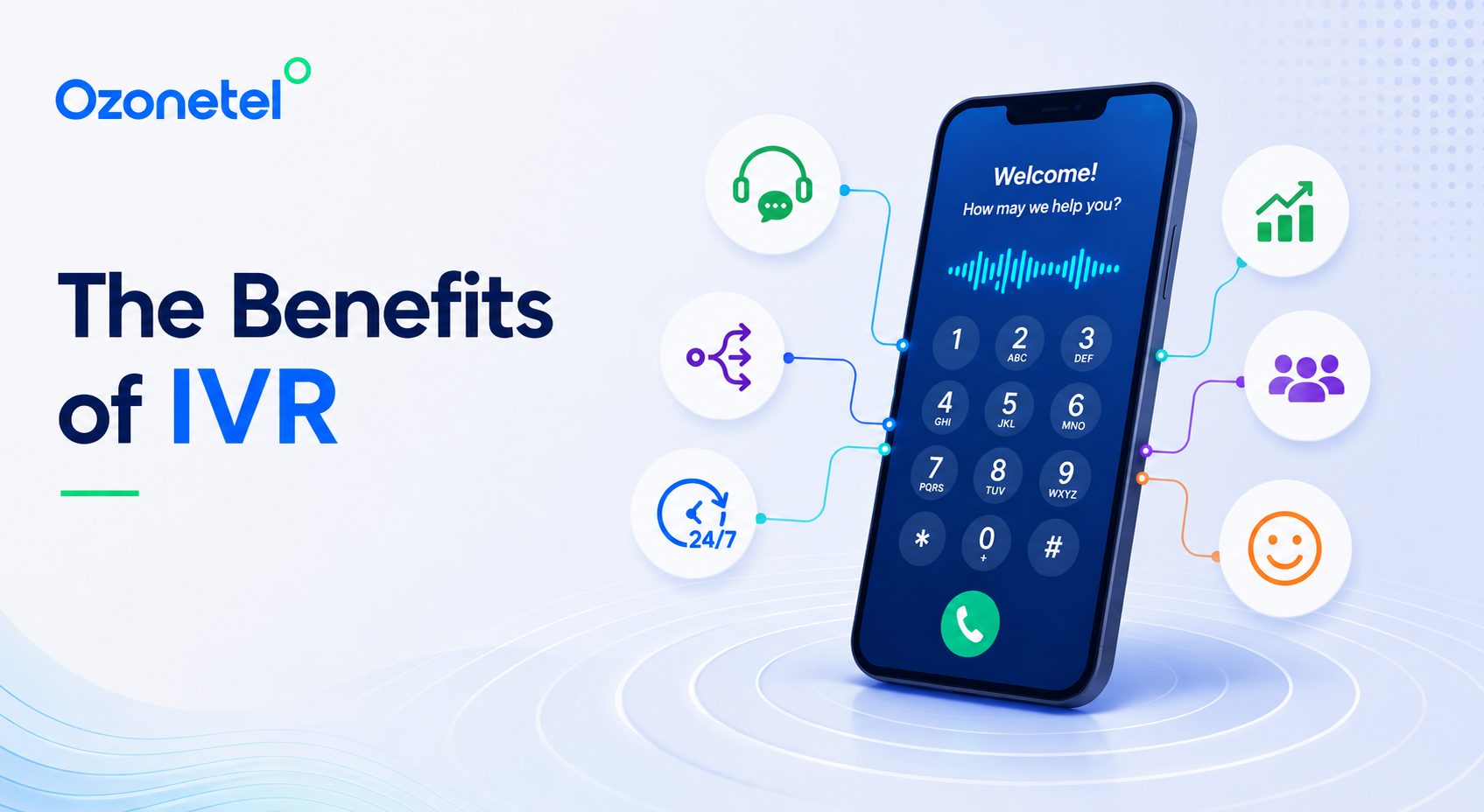
How many customers hang up before your team even answers? That single number says more about your IVR than any feature list ever could. The real benefits of IVR show up when it fixes that exact problem: lower cost per call, faster resolution, fewer dropped calls, seamless routing, round-the-clock availability, and agents who spend time on calls that actually need them.

This blog breaks down the key benefits of IVR — and, more importantly, how each one makes a real difference to the people calling your business.

Why Intelligent IVR Delivers Better Results

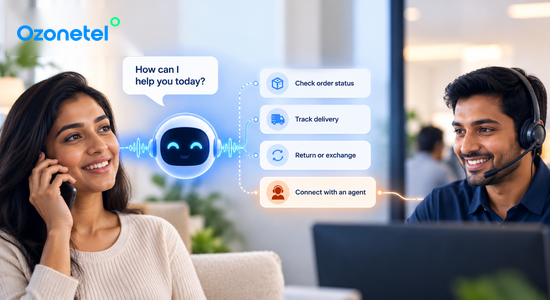
An Intelligent IVR does more than answer and transfer calls. It understands why a customer is calling, applies context-based routing, and guides each caller to the fastest path to resolution: self-service, the right agent, a callback, or a priority queue. Every decision happens in the background, before the caller even notices they’ve been routed anywhere.


That’s a shift from static, one-size-fits-all menus, where every caller hears the same options in the same order regardless of who they are or why they’re calling. CX teams build these journeys with:

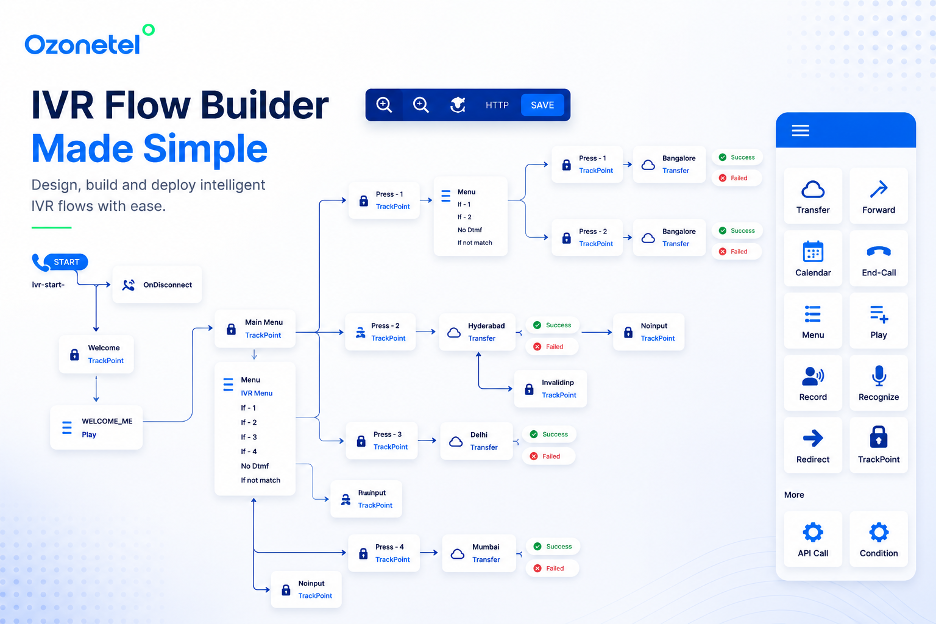
  • Drag-and-drop flow design
  • Smart routing
  • CRM integrations
  • Conversational AI
  • Speech input
  • Queue callbacks
  • Sticky agent routing
  • Real-time analytics

Together, these personalize call handling and cut misroutes as the flow runs. That’s the real dividing line between the best IVR software and one that just answers calls, and it’s exactly where most of the benefits below start showing up.

See how dynamic routing and self-service change the caller experience.

10 Benefits of IVR for Businesses

1. Lower cost per call

AI-powered IVR cuts cost per call by handling routine interactions, order status, payment info, appointment details, balances, without needing an agent. Agents spend less time on repeat queries, and support scales without headcount growing at the same pace as call volume.

2. Better First Contact Resolution

Misrouted calls mean customers repeat themselves, and repeat calls pile up. HDB Financial Services built a 360-degree customer view with Ozonetel and SugarCRM, resolving 70% of queries through self-service IVR and hitting 90% First Call Resolution. IVR works best tied to customer data, not run as a standalone menu.

3. More self-service resolution

Well-designed IVR lets customers handle simple tasks themselves, useful wherever speed beats agent contact. For ACKO, Ozonetel built self-service flows for policy, claims, and renewals, delivering 3,000+ resolutions a month and 90% CSAT. It doesn’t just deflect calls, it decides which requests can be self-served.

4. Shorter Average Handle Time

AHT drops when agents get context before the call connects. Angel One cut AHT by 25% by routing to specialist teams with Salesforce context up front, removing the discovery questions.

5. Less call abandonment

Callers hang up when they wait too long or land in the wrong queue. Angel One handled 40,000+ calls a day and used Ozonetel’s IVR and routing to cut abandonment by 58%, with priority callbacks when calls dropped. That matters most where spikes are unpredictable: broking, healthcare, BFSI.

6. Support around the clock

IVR keeps basic support available outside business hours and during peak periods. Routine requests get resolved instantly; urgent ones get escalated or scheduled for callback, so agents aren’t on call around the clock.

7. Better CX and CSAT

Customers want quick answers, fewer transfers, less repeating themselves. ACKO hit 90% CSAT on Ozonetel’s IVR approach; Redcliffe Labs lifted NPS by 60% after personalizing patient engagement at scale. Automation only improves CX when it’s built around the customer’s journey, not internal department lines.

8. Scales through call spikes

Volumes spike with billing cycles, campaigns, and outages. Cloud IVR absorbs that without extra infrastructure or temp staff. Wakefit used Ozonetel to cut call volume by 26% and bring repeat call rate down from 2.7 to 2.0.

9. Handles complex, multilingual journeys

Businesses serving varied markets need IVR that supports multiple languages and escalation paths, something a static menu can’t manage at scale. Ozonetel’s drag-and-drop builder lets teams build self-service paths, route priority customers to specialists, and update flows during campaigns, all without code.
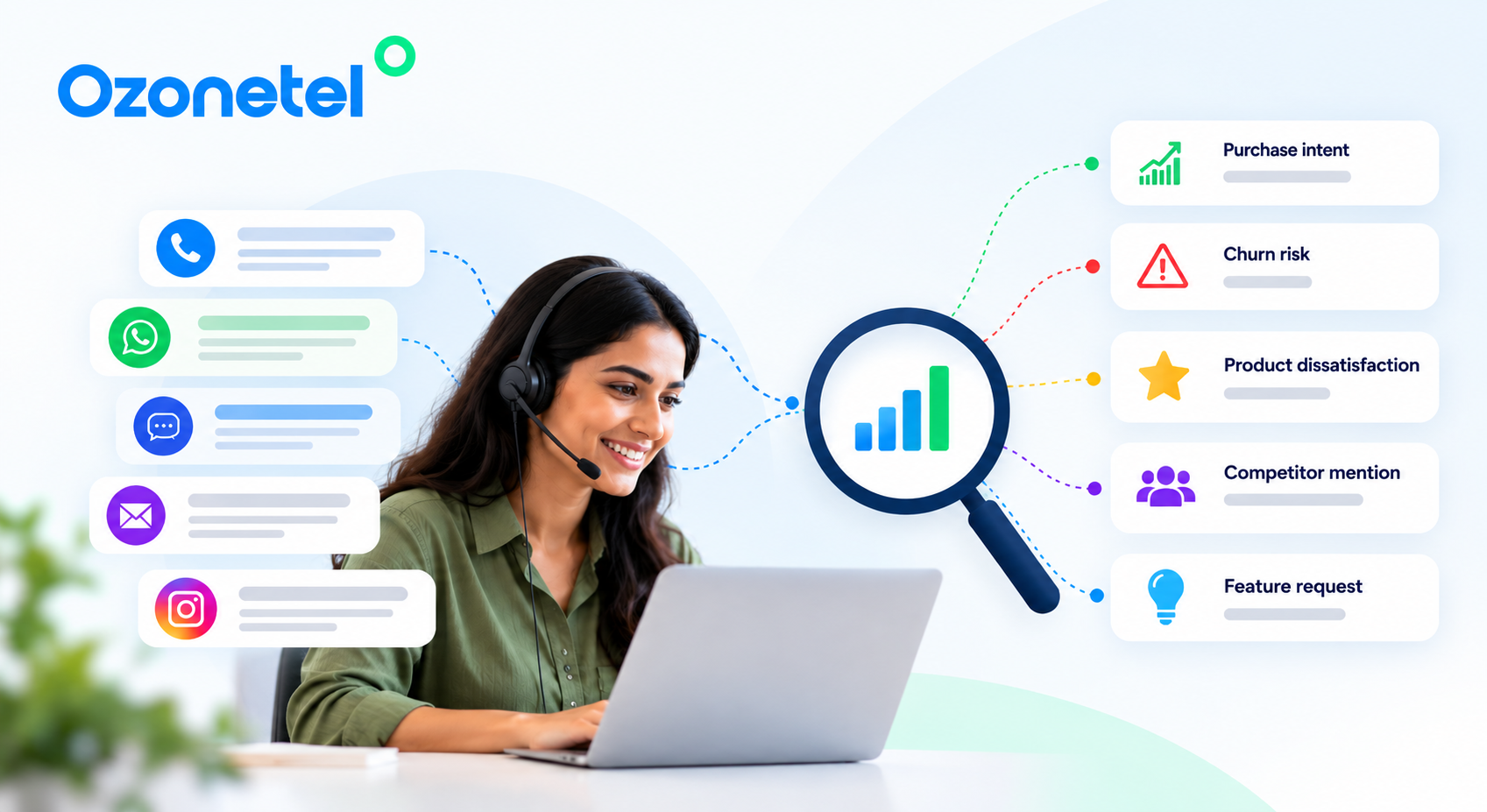
10. Turns calls into business intelligence

Every IVR interaction shows what customers need and where they drop off. With analytics, IVR becomes a data source, not just a support channel. Tata 1mg centralized campaign management and AI-led Voice of Customer, landing 2X higher lead conversion and 60% higher retention. That’s broader than IVR alone, but it shows what connected conversations can do for revenue.

Facing High abandonment rates? to see where your callers drop, repeat, or escalate.

Real Outcomes from Ozonetel Customers

A quick look at how some of India’s top firms across industies are leveraging Ozonetel AI IVR to drive better

CustomerChallengeOzonetel Impact
HDB Financial ServicesNeeded visibility and faster resolution70% self-service resolution, 90% FCR, 5% lower TAT
Angel OneHigh volumes, long waits, rising abandonment58% lower abandonment, 25% lower AHT
ACKOPolicy and claims journeys needed self-service3,000+ monthly resolutions, 90% CSAT
WakefitRepeat and delivery-related calls increasing load26% lower call volume, repeat rate 2.7 to 2.0
Tata 1mgFragmented data limited CX visibility2X higher conversions, 60% higher retention

How to Measure IVR Benefits

The benefits of IVR shouldn’t be measured by how many calls are kept away from agents. A good IVR is measured by whether customers get what they called for, faster, with less friction, and fewer repeat interactions.
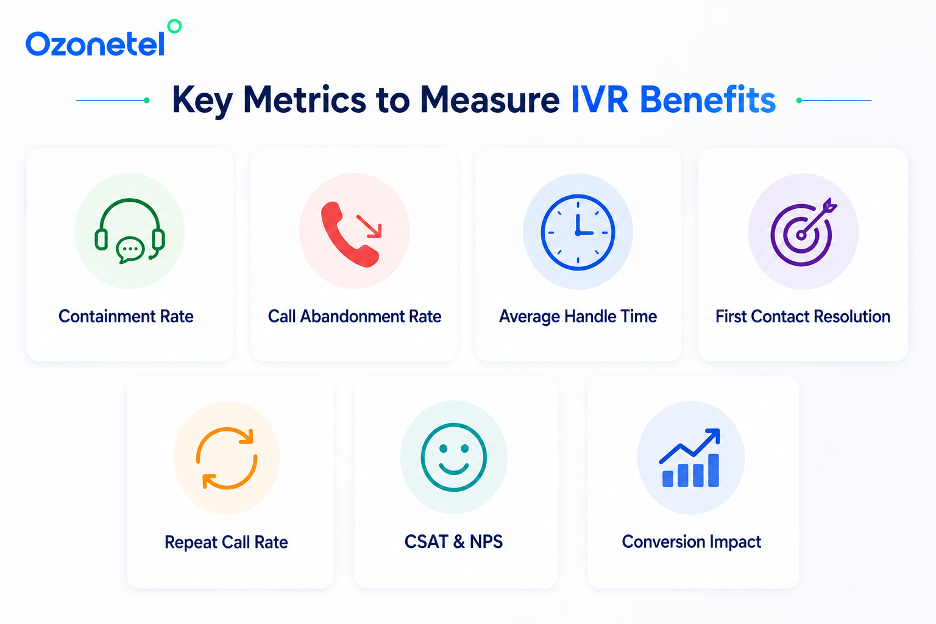
Track these metrics:

  • Containment rate: How many callers resolved their query through self-service without reaching an agent, one of the clearest signs your IVR is actually helping.
  • Call abandonment rate: How many callers drop before getting help. High abandonment usually means the flow is too long or routing to overloaded queues.
  • Average Handle Time: How long agents spend on calls after IVR transfer. CRM and CTI integrations that pass caller context ahead of time help bring this down.
  • First Contact Resolution: Whether customers get resolved on the first try. Intelligent routing and sticky agent logic improve this by connecting callers to the right person the first time.
  • Repeat call rate: Whether callers are coming back because the issue wasn’t actually solved, usually a sign of broken self-service flows or poor routing.
  • CSAT and NPS: Whether the experience felt fast and easy, the check on whether automation is helping or just moving the queue.
  • Conversion impact: For sales, renewals, or lead qualification journeys, whether IVR routing is actually improving outcomes, not just efficiency.

CX teams get the clearest read on all of this through live dashboards and real-time analytics that show where callers drop, which flows resolve queries, and where the next fix should happen.
Why Cloud-based IVR is the Preferred Choice for Businesses

Cloud IVR offers several advantages for businesses operating in India:

  • Scales effortlessly during peak demand: Industries such as e-commerce, BFSI, travel, and retail often experience spikes in call volumes during festivals, sales events, EMI due dates, and renewal cycles. Cloud IVR can scale instantly without requiring additional hardware.
  • Supports multi-location and multilingual operations: Businesses can manage multiple locations from a single platform while delivering language-specific IVR experiences in Hindi, Tamil, Telugu, Bengali, and other regional languages.
  • Deploys faster with lower upfront investment: Unlike on-premise systems that may take weeks or months to install, contact center IVR can typically be deployed within days, helping businesses.

What Makes Ozonetel Intelligent IVR Different?

Most IVR systems can answer and route calls. Ozonetel Intelligent IVR goes further, helping businesses understand, personalize, and continuously improve the entire caller journey.

What sets it apart:

  • Drag-and-drop flow design: Build and adjust journeys without coding, useful for campaign spikes, service issues, or seasonal demand.
  • Smart routing: Route by intent, skill, priority, or agent availability to cut misroutes.
  • CRM and CTI integrations: Pull customer context into the call before it reaches an agent.
  • Conversational AI and speech input: Support natural, voice-led interactions, not just keypad navigation.
  • Self-service automation: Resolve routine queries, order updates, payment reminders, renewals, without an agent.
  • Queue callbacks and virtual hold: Offer a callback instead of a wait, reducing abandonment.
  • Sticky agent routing: Send returning customers to the same agent or relationship manager.
  • Live dashboards: Monitor queues, routing outcomes, and drop-offs in real time.

For CX leaders, the difference is visibility: not just running an IVR, but seeing which journeys work, which fail, and where to improve next

Final Word

IVR used to mean press a number, wait, get transferred. That’s not enough anymore. Done well, it lowers cost, improves resolution, and cuts abandoned calls, while giving CX teams the data to keep improving journeys. Systems that pull this off stay easy to adjust and easy to measure. That’s where Ozonetel Intelligent IVR fits.

Want to turn your IVR from a static phone menu into a measurable CX engine

Prashanth Kancherla

Frequently Asked Questions

It takes the repetitive load off your agents so they can focus on calls that actually need a human, while customers get routine questions answered through self-service and smart routing without waiting in a queue for them.

It automates the calls that don’t need a person, order status, balance checks, appointment confirmations, and routes anything complex straight to the right team, so fewer calls bounce between agents before getting resolved.

It reads caller intent and pulls in CRM context before the call even connects, which cuts wait time, avoids sending people to the wrong queue, and gets them to a resolution without repeating themselves.

Containment rate and abandonment rate show whether the IVR is actually working. AHT, FCR, and repeat call rate show what’s happening once a call reaches an agent. CSAT, NPS, and conversion impact show whether any of it is moving the needle on the customer’s side.

Traditional IVR runs on static menus, the same options, in the same order, for every caller. Intelligent IVR adjusts in real time based on intent, CRM context, and speech input, so no two callers necessarily hear the same flow.

Tags:

IVR

Share this post: