- Resources
- What Are Customers Really Saying? 10 Customer Signals Hidden in Every Conversation
What Are Customers Really Saying? 10 Customer Signals Hidden in Every Conversation

Prashanth Kancherla
Oct 1, 2026 | 9 mins read
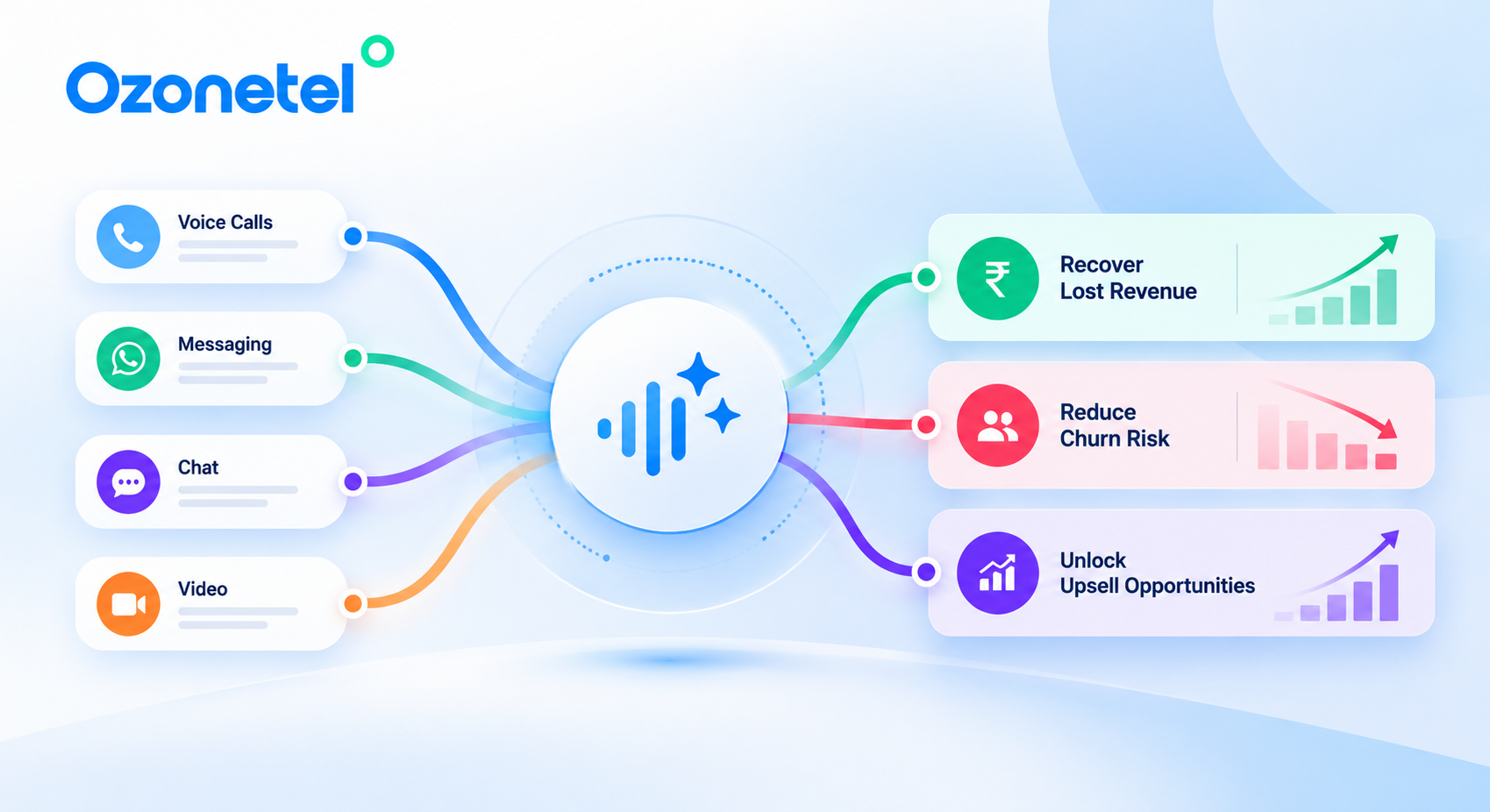
The most valuable customer feedback may not come from a survey. It may already be sitting inside your calls and chats.
A pricing question can reveal purchase intent. A repeated complaint can expose churn risk. A mention of a competitor can tell you that a customer is weighing alternatives. These signals often appear in ordinary conversations long before they show up in a formal feedback report.
2025 Customer Experience Survey by PwC found that 29% of consumers had stopped using or buying from a brand because of a poor customer experience. The question is: how many of the conversations leading up to that decision could a business have seen coming?
Key Takeaways
- Customer conversations contain signals about buying intent, churn, dissatisfaction, pricing, competitors and unmet needs.
- A single conversation provides context; patterns across thousands of conversations reveal broader customer behaviour.
- AI can identify these signals across calls and chats at a scale that manual analysis cannot.
- The real value comes from connecting customer signals to decisions across sales, service, retention and product teams.
10 Customer Signals Hidden in Every Conversation
Customers rarely communicate everything explicitly. Their questions, objections, repeated complaints and even the language they use can reveal what they are likely to do next.
1. Purchase Intent
Buying intent often appears before a customer actually asks to buy. Questions about pricing, implementation timelines, availability, onboarding or specific use cases can all indicate that a prospect is moving closer to a decision.
For example: A prospect asking how quickly they can get started or whether a particular feature is available may be further along in the buying journey than someone simply asking for general product information.
These signals matter because sales teams can prioritise conversations where there is genuine buying interest and respond while that interest is still active.
2. Churn Intent
Customers don’t always announce that they’re leaving. Churn signals can appear through repeated complaints, cancellation questions, frustration over unresolved issues, reduced engagement or comparisons with competing providers.
For example: A customer who has complained about the same issue several times and then starts asking about cancellation may be showing a much stronger churn signal than a customer who raises a single complaint.
These signals matter because identifying the risk earlier gives retention teams more time to understand the underlying problem and intervene.
Gartner found that only 14% of customers who experience a high-effort service interaction say they are likely to continue doing business with the company.
In practice: Spotting churn earlier
Analysis of more than 9,000 Dish TV customer conversations helped identify churn signals as early as the second interaction, contributing to a 25% reduction in churn.
3. Product Dissatisfaction
Customers don’t always say they dislike a product. Dissatisfaction can surface through repeated questions about the same feature, workarounds, complaints about usability or frustration with how something performs.
For example: If customers repeatedly explain that they have to use a manual workaround to complete a task, the issue may go beyond support and point to a product experience that needs attention.
These signals matter because repeated dissatisfaction across conversations can reveal a product or process problem that individual support tickets may not make visible.
This is where conversation data can complement traditional feedback channels. A survey captures what a customer chooses to report. Conversations often capture what they say while trying to solve the problem.
4. Price Sensitivity
Price objections are more nuanced than simply saying something is “too expensive.” Customers may ask for discounts, compare plans, question the value of a feature or repeatedly return to pricing after discussing the product.
For example: If customers consistently respond positively to a product but hesitate when pricing comes up, the issue may be perceived value rather than price alone.
These signals matter because they can help sales and marketing teams understand where value communication, packaging or positioning may need attention.
5. Competitor Consideration
Customers often reveal competitive intent casually: “We’re also looking at…”, “How are you different from X?” or “Another provider is offering this.”
For example: If the same competitor is being mentioned repeatedly by prospects in a particular segment, that may reveal a broader competitive consideration rather than an isolated objection.
These signals matter because they can show which alternatives customers are considering, what they compare and where the business may be losing ground.
It can also surface competitive concerns that may never appear in formal win-loss surveys.
6. Recurring Service Issues
One complaint may be an isolated incident. The same complaint appearing across hundreds of conversations is something else.
Customers may repeatedly mention delayed responses, failed transactions, delivery problems, authentication issues or having to contact support multiple times.
For example: If customers across different locations keep mentioning the same delivery delay, the problem may sit with the underlying process rather than individual service interactions.
These signals matter because they help businesses move from resolving individual complaints to identifying the root cause of recurring customer problems.
The difference is important: resolving one customer’s complaint closes a ticket. Finding why hundreds of customers have the same complaint can prevent the next hundred.
7. Unmet Needs
Some of the most useful customer signals aren’t complaints at all. Customers may ask for something the business doesn’t currently offer, describe a workaround or explain how they wish a product worked.
For example: If customers repeatedly describe the same workaround because an existing product doesn’t support a particular task, that may point to an unmet need worth investigating.
These signals matter because recurring unmet needs can reveal opportunities for new products, services, partnerships or improvements to the existing customer experience.
In practice: Finding growth signals in customer behaviour
For HDB Financial Services, conversation intelligence helped identify customer patterns linked to loyalty and defection, contributing to a 2× improvement in the loyal-to-defected ratio and ₹1,550 crore in annual disbursement uplift.
Read the HDB Financial Services case study →
8. Feature Requests
A feature request can be more than a product suggestion. It can reveal what customers need in order to get more value from the product.
For example: If customers repeatedly ask for the same capability, particularly when explaining why they cannot complete a task or expand their usage, the request may represent a broader product gap.
These signals matter because grouping feature requests by frequency, customer segment and context can help product teams distinguish isolated preferences from recurring customer needs.
The same analysis can also reveal the language customers naturally use to describe a feature, which can be useful for product messaging and documentation.
9. Emotional Triggers
A customer’s emotion can reveal what matters most to them. Frustration after a failed delivery, urgency around a payment issue, or excitement about a particular feature can point to important moments in the customer journey.
For example: If hundreds of customers become frustrated when they are transferred between agents, the issue may not be individual agent behaviour. It could indicate a broader problem with routing or how the support process is designed.
When the same emotional response appears across thousands of conversations, it becomes a business signal—not just a sentiment score. It can help teams identify where customers are struggling, where they see value and where the experience needs attention.
10. Escalation Signals
Some conversations contain early signs that an issue is about to become more serious: repeated requests to speak to a manager, references to previous unresolved interactions, threats to complain publicly or increasing frustration after multiple failed attempts to resolve an issue.
For example: A customer who has contacted support several times, received no resolution and is now asking for a manager is showing a stronger escalation signal than someone making a first-time complaint.
These signals matter because identifying escalation earlier can help teams prioritise intervention before a routine service issue becomes a larger customer or reputational problem.
The Signal Becomes More Valuable When You See the Pattern
A single customer conversation can tell you what happened. Thousands of conversations can show you what is happening repeatedly.
Consider three signals appearing together: a customer mentions a competitor, objects to pricing and asks about cancellation. Each signal matters on its own. Together, they tell a much clearer story about potential churn.
The same applies to growth. A feature request combined with questions about additional users, pricing and implementation could indicate that a customer isn’t simply asking for functionality—they may be evaluating an expansion.
This is the real value of conversation analytics. It isn’t just about finding keywords. It is about connecting intent, context, frequency and behaviour to understand what customers are actually telling the business.
How AI Finds These Signals at Scale
No team can manually listen to every customer call, read every chat and connect every recurring theme. AI changes the scale at which this analysis can happen.
AI can analyse conversations for signals such as:
- Customer intent and buying behaviour
- Churn indicators
- Product complaints and recurring pain points
- Competitor mentions
- Pricing objections
- Feature requests
- Sentiment and emotional context
- Escalation patterns
- Frequently discussed topics and issues
But identifying a signal is only the first step. The more useful capability is connecting signals across conversations, customer segments and time.
That is what moves conversation analysis closer to customer intelligence and Voice of Customer analytics: instead of asking what happened in one interaction, the business can start asking what customers are consistently saying and what those patterns mean.
From Customer Signals to Business Decisions
The value of customer signals ultimately comes down to what the business does with them.
| Customer signal | What it can inform |
|---|---|
| Purchase intent | Sales follow-up and conversion |
| Churn intent | Retention intervention |
| Product dissatisfaction | Product and process improvements |
| Price sensitivity | Pricing and value positioning |
| Competitor consideration | Competitive strategy |
| Recurring service issues | Root-cause analysis |
| Unmet needs | New product or service opportunities |
| Feature requests | Product priorities |
| Emotional triggers | CX intervention |
| Escalation signals | Priority handling |
The same customer conversation can therefore have implications for several teams. A recurring complaint may matter to customer service, product, operations and leadership at the same time.
The challenge is making that information visible beyond the team that handled the original conversation.
In practice: Turning conversation signals into action
For a leading asset reconstruction company managing ₹8,000+ crore, conversation intelligence helped identify patterns that could improve recovery actions, contributing to a 35% increase in net recovery and a 40% reduction in cost to recover.
What the Voice of the Customer Really Looks Like
Customers are constantly telling businesses what they value, what frustrates them, what they need, what they are willing to buy and what could make them leave.
The problem is that these signals are scattered across thousands of calls, chats and other customer interactions.
A complaint here. A competitor mention there. A feature request repeated across several customer segments. A subtle change in the way customers talk about a product.
Individually, these moments can be easy to overlook. Together, they can reveal the direction of the customer experience—and the business opportunities or risks sitting underneath it.
This is where AI-powered Voice of Customer analysis becomes useful: bringing those scattered signals together so businesses can understand the bigger picture and act on it.
Ozonetel’s Voice of Customer capabilities are built around this broader view of customer intelligence—moving from individual conversations to the patterns that matter across the business.
Ready to see it on your own call flows?
Frequently Asked Questions
No — the value scales with complexity of customer journeys, not company size. Smaller teams with high support volume or multi-channel customers often see the gap between chatbot and conversational AI fastest.
It doesn’t have to replace them outright — chatbots still handle simple FAQs well. Conversational AI extends what happens once a conversation needs context, reasoning, or action.
Yes — when it’s integrated with your CRM, ERP, or ticketing systems, it can check order status, initiate refunds, and update records directly, not just describe the process. That integration is what turns an answer into a resolution.
Through resolution-based metrics: first-contact resolution, repeat contact rate, escalation rate, CSAT, and task completion — not raw containment percentage.
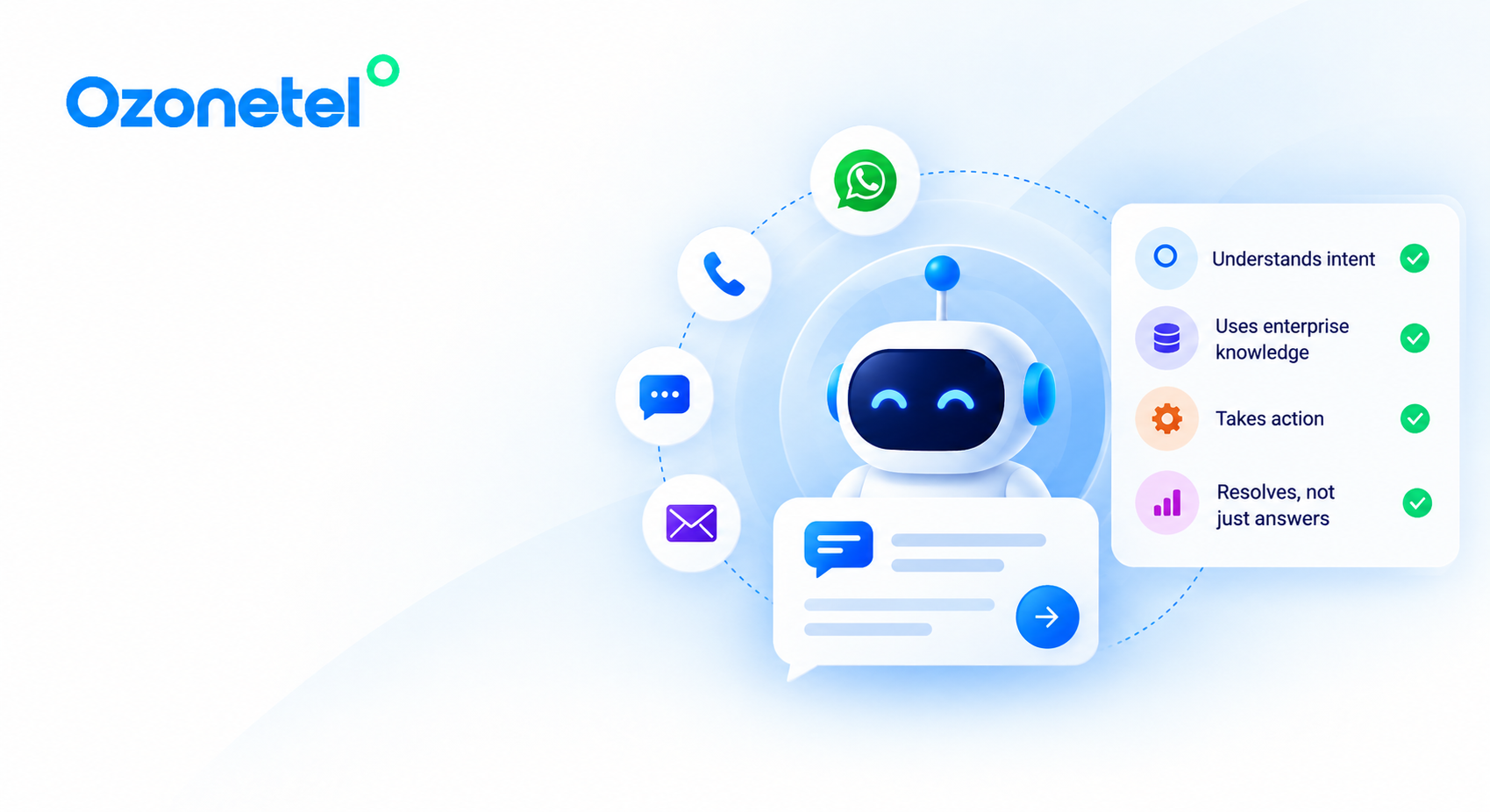
A chatbot maps questions to predefined answers. Conversational AI understands intent and context, reasons over enterprise knowledge, and can take action to resolve the request.
The amended framework permits a termi
Yes — the stronger implementations carry context across channels, so a customer isn’t forced to restart the conversation when they switch from chat to a phone call.
nation charge of up to 5 paise per minute for A2P calls, subject to the exemptions specified in the regulations.
Timelines depend on how many systems it needs to integrate with, but most enterprise deployments go from pilot to production in weeks, not months, especially when the platform sits natively in your existing CX stack rather than being bolted on separately.