Has Your Customer Service Outgrown Your Chatbot? 7 Signs You Need Conversational AI
Has Your Customer Service Outgrown Your Chatbot? 7 Signs You Need Conversational AI
Prashanth Kancherla
Sep 28, 2026 | 6mins read
Your chatbot answers thousands of customer questions every month.
So why are your agents still buried in repetitive conversations? Why do customers repeat themselves every time they switch from WhatsApp to a call? And why does your bot go silent the moment a customer needs something actually done?
Here’s the uncomfortable possibility: your chatbot isn’t broken. Your customer journeys have outgrown it.
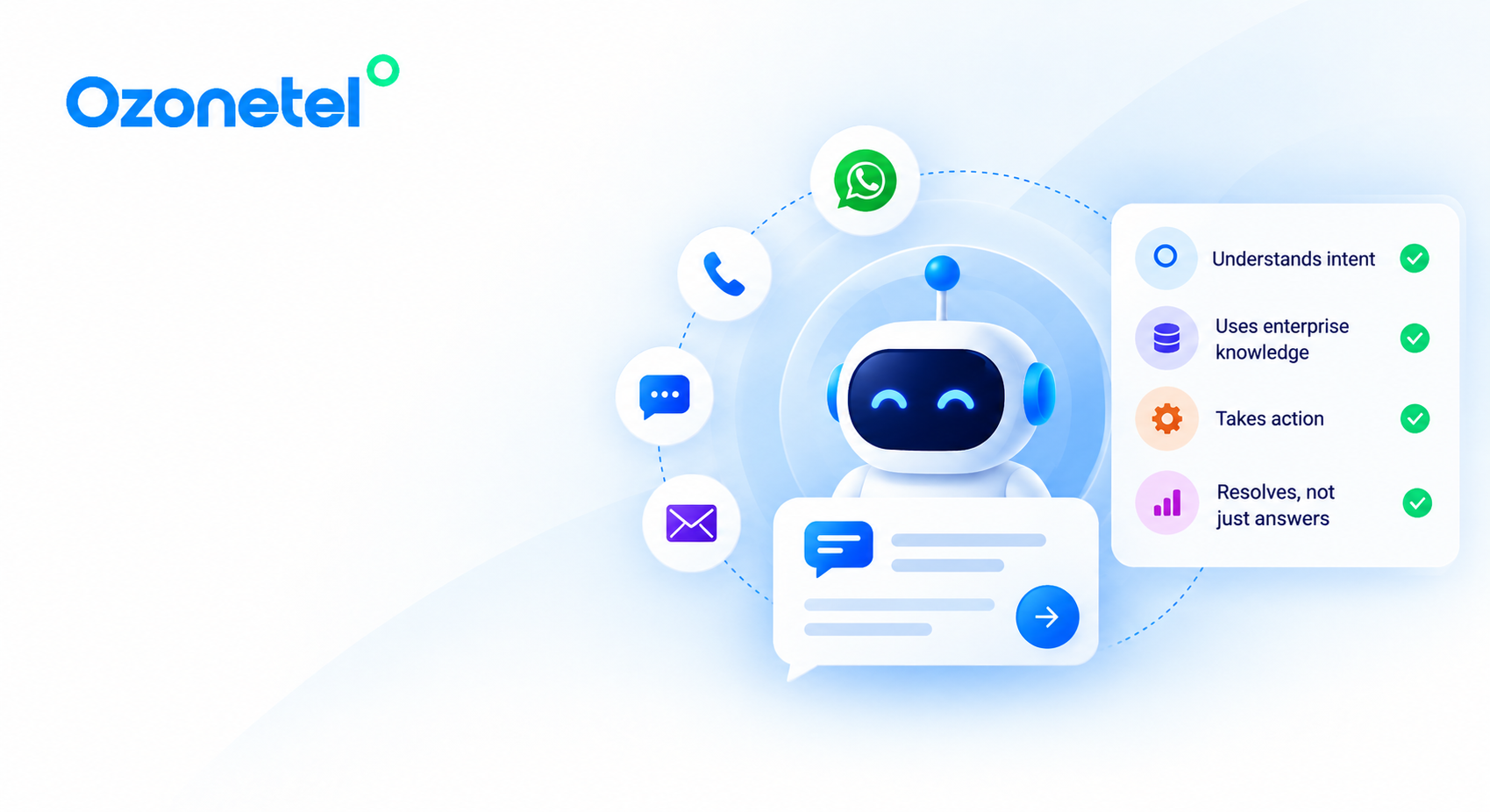
The real question isn’t “Can AI answer customers?” It’s: can AI understand the customer, take the right action, and resolve the need?
Quick answer: Your business likely needs conversational AI — not just a chatbot — when agents are absorbing high volumes of repetitive work, customers repeat themselves across channels, resolution rates lag behind containment rates, and your bot can explain a process but can’t execute it. That’s the shift: from automating answers to automating outcomes.
Key takeaways
A chatbot maps questions to scripted answers; conversational AI understands intent, holds context, reasons over enterprise knowledge, and takes action to resolve the request.
Seven practical signs — from repetitive agent workload to disconnected AI tools — tell you whether you’ve outgrown scripted automation.
The real ROI metric isn’t containment rate. It’s resolution: first-contact resolution, repeat contact rate, escalation rate, and CSAT.
Agentic AI conversational bots are already running in production across BFSI, agriculture, government, and hospitality — automating full workflows, not just FAQs.
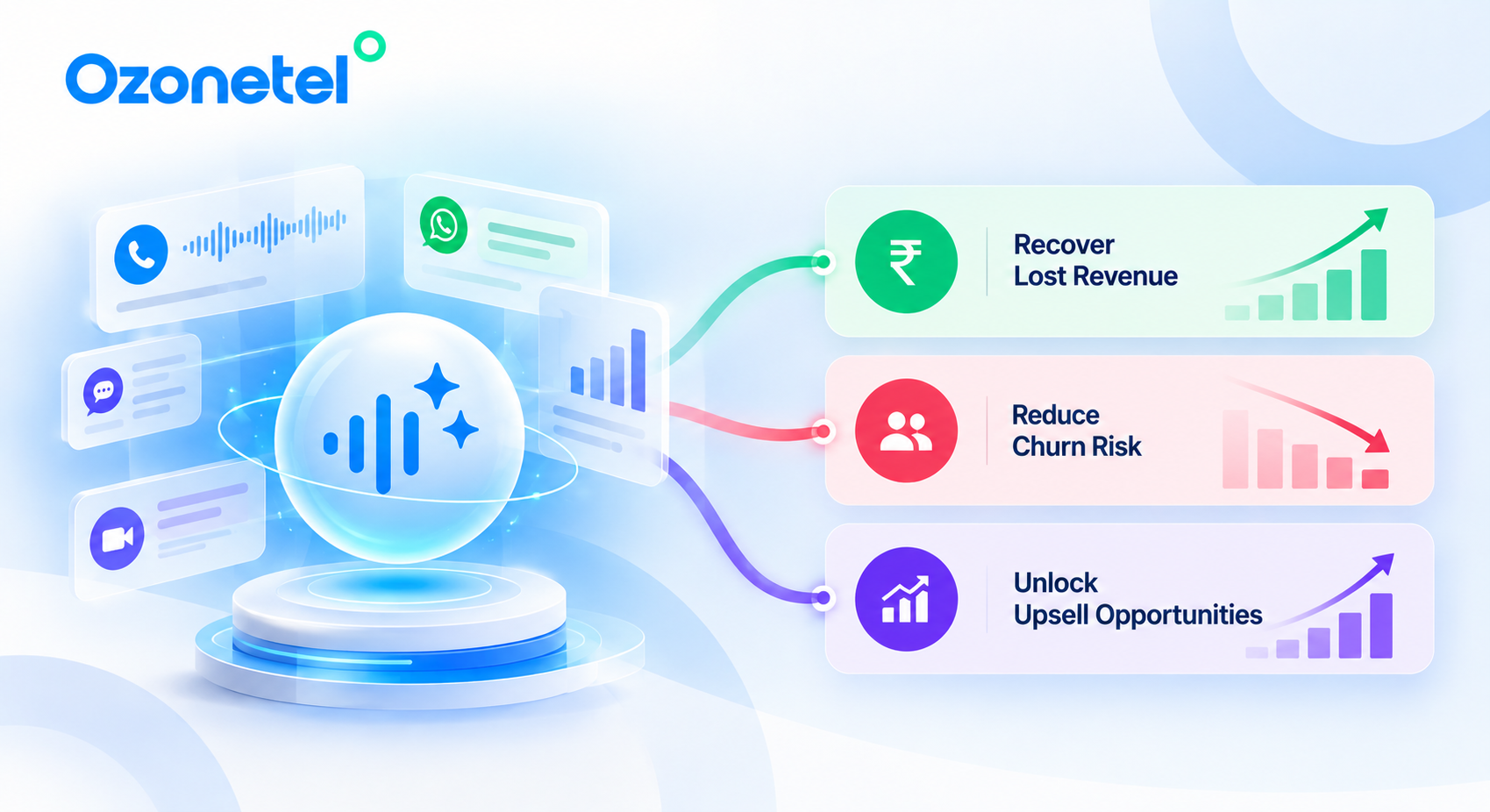
Enterprises running this stack are seeing roughly 3X higher conversions, 60% more retention, and 15% revenue growth on average.
Most chatbots fail not because they’re broken, but because expectations outgrew them.
Chatbots still earn their keep for simple, high-volume interactions. The trouble starts when a rules-based bot is asked to handle conversations that need context, reasoning, enterprise knowledge, or action — things it was never architected to do.
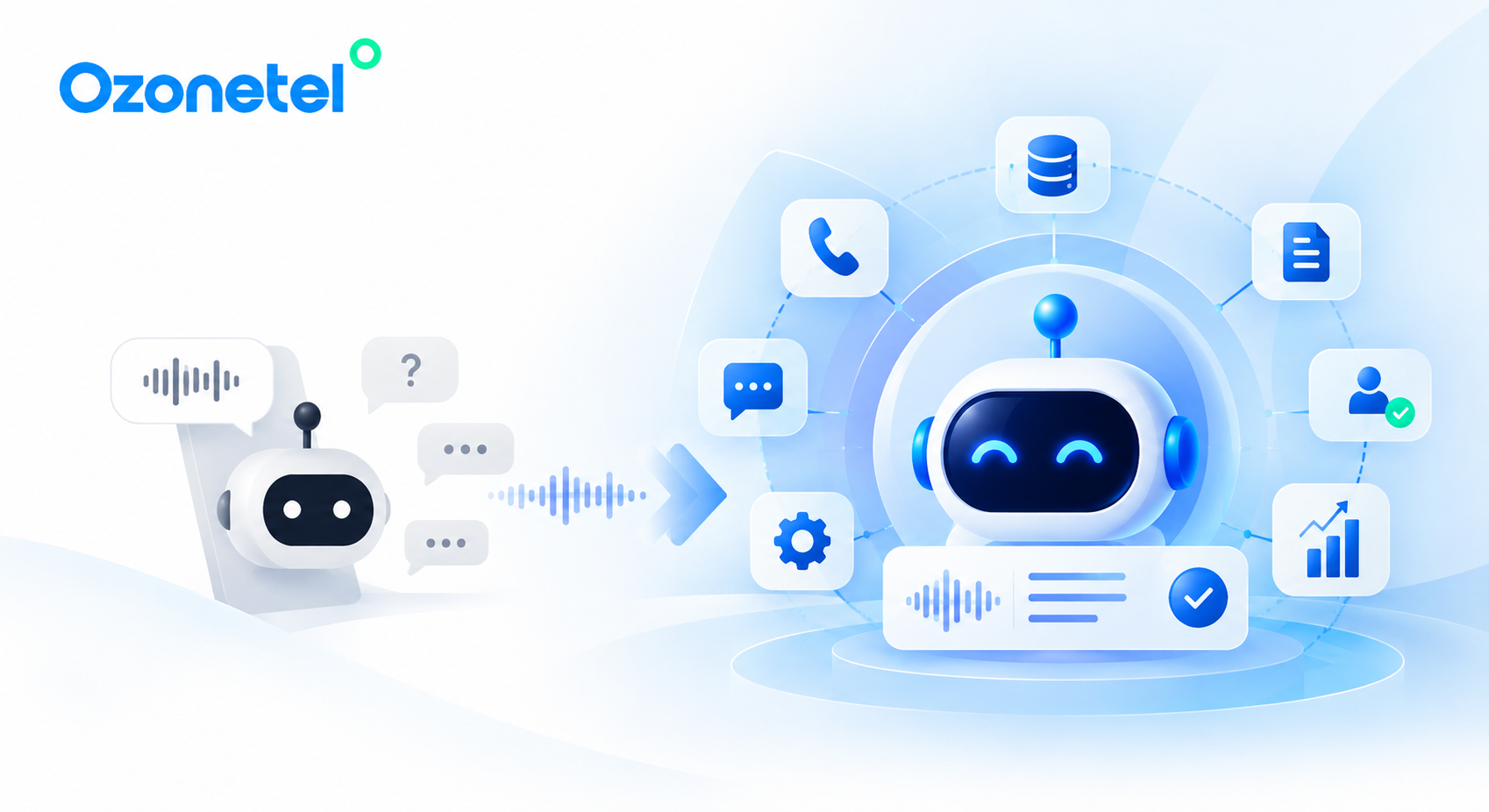
Traditional chatbot: Question → Intent → Predefined response
That’s the real shift here — not smarter FAQs, a fundamentally different job description for the AI.
7 signs your customer service has outgrown your chatbot
These seven patterns show when scripted automation can no longer keep up.
1. Your chatbot handles FAQs. Your agents handle everything else.
Order status, appointment changes, policy questions, payment queries, basic troubleshooting — how much of that still lands on a human because the bot deflects only the simplest layer of the conversation? You may have automated the easiest part of the journey, not the most expensive one.
2. Customers keep repeating themselves.
They start on WhatsApp, move to chat, call in, get transferred — and explain everything again. That’s not an omnichannel experience; it’s several channels orbiting the same customer without ever comparing notes. Does context travel with the customer, or does every channel start from zero?
3. Your AI can answer — but it can’t act.
Customer: “Can you change my delivery address?” Bot: “You can do that from your account.” Customer: “Can you just do it?” Bot: “Please visit…” The customer didn’t ask for instructions. They asked for an outcome. “Your refund takes 5–7 days” is an answer. Verify → check eligibility → initiate refund → update system → confirm with customer is a resolution.
4. Your automation breaks when customers go off-script.
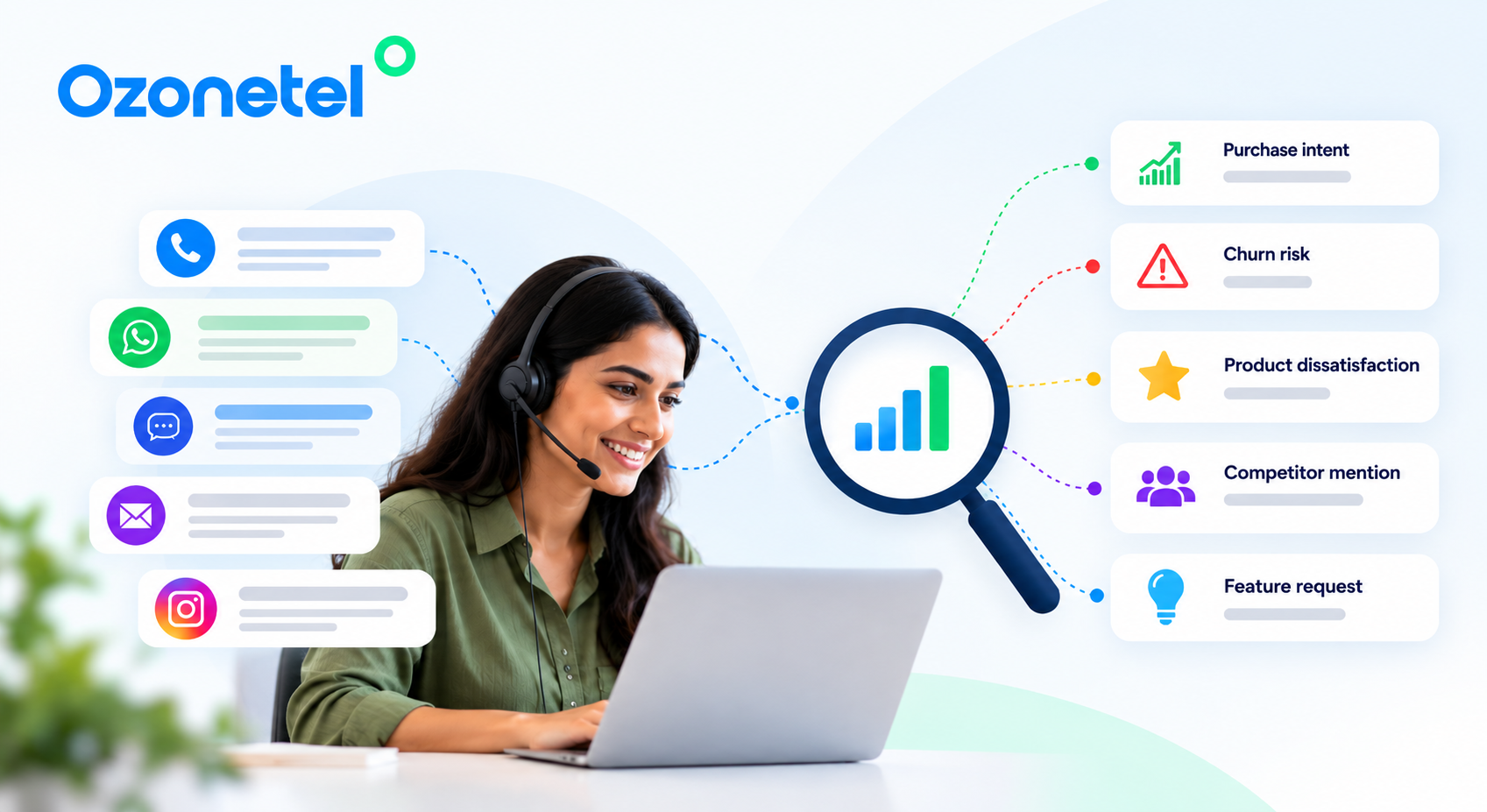
Nobody actually types “Track Order.” They say, “I ordered this two days ago and it’s supposed to arrive today — where is it?” That sentence carries an intent (tracking), a context (delay, urgency), and potentially an action (pulling live status). Parsing all three from natural language is what separates conversational AI from a decision tree.
5. Your AI doesn’t know what your business knows.
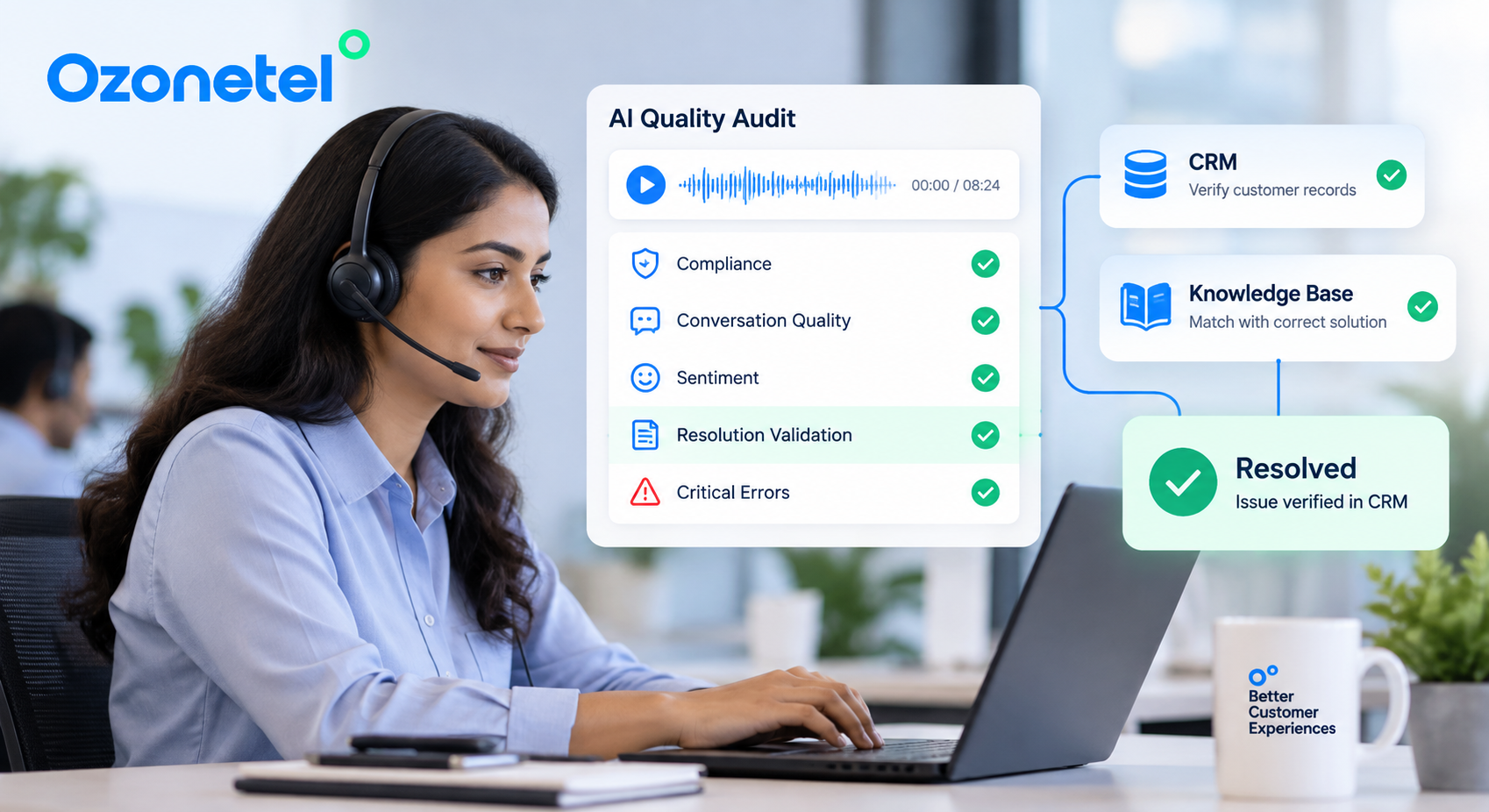
The real answers live in your CRM, ERP, ticketing system, knowledge base, and order database. If your bot only knows what’s inside its own content repository, it’s operating with blinders on. Enterprise AI shouldn’t sit outside your business systems — it should work with them.
6. You’re measuring containment, not resolution.
A bot that “handles” 70% of conversations sounds like a win — until you ask whether those customers actually got what they needed, or just gave up, called back, or found an agent anyway. Track first-contact resolution, repeat contacts, escalation rate, and CSAT — not just how many conversations the bot touched.
7. You’ve accumulated AI tools instead of building an AI layer.
A chatbot here, a voicebot there, agent-assist somewhere else, none of them talking to each other. More AI tools don’t automatically add up to a smarter customer experience if they’re disconnected islands. Do your AI applications share context, knowledge, and workflows — or are they just coexisting?
Where does your automation sit today?
This six-stage model shows how mature your current customer automation really is.
Stage
What the AI does
1. Answer
Responds to FAQs
2. Understand
Identifies intent
3. Contextualize
Understands conversation history
4. Act
Executes workflows
5. Resolve
Completes customer journeys
6. Orchestrate
Coordinates AI, systems, and humans
You don’t need to jump from Stage 1 to Stage 6 overnight. But knowing where you actually sit tells you which capability is worth investing in next — instead of buying more of what you already have.
8 questions to ask before you invest
Answer these eight questions honestly before committing budget to any AI platform.
1.Can it understand natural customer language, not just keywords?
2.Can it maintain context across multiple turns and channels?
3.Can it access trusted, current enterprise knowledge?
4.Can it connect to your CRM, ERP, or ticketing systems?
5.Can it execute workflows and take action, not just respond?
6.Can it work consistently across voice and digital channels?
7.Can it hand off to a human agent with full context?
8.Can you measure resolution and business outcomes, not just volume?
If the honest answer to several of these is “no,” another FAQ bot probably won’t fix the underlying problem.
What agentic AI chatbots have already solved
Four real deployments show what agentic AI resolves once it’s live in production.
Muthoot Gold — going national without a single boutique.
Launching a high-value jewellery vertical usually means costly physical showrooms. Instead, an agentic WhatsApp bot let customers browse catalogs, share designs with family, and move through the buying journey digitally, with trust sealed at their local Muthoot branch. Average order value jumped 2.5X — from ₹20,000 to ₹50,000 — on 150,000+ WhatsApp impressions in 9 months, with zero inventory and zero new boutiques.
Mahindra’s #KisanBot — end-to-end support for Tier-3 farmers.
Product awareness, dealer lookup, purchase assistance, after-sales support, and feedback collection — all handled in-language for farmers with limited digital literacy, not just FAQ deflection. The result: faster query resolution, a clear spike in enquiries from Tier-3 markets, and sales and service teams reaching leads far faster than before.
Telangana MeeSeva — government workflows rule-based bots couldn’t touch.
Multiple autonomous agents validate eligibility, guide citizens step-by-step through applications, trigger payments, fetch real-time status, deliver QR-verified certificates, and decide when a physical visit is genuinely unavoidable — in English and Telugu. In its first three months live, it served 25 lakh citizens across 580+ services and 38 departments, 24/7, with no queues.
A GenAI-personalised WhatsApp campaign, addressing every recipient by name, replaced blanket SMS blasts. Open rates jumped from ~13% to 70%, revenue hit 3X baseline, 16% of dormant patrons re-engaged, and the event sold out in two weeks — a new attendance record.
Each of these follows the same pattern: the bot didn’t just answer — it acted, end to end, inside a real workflow. Across enterprises running this stack, Ozonetel has seen roughly 3X higher conversions, 60% more retention, and 15% revenue growth on average. You can browse more of these in our customer stories.
Talk to our team about mapping this against your own call volumes and team structure:
No — the value scales with complexity of customer journeys, not company size. Smaller teams with high support volume or multi-channel customers often see the gap between chatbot and conversational AI fastest.
It doesn’t have to replace them outright — chatbots still handle simple FAQs well. Conversational AI extends what happens once a conversation needs context, reasoning, or action.
Yes — when it’s integrated with your CRM, ERP, or ticketing systems, it can check order status, initiate refunds, and update records directly, not just describe the process. That integration is what turns an answer into a resolution.
Through resolution-based metrics: first-contact resolution, repeat contact rate, escalation rate, CSAT, and task completion — not raw containment percentage.
A chatbot maps questions to predefined answers. Conversational AI understands intent and context, reasons over enterprise knowledge, and can take action to resolve the request.
Yes — the stronger implementations carry context across channels, so a customer isn’t forced to restart the conversation when they switch from chat to a phone call.
nation charge of up to 5 paise per minute for A2P calls, subject to the exemptions specified in the regulations.
Timelines depend on how many systems it needs to integrate with, but most enterprise deployments go from pilot to production in weeks, not months, especially when the platform sits natively in your existing CX stack rather than being bolted on separately.