Why e-Commerce Customer Support is Becoming the Real Differentiator for Online Retailers
Why e-Commerce Customer Support is Becoming the Real Differentiator for Online Retailers
Prashanth Kancherla
Aug 12, 2026 | 7mins read
Having multiple tabs open while shopping online to compare discounts is the norm today. Product specs are usually copy-pasted across marketplaces, and the discount codes circulate within hours of launch. Price and product alone rarely decide who wins a customer’s loyalty. What is more important is what happens after the “buy now” click. Retailers that treat e-commerce customer support as an afterthought are quietly losing repeat buyers to competitors who make it a core part of the brand experience.
Why Product and Price No Longer Win the Loyalty Battle in e-Commerce
Even just a decade ago, a competitive price on a decent product page was enough to win a sale. Today, products are commoditised faster than ever, and price-matching tools are one browser extension away. Shoppers expect a baseline of quality and value as table stakes rather than a differentiator.
What’s left to compete on is experience. Support is the one interaction where a customer talks to the retailer directly.
What Post-Purchase Experience Data is Telling Retailers in 2026
A majority of shoppers now read a retailer’s return policy before completing a purchase, using it as a proxy for how much they can trust the brand if something goes wrong. Shoppers want an easy returns process; only then will they buy from that retailer again.
In other words, the post-purchase journey is evaluated before the purchase even happens, and it directly shapes whether they come back. Retailers who still treat “we’ll deal with it if a problem comes up” as an acceptable support philosophy are misreading how much weight buyers now place on this stage of the journey.
How Support Quality Directly Affects Repeat Purchase Rate
Repeat customers are the backbone of profitable e-commerce, and support quality is one of the clearest levers for protecting that. Existing customers consistently spend more per order than new customers, which makes retaining them a growth engine. A single poor support interaction, on the other hand, is often enough to push a customer toward a competitor. This is precisely the kind of outcome that specialist ecommerce and retail support teams are built to protect.
Where e-Commerce Support Breaks Down and Costs Retailers Most
WISMO Queries That Overwhelm In-House Teams at Scale
“Where is my order?” remains the single most common query in e-commerce support, and it scales in direct proportion to order volume. That means, it hits the hardest when a retailer is growing fastest or entering a peak sale period. In-house teams are prepared for volume, and routinely buckle under WISMO spikes, leading to longer wait times, frustrated customers, and agents with low bandwidth for anything complex. This single query type can quietly consume the majority of a support team’s working hours, crowding out the higher-value conversations that actually build loyalty.
Returns and Refund Handling That Turns Customers Away
It is during returns when support experience and operational reality collide hardest. Online products are returned at a far higher rate than in-store purchases, and with every one of those returns comes a status update, a refund query, an exchange request. A slow, unclear, or inconsistent process can cost retailers the customer’s future orders too.
When handled well, though, returns become a retention opportunity. A transparent refund experience is the difference between a one-time buyer and a repeat one.
How AI is Transforming Ecommerce Customer Support Operations
AI Agents Handle Tier-One Queries Before They Reach Human Teams
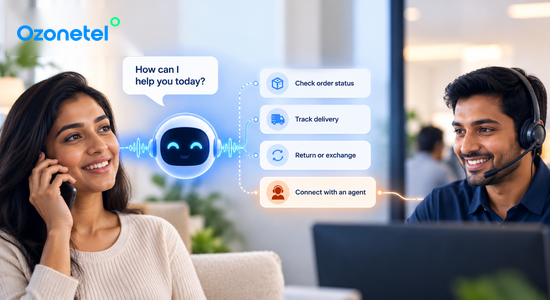
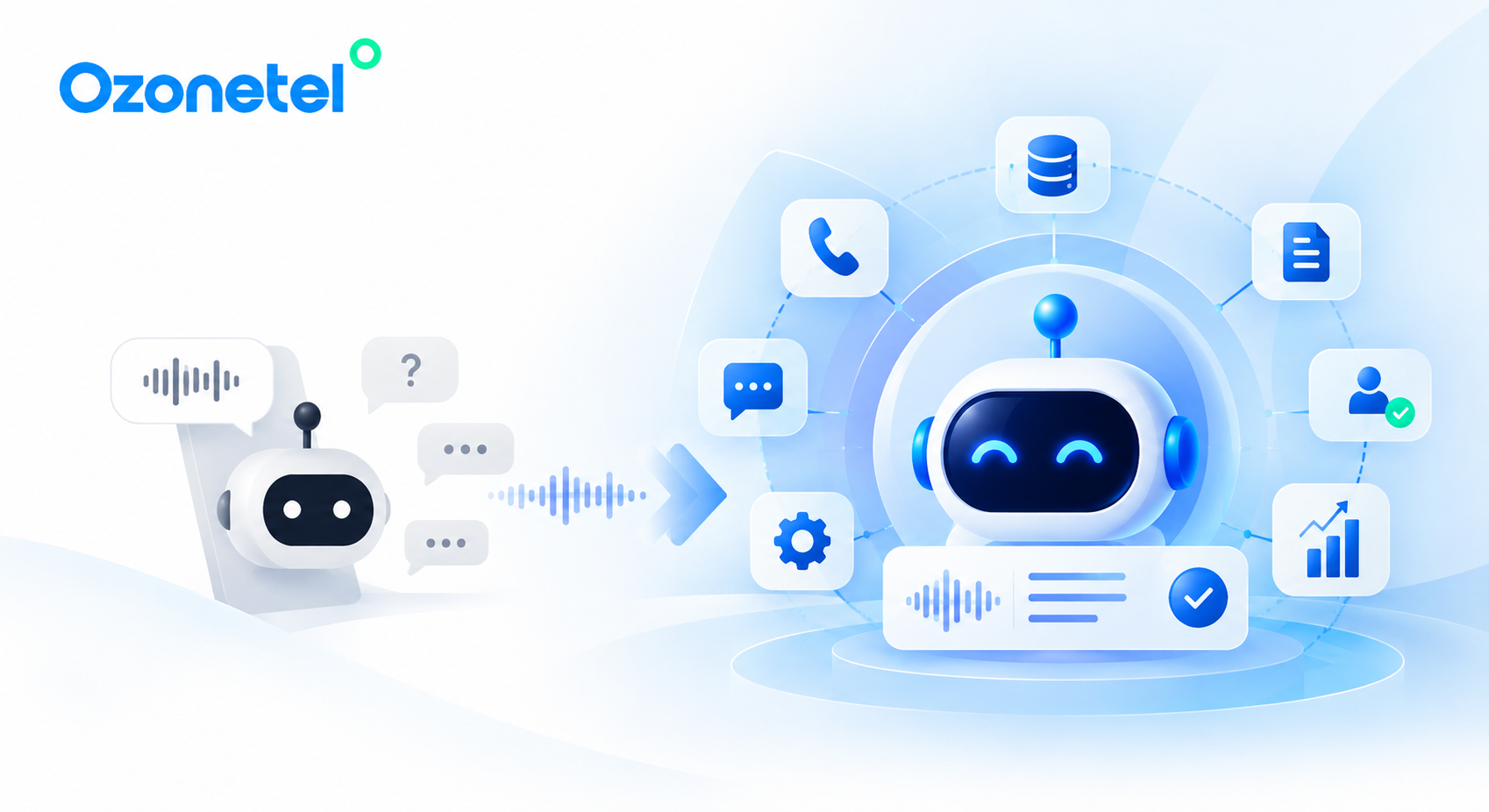
An AI chatbot for e-commerce isn’t a novelty widget bolted onto a website. It’s the first line of defence against repetitive, high-volume queries like order tracking, delivery estimates, and basic policy questions. By resolving these tier-one queries instantly, AI frees human agents to focus on the conversations that genuinely need judgment and empathy.
Done well, AI isn’t about replacing people but routing the right query to the right resource, so customers get instant answers to simple questions and attention on complex ones.
Omnichannel Support That Unifies Chat, Email and Social
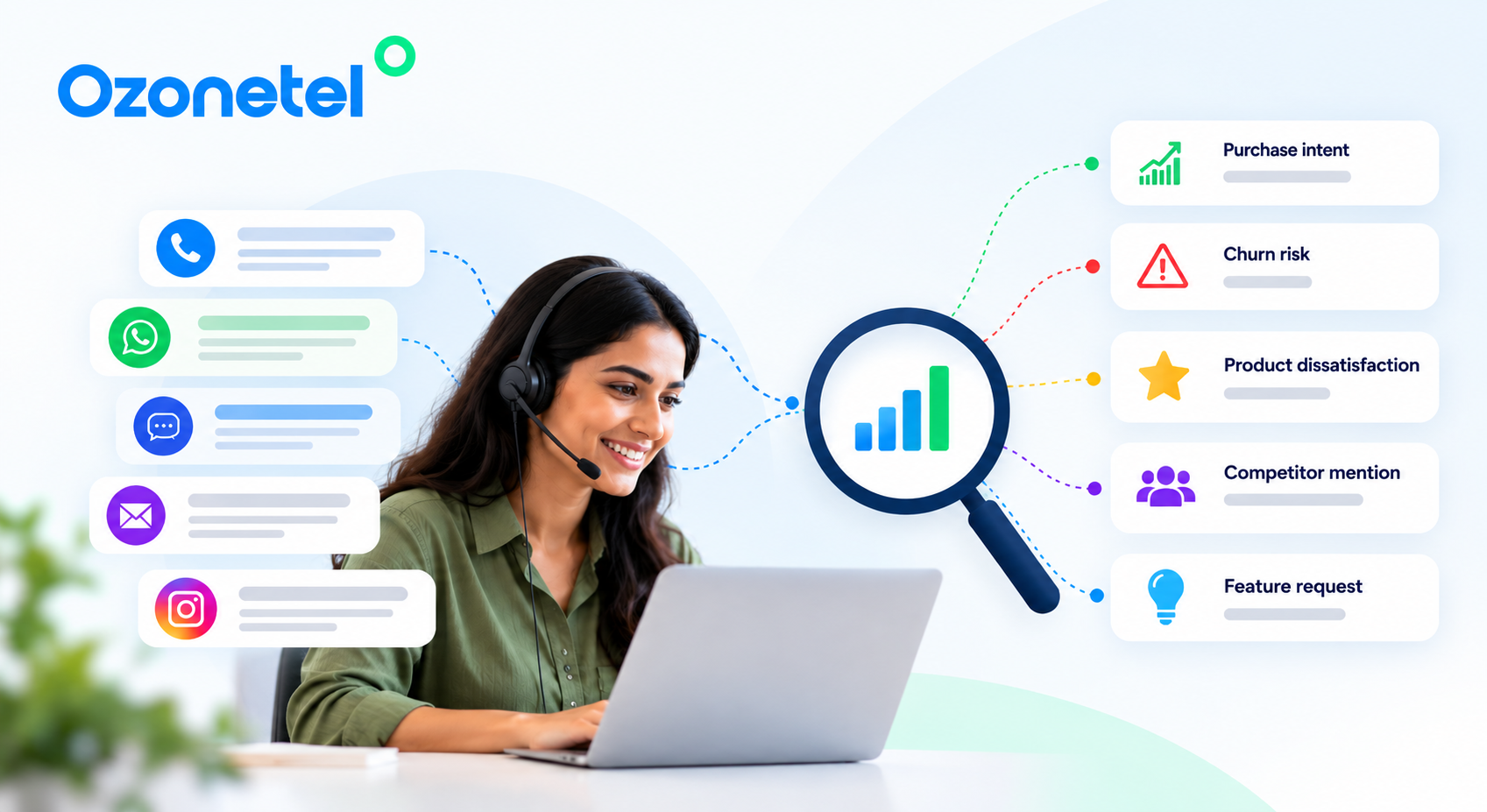
Today, a shopper might message a brand on Instagram, follow up over email, and then jump onto live chat for the same order. Omnichannel e-commerce customer support stitches these conversations into a single thread, so the customer never has to repeat themselves, and agents have full context.
This kind of unified visibility across omnichannel customer service is what separates a modern support operation from a patchwork of disconnected inboxes and widgets.
Why Human Agents Remain Essential for High-Value Customer Interactions
Human agents aren’t optional. Complex refund disputes, emotionally charged complaints, high-value B2B or bulk orders, and anything involving genuine ambiguity still need a person who can read the tone and make a call, something that a script can’t. Customers feel unheard by a bot, escalating their frustration. A skilled human becomes more valuable because of how the problem was handled.
The companies that are getting it right are building a deliberate split, where automation absorbs volume, and people absorb nuance. That balance is what actually protects customer trust
How Outsourced e-Commerce Support Helps Retailers Scale Without Losing Quality
Variable Capacity That Absorbs Peak Season Volume
Sales events and seasonal peaks can multiply query volume several times over in a matter of days. Hiring and training an in-house team for that peak means paying for idle capacity the rest of the year. Outsourced teams flex capacity up and down with demand, so retailers get peak-season coverage without carrying a peak-season cost base all year round.
Specialist Teams Trained in e-Commerce CX Workflows
Generic support agents take time to learn the quirks of e-commerce, such as return windows, carrier exceptions, marketplace policies, platform-specific checkout issues. This is one of the primary reasons retailers are investing in e-commerce customer service outsourcing, especially as specialist outsourced teams are already fluent in these workflows. Many also bring live chat and messaging expertise as standard, so retailers don’t have to bolt that capability on separately.
What Separates a Support Function From a Growth Driver
The dividing line is simple. A support function answers questions; a growth driver anticipates them, resolves them fast, and turns the interaction into a reason the customer stays. That requires the right mix of automation for scale, skilled humans for nuance, unified channels for context, and a returns process that builds trust instead of eroding it.
Retailers who invest in that mix are compounding customer lifetime value, order after order.
Conclusion
Product and price will always matter, but they no longer decide loyalty on their own. In a market where switching brands takes a single click, the retailers who win repeat business are the ones who get fast, consistent, omnichannel support, backed by the right blend of AI and human expertise. Getting there doesn’t require choosing between technology and people. It requires designing both to work together, with the customer’s next purchase as the goal.
No. 1600 and 1601 numbers are TRAI-allocated to verified, regulated entities — banks, NBFCs, insurers, and government bodies — exclusively for service and transactional calls like OTPs, account alerts, and fraud warnings. They cannot legally be used for promotional or telemarketing calls.
Most likely because a bank, insurer, NBFC, or government body you have an existing relationship with sent you a service-related communication — an OTP, a transaction confirmation, an account alert, or a fraud warning. These numbers are reserved for that exact purpose.
140 numbers are used for promotional and telemarketing calls and require your consent under DND rules. 1600/1601 numbers are reserved for service and transactional calls from regulated entities and are exempt from DND blocking for existing customers. If you’re getting promotional content from a 1600/1601 number, that’s a compliance violation worth reporting.
Yes, you can block any number through your phone’s standard call-blocking settings. But because 1600/1601 numbers carry service-critical communication — OTPs, fraud alerts, payment confirmations — blocking them outright can mean missing time-sensitive account information.
No. 1600 and 1601 are domestic 10-digit prefixes allocated by India’s Department of Telecommunications specifically for BFSI and government service calls. Calling them back doesn’t incur premium charges beyond your normal calling rates.
Entities regulated by RBI (banks, NBFCs, payment banks, small finance banks), IRDAI (insurers), SEBI (mutual funds, AMCs, stockbrokers), PFRDA (pension fund managers, recordkeeping agencies), and central or state government bodies are mandated to migrate service and transactional voice calls to the 1600/1601 series.
You’re exposed to telecom-side call blocking on non-compliant numbers, penalties under the applicable TRAI direction, and growing supervisory scrutiny from your sector regulator. There’s no grace period built into the mandate — the practical fix is to migrate as quickly as possible through an authorised provider rather than wait for enforcement to escalate further.
Yes. TRAI’s phased mandate, issued November 20, 2025, closed its final phase (SEBI-regulated stockbrokers) on March 15, 2026. Every BFSI and government segment covered by the direction is now past its migration deadline, which means the current focus for regulators and telecom operators has shifted from rollout to enforcement.